PCR Controls: A Run Checklist Before You Load the Gel
An implementation checklist for PCR controls on a run is a lane map, not a lecture on negatives. Do not interpret a sample band until every control on this run is named and the hold rule is written. An unlabeled pretty gel is not a result.
What Must Be Named Before the Gel
The outcome is a written lane map that a second person can read before the cycler starts. Inputs are the assay job (cloning insert, colony screen, or detection), the template class, and whether reverse transcription is part of the run. MIQE 2.0 names positive, negative, no-template, and no-reverse-transcriptase tubes as distinct control classes. This page borrows those names for a research run. It is not a qPCR publication checklist and it is not the later definition of NTC versus other negatives.
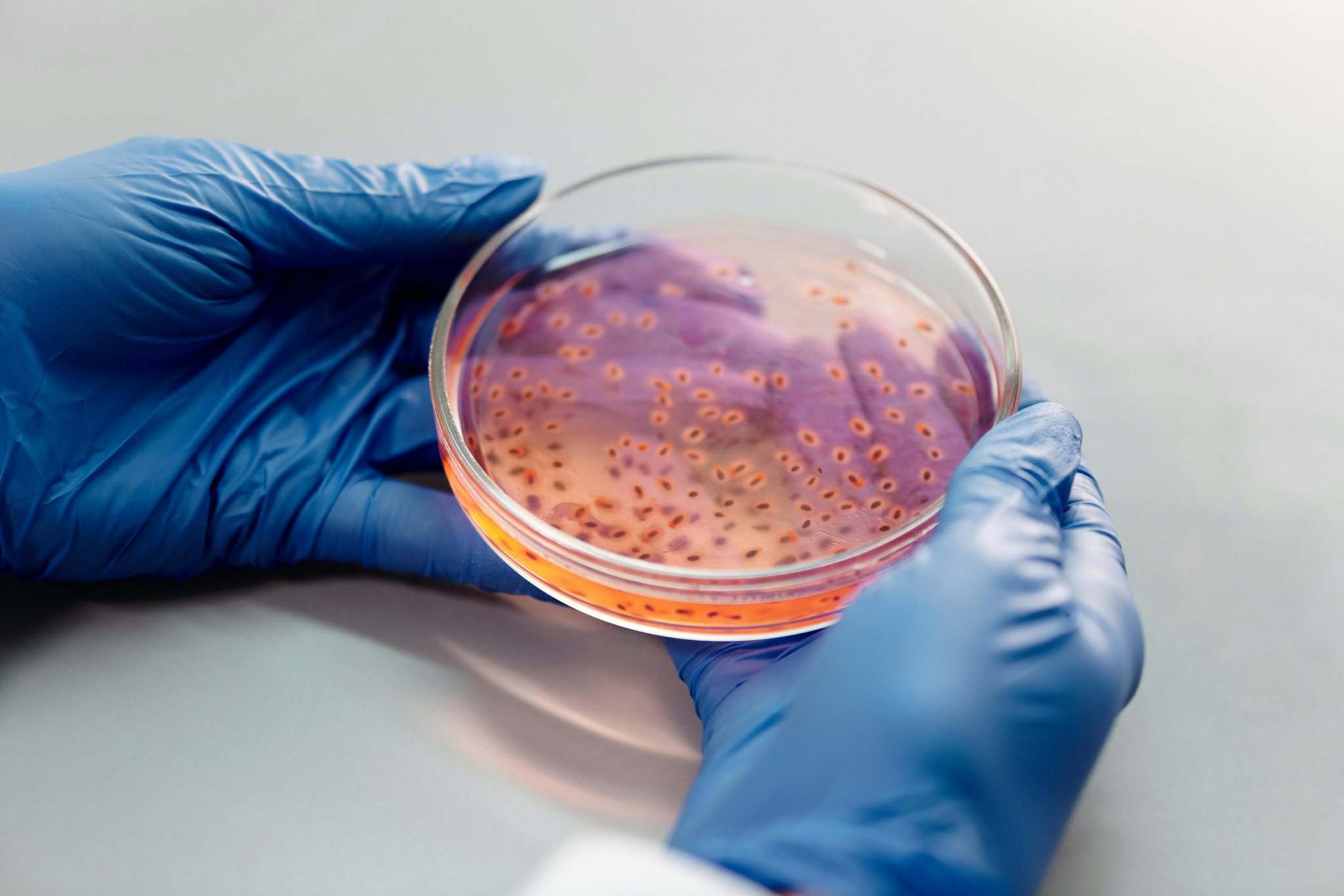
A gel photograph in a shared folder is not the outcome. The map has to exist before anyone loads.
Steps: Build the Control Lane Map
- Write the assay job in one sentence. Colony screen, insert amplification, or detection each imply a different expected size and a different failed-control action. Checkpoint: a second person can say what a “good” sample band would mean.
- Assign a no-template control. Replace the sample nucleic acid with water or buffer. MIQE 2.0 uses that tube to detect reagent or laboratory contamination; amplification there can invalidate the run. Write the hold now: if the NTC bands at the target size, the run stops. Checkpoint: the NTC lane ID is on the map before you pipette master mix.
- Assign a positive control that must produce the expected product if the chemistry is intact. A leftover “known good” template is usable only when its identity and expected size are written. Checkpoint: the positive lane has a size, not the word “plus.”
- Assign any other negative this assay actually needs. An extraction blank, a matrix blank, or a no-RT tube is in play when those steps exist. MIQE 2009 requires NTCs on each plate or batch and rejection conditions set in advance. This step uses that advance-hold idea. It does not redefine NTC. Checkpoint: every extra negative has a lane ID and a fail meaning.
- Write lane IDs for samples and controls before loading the gel. Leave no empty header. Checkpoint: a second person can reconstruct the gel from the map without asking who pipetted which tube.
Worked check. The run is a cloning PCR for a 1.2 kb insert. Lanes 1–8 are samples. No NTC lane is labeled. No positive is on the map. The gel later shows a bright 1.2 kb band in lane 3. Interpretation is blocked at step 2. Add the NTC and the positive to the next run, write the hold (“NTC band voids the plate”), and do not crop the old photograph into a result.
Expected Result and Verification
Expected result: every control lane is named and the hold rule is written before the gel is loaded. Verification: the NTC is blank at the target size, the positive is present at the expected size, and any extra negative behaved as planned. If any control is unnamed, interpretation is blocked even when a sample lane looks perfect. Opening a notebook page or saving the gel file is not verification. Those are storage moves.
Failures That Still Produce a Pretty Band
NTC bands at the target size. Rollback: hold the whole run. Do not call any sample positive. Discard the opened master mix, remake reagents, and repeat with a new lane map. Cropping the NTC lane out of the figure is not rollback.
Positive is blank. Rollback: do not call samples negative. The chemistry may have failed. Repair polymerase, primers, or cycling, then repeat. A faint sample band beside a dead positive is not evidence of a weak insert.
No-RT omitted on an RNA run. Rollback: do not claim an RNA-specific product. Add the no-RT tube on the next map and repeat. A DNA contamination story invented after the gel is not a control.
Unnamed lanes. The gel is sharp and the expected size is obvious to the person who pipetted. Rollback: the run is undocumented. Repeat with IDs on the map before loading. Do not reconstruct lane order from memory.
This Checklist Is Not an NTC Definition Page
What a no-template control is, versus another negative, is a later definition page. Tm versus annealing and primer-dimer versus specific product are later pages. Primer-design software is a selection page, not this gate. After the lane map exists, an experiment record such as the PCR record template can store outcomes. A notebook such as ZettaNote is one place to keep that map. Official copy documents structured experiment records. It does not name the controls for you. The takeaway is the hold, not a prettier gel.
Frequently Asked Questions
Can a PCR band be interpreted if the controls were not named?
No. An unnamed control lane blocks interpretation. The sample band is not a result until NTC, positive, and any other required negative are on the map.
Is a no-template control the only negative control on a run?
No. NTC is one negative. A run may also need an extraction blank, a no-RT tube, or another matrix blank. This page only requires you to name the ones this assay uses. The class distinction lives on the NTC definition sibling.
Related Articles