Which PCR Primer Design Tool Delivers the Most Reliable Results?
Why Primer Design Is a Make-or-Break Step in PCR
Polymerase Chain Reaction (PCR) is one of the most fundamental techniques in molecular biology, and the quality of your primers determines whether your experiment succeeds or fails. Poorly designed primers lead to non-specific amplification, primer-dimer formation, low yield, and unreliable results. A robust PCR primer design tool eliminates much of this guesswork by applying thermodynamic calculations, specificity checks, and secondary structure predictions to generate optimized primer pairs.
Whether you are performing standard PCR, quantitative real-time PCR (qPCR), or multiplex PCR, the principles of good primer design remain consistent: appropriate melting temperature, balanced GC content, minimal self-complementarity, and high specificity for your target sequence.
Core Parameters Every Primer Design Tool Should Handle
Before evaluating specific tools, it helps to understand the key parameters that primer design software must calculate and optimize:
- Melting Temperature (Tm): Primers in a pair should have matched Tm values (within 1–2°C) for efficient annealing.
- GC Content: Ideally between 40–60% for stable yet specific binding.
- Primer Length: Typically 18–25 bases for standard PCR applications.
- Self-Dimer and Hairpin Detection: Complementary regions within or between primers that can form unwanted secondary structures.
- Specificity Checking: BLAST or genome-wide alignment to ensure primers bind only the intended target.
- Amplicon Length: The distance between primer binding sites, which affects reaction efficiency and suitability for applications like qPCR.
Free and Web-Based Primer Design Tools
Primer3 and Primer3Plus
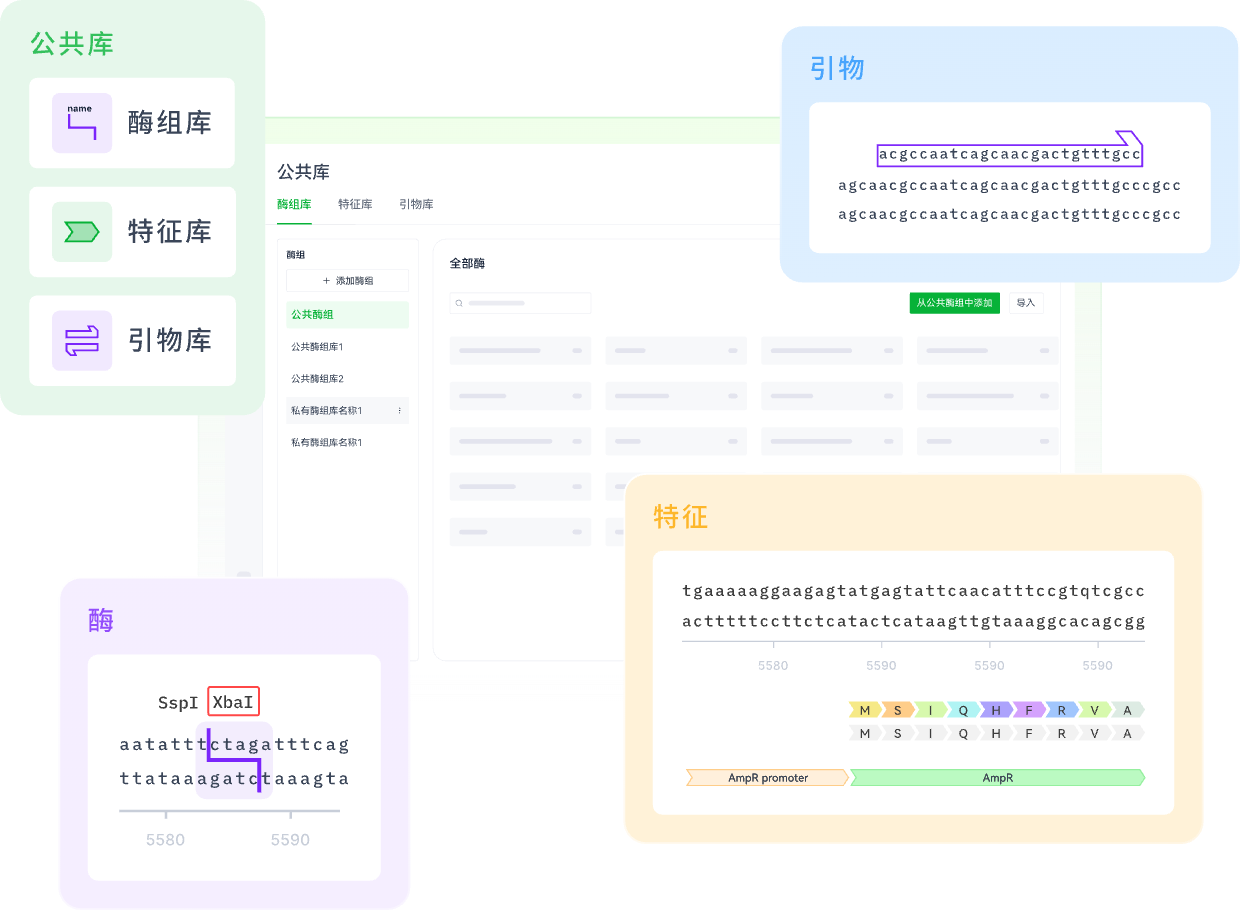
Primer3 is the open-source engine that powers many commercial and academic primer design applications. It offers extensive parameter customization, including product size range, Tm thresholds, GC clamps, and mispriming library checks. Primer3Plus provides a user-friendly web interface on top of the Primer3 engine, making it accessible to researchers without bioinformatics expertise.
NCBI Primer-BLAST
Primer-BLAST combines the Primer3 algorithm with NCBI's BLAST search to verify primer specificity against a selected genome or database. This dual approach ensures that your primers will amplify only the intended target—a critical requirement for experiments involving gene families with high sequence similarity.
IDT PrimerQuest
Integrated DNA Technologies offers PrimerQuest as a free web tool for designing standard PCR primers, qPCR probes, and TaqMan assays. Its tight integration with IDT's oligo ordering system streamlines the path from design to synthesis.
BatchPrimer3
For high-throughput projects that require primer design for hundreds of target sequences, BatchPrimer3 accepts batch input and processes multiple designs simultaneously. Results are color-coded and downloadable in tab-delimited format for easy integration into laboratory workflows.
Comprehensive Platforms with Built-In Primer Design
SnapGene
SnapGene includes primer design within its molecular cloning suite, allowing researchers to select primers from a sequence map, simulate PCR amplification, and visualize results on a virtual agarose gel. Its cloning context awareness ensures that primers are designed with the broader construct in mind, not just the immediate target.
Geneious Prime
Geneious Prime offers primer design alongside sequence alignment, phylogenetic analysis, and cloning tools. Its advantage lies in the integrated workflow: you can align sequences, identify conserved regions, and design primers targeting those regions without leaving the application.
ZettaGene from ZettaLab
ZettaGene, part of the ZettaLab cloud platform, incorporates primer design within a broader gene design and cloning workflow. Because ZettaGene connects to ZettaCRISPR and ZettaNote, researchers can design primers for PCR validation of CRISPR edits and document the entire process in a single integrated environment. This eliminates the need to export primer designs to a separate ELN or cloning software.
Tool Comparison Summary
| Tool | Type | Specificity Check | Batch Design | Cost |
|---|---|---|---|---|
| Primer3 | Web / API | No (requires external BLAST) | Yes | Free |
| Primer-BLAST | Web | Yes (genome-wide BLAST) | Limited | Free |
| IDT PrimerQuest | Web | Basic | No | Free |
| SnapGene | Desktop | Integrated BLAST | No | Paid |
| Geneious Prime | Desktop | Integrated BLAST | Plugin available | Paid |
| ZettaGene | Cloud | Yes | Yes | Subscription |
| BatchPrimer3 | Web | Mispriming library | Yes | Free |
Specialized Applications and Advanced Features
qPCR and Probe Design
Designing primers and probes for quantitative PCR requires additional considerations: amplicon length should be short (80–150 bp) for optimal efficiency, and probe placement must avoid primer binding regions. Tools like Beacon Designer and the GenScript qPCR tool specialize in these requirements, offering TaqMan, SYBR Green, and molecular beacon design modes.
Multiplex PCR Primer Design
Multiplex PCR amplifies multiple targets simultaneously, requiring that all primer pairs work under identical cycling conditions without cross-reacting. Primer design tools for multiplexing must evaluate all pairwise interactions between every primer in the set, a computationally intensive task that few free tools handle well.
Connecting Primer Design to the Full Experimental Workflow
One of the persistent inefficiencies in molecular biology is the gap between primer design and experimental documentation. A researcher may design primers in one tool, order them from a vendor, and then manually record the sequences and conditions in a lab notebook. Each handoff introduces risk of error and data loss.
ZettaLab addresses this by connecting ZettaGene (which includes primer design), ZettaCRISPR (for CRISPR guide validation), and ZettaNote (for experimental documentation) into a single platform. When a researcher designs primers for PCR validation of a gene edited with CRISPR, the primer sequences, target coordinates, and experimental conditions are automatically linked in the ZettaNote record—no manual data transfer required.
Conclusion
The PCR primer design tool you choose should match your experimental needs: standard PCR requires basic Tm and specificity checks, while qPCR and multiplex applications demand more specialized algorithms. Free tools like Primer3 and Primer-BLAST remain excellent starting points, but research groups working at scale benefit from integrated platforms that connect primer design with cloning, CRISPR editing, and electronic lab documentation. ZettaLab's cloud-based ecosystem exemplifies this integrated approach, reducing friction between computational design and bench execution.
Related Articles