Experiment Record Attachments: A Lab File Checklist
An experiment record attachment is a data file or reference that provides evidence, context, or reproducibility for a documented scientific result. The right attachment set is selective: it preserves the raw source, explains important transformations, and connects the conclusion to inspectable evidence without copying every project file into every record.
For molecular biology teams, attachments commonly include instrument exports, gel or microscopy images, sequence files, plasmid maps, primer tables, analysis outputs, and protocol deviations. A durable attachment workflow must also address naming, versions, permissions, formats, and long-term access.
Use the Evidence Chain to Decide What to Attach
| File Type | Typical Examples | Attachment Decision |
|---|---|---|
| Raw evidence | Instrument exports, original images, sequencing reads | Attach or reference the controlled original whenever it supports the result. |
| Processed output | Normalized tables, annotated images, alignment results | Include when the conclusion depends on processing, with method and source links. |
| Design context | Plasmid maps, reference sequences, primer sets | Link the exact version used to plan or interpret the experiment. |
| Execution context | Instrument method files, run settings, scripts | Include when settings materially affect reproducibility or analysis. |
| Review evidence | Approval notes, discrepancy resolution, QC reports | Keep the final review trail with the record or in a linked controlled workflow. |
Preserve Raw Data Before Adding Convenient Summaries
A screenshot, cropped image, or exported chart may help a reviewer understand a result, but it is not always a substitute for the raw file. Preserve the original data in its native or validated archival form when possible. If the native format depends on proprietary software, consider an additional open or human-readable export without deleting the source.
Processed files should identify their inputs and the steps used to create them. A spreadsheet titled “final results” is difficult to audit if it does not show which raw runs were included, which rows were excluded, or which formula version was applied. Store the analysis method, script version, or transformation notes close to the output.
Attach Molecular Biology Files at the Correct Version
Sequence and Plasmid Design Files
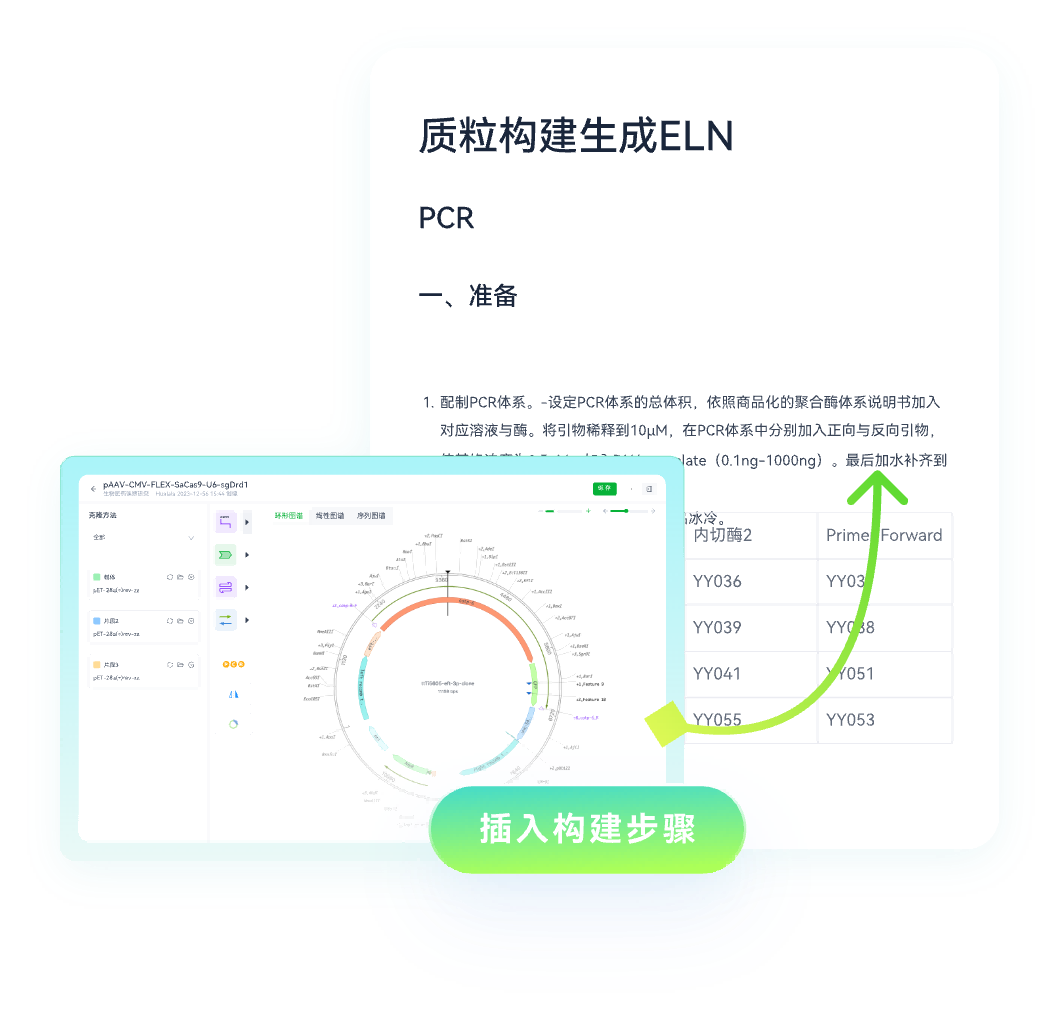
Sequence context is often part of the scientific input rather than an optional illustration. Link the reference sequence, expected construct, annotated plasmid map, and primer set that were active when the experiment was run. If the design changes later, the historical record must still resolve to the earlier version.
Researchers can use ZettaGene sequence and plasmid tools to work with design context and then reference relevant outputs in the experiment record. The record should state whether a sequence is planned, received, or experimentally verified so that a computational design is not mistaken for bench confirmation.
Images, Gels, and Instrument Outputs
Keep the full original image or run output where practical, then add an annotated derivative for interpretation. Record any cropping, contrast adjustment, lane labeling, background correction, or other transformation. The annotation should clarify the evidence without obscuring the original. For repeated instrument runs, use a consistent run identifier that appears in both the file name and the experiment record.
Avoid Three Common Attachment Failures
- Personal-folder links. Links break when access changes or a researcher leaves, so use a team-controlled location with durable permissions.
- Unlabeled duplicates. Multiple files called final, final2, and revised hide lineage; assign versions or immutable identifiers.
- Summary-only evidence. A pasted chart without the underlying data prevents later reanalysis and weakens review.
- Context-free exports. Files need sample, run, method, and record identifiers so they can be understood outside the author's memory.
Connect File Storage with the Experiment Record
Large or sensitive files may belong in a managed project repository rather than inside the ELN body. The record should still preserve a durable link, access expectations, checksum or version information where appropriate, and a short description of relevance. ZettaNote experiment documentation supports file references and research context, while ZettaFile supports team-oriented file organization and permission management within the broader platform.
Retention and access rules should be defined before a project closes. Teams should know which formats will remain readable, who owns the files, how exports are handled, and what happens when a user account is disabled. The Zettalab plan information can support product evaluation, but laboratories should test their own file volumes, retention needs, and security controls during a pilot.
Review Attachments as Part of Record Approval
A reviewer should be able to open each critical file, match it to the stated sample or run, and identify whether it is raw or processed. Broken links, inaccessible formats, unexplained transformations, and inconsistent identifiers should be resolved before the record is considered complete. This check turns file attachment from a clerical step into evidence verification.
FAQ
Should every file produced during an experiment be attached?
No. Attachments should preserve the evidence and context needed to reproduce, interpret, or review the experiment. Temporary files, caches, redundant exports, and unrelated working documents may not add value. However, do not remove raw data merely because a summarized figure is easier to read. Define a file disposition rule for each instrument or workflow: which source files are retained, which derivatives are created, where they are stored, and how the record identifies them. The goal is a complete evidence chain, not maximum file volume.
What is the difference between raw and processed data in an ELN?
Raw data are the original observations or instrument outputs before analytical transformation. Processed data have been cleaned, normalized, annotated, aligned, quantified, or otherwise changed to support interpretation. Both may belong in an ELN workflow, but their roles must be clear. Preserve the raw source and document how the processed result was produced, including software, parameters, scripts, or manual decisions that materially affect the outcome. A reviewer should be able to move from the conclusion to the processed output and then back to the original evidence.
How should laboratory attachment files be named?
Use names that include stable identifiers rather than personal shorthand. A practical convention may combine the project or experiment ID, sample or run ID, data type, date, and version. Keep the pattern short enough for daily use and avoid characters that create cross-platform issues. File names should complement metadata, not carry the entire scientific description. If a file is renamed after generation, preserve its origin and ensure the experiment record still points to the controlled version rather than an obsolete local copy.
Can a link to cloud storage replace an ELN attachment?
A cloud link can be appropriate when the target is team controlled, permission managed, version stable, and retained for the life of the record. It is weak evidence when it points to a personal drive, a mutable “latest” file, or a location that may be reorganized without redirects. During system evaluation, test whether links survive account changes, whether reviewers can access them, and whether exports preserve the relationship. A connected workspace can reduce link fragility, but governance and retention responsibilities still belong to the laboratory.
Conclusion
The right experiment record attachments preserve an evidence chain from raw source to processed result and scientific conclusion. Stable identifiers, controlled versions, durable permissions, and clear provenance matter more than simply uploading more files. Teams evaluating a connected approach can review Zettalab's research file and documentation workspace against their own attachment, retention, and access requirements.
Related Articles