Paper-to-eln Migration: A Phased Workflow for Research Labs
A paper-to-ELN migration is a controlled transition that moves active experiment documentation, supporting files, and review practices into an electronic lab notebook. It is not simply a scanning project. The migration must define which historical records move, how new records are structured, who owns them, and how the laboratory verifies continuity.
The safest approach starts with one representative workflow, tests it with real users, and expands only after records, attachments, permissions, exports, and reviews behave as intended. Molecular biology teams should include sequence and plasmid context in the pilot rather than testing text-only records.
Define the Migration Scope Before Choosing What to Transfer
Inventory current notebooks, active projects, methods, data locations, and review obligations. Separate active records that researchers still use from closed historical notebooks that may only need indexing or archival scans. Transcribing every historical page can consume time without improving retrieval, while ignoring active reference material can break ongoing work.
| Record Group | Typical Treatment | Acceptance Check |
|---|---|---|
| New experiments | Create directly in the ELN after cutover | Template, ownership, and review workflow operate correctly. |
| Active projects | Migrate key context, open actions, and supporting files | Researchers can continue work without searching two systems. |
| Closed paper notebooks | Index, scan selectively, or retain under existing archive controls | Authorized users can locate the physical or digital source. |
| Shared digital files | Move or link from a controlled project location | Links, permissions, versions, and retention remain intact. |
Build the Future Record Structure Before Importing History
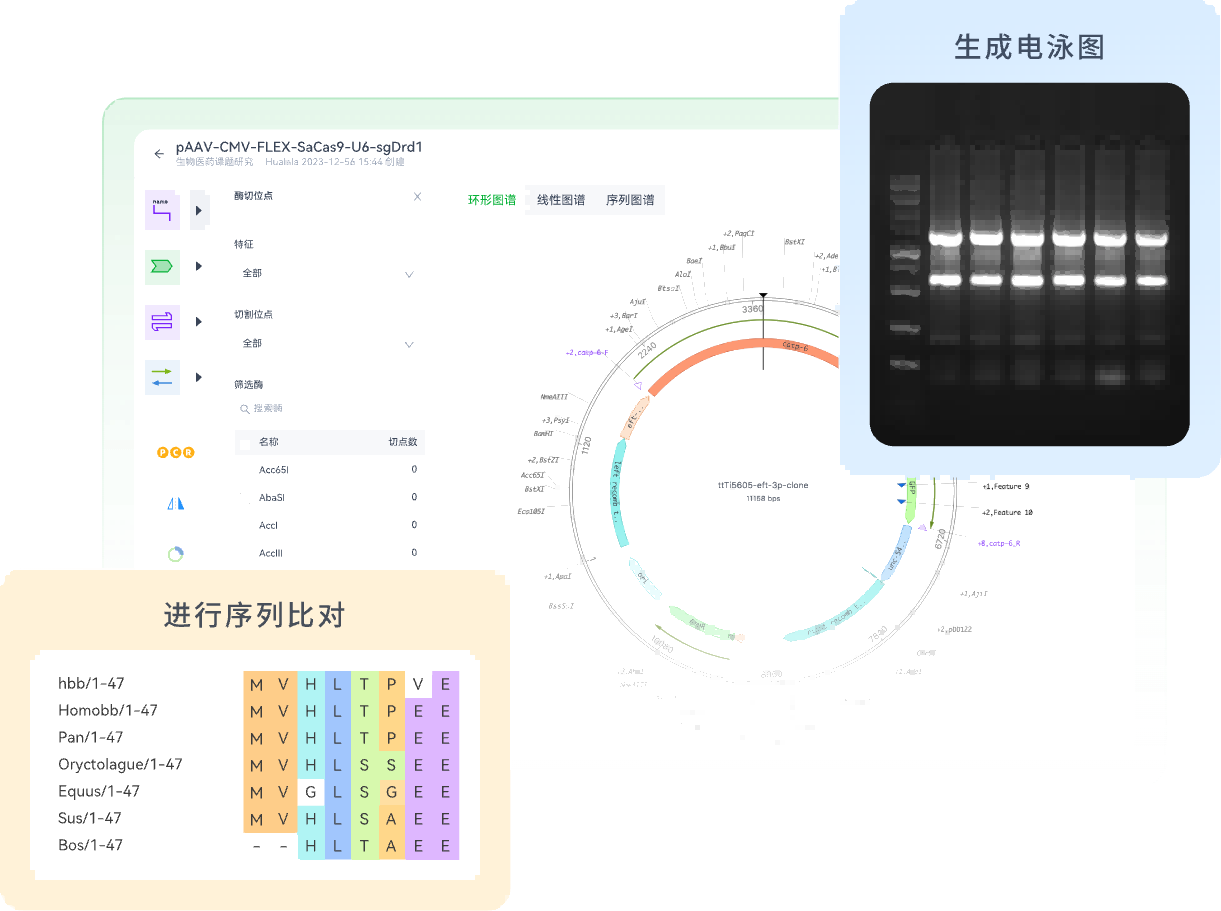
Design a small required core for objective, inputs, method, actual execution, evidence, deviations, conclusion, and review. Then create method-specific additions for cloning, PCR, sequence verification, or other recurring work. Do not reproduce every paper page layout in digital form; use structured fields where search and consistency matter, and flexible narrative sections where scientific observations vary.
ZettaNote ELN capabilities support reusable templates, annotations, file references, and team collaboration. Template decisions should still come from the laboratory's own workflows, quality requirements, and user testing.
Run a Pilot with One Complete Scientific Workflow
Select a Workflow with Real Complexity
A useful pilot includes preparation, execution, files, review, and follow-up. For example, a plasmid construction workflow may connect a reference sequence, design file, primer set, gel image, sequencing result, alignment, and final conclusion. A text-only demonstration will not expose file, permission, or version problems that appear in real research.
Where relevant, test how molecular biology tools and ELN records share context. Confirm that the record identifies the exact design version rather than linking to a mutable “latest” file.
Define Acceptance Criteria
- Completeness: Required scientific context and evidence are captured without excessive administrative burden.
- Retrieval: A colleague can find the experiment and attachments using expected search paths.
- Review: Comments, corrections, and approvals remain attributable and understandable.
- Continuity: Records survive account changes, project handoff, export, and restoration tests.
- Usability: Researchers can document work at the point of execution with available devices and connectivity.
Migrate Active Context, Not Just Page Images
Scanned notebooks preserve visual history but do not automatically create searchable, structured records. For active projects, create a migration summary that identifies the source notebook, relevant page range, project status, key samples or constructs, unresolved actions, and locations of supporting digital files. Link the scan as evidence rather than manually rewriting every line.
Use quality checks on a sample of migrated records. Compare identifiers, page references, attachment accessibility, dates, owners, and project relationships. Record any information that could not be migrated and state where the original remains available.
Plan Training Around Tasks and Roles
Researchers need task-based training: how to start a record, reference a protocol, attach data, document a deviation, request review, and find prior work. Principal investigators and reviewers need visibility into queues, comments, and closure. Administrators need procedures for templates, permissions, accounts, backups, and exports.
The Zettalab Academy resources can supplement onboarding, but local examples and office hours are essential. Track incomplete records, retrieval difficulties, support questions, and review delays during the pilot. These signals reveal workflow problems more effectively than measuring logins alone.
Cut Over with an Authoritative-Record Rule
State when new experiments must begin in the ELN and how in-progress paper work will close. During a temporary hybrid period, label the authoritative record for each experiment. Freeze or archive superseded templates, communicate ownership, and schedule a post-cutover review. Keep rollback and continuity procedures available, but avoid indefinite duplicate documentation.
FAQ
Does a lab need to digitize every historical notebook?
Usually not. The appropriate scope depends on active scientific value, legal or retention obligations, retrieval frequency, physical condition, and available resources. Many labs index closed notebooks and scan selected high-value or at-risk material while migrating richer context for active projects. Document the decision so users know which records are searchable in the ELN and which remain in the physical archive. If a historical page is referenced from a new record, include a stable notebook and page identifier and confirm that authorized staff can retrieve the source.
How long should an ELN migration pilot run?
The pilot should last long enough to complete one or more representative experiment cycles, including data attachment, review, correction, project handoff, and retrieval. A fixed number of weeks is less meaningful than workflow coverage. For molecular biology, include at least one process with sequence or plasmid files and verification evidence. End the pilot only after acceptance criteria are tested and major issues have owners. Expanding before users complete real records can hide problems that a short product demonstration will not reveal.
What should be tested before an ELN cutover?
Test record creation, templates, required fields, file uploads or links, search, permissions, review comments, corrections, exports, backups, and account offboarding. Use realistic file sizes and formats. Verify that a reviewer can trace a conclusion to raw evidence and that a colleague can understand the record without the original author present. Also test failure conditions, such as unavailable links or a disabled account. Record owners for unresolved gaps. A cutover decision should be based on documented acceptance results rather than general user enthusiasm.
How can a lab reduce resistance to ELN adoption?
Start with workflows where electronic documentation solves a visible problem, such as finding prior experiments, linking sequence files, or enabling remote review. Involve active researchers in template design and remove fields that do not support a scientific or quality decision. Provide role-specific training, rapid support, and examples based on real lab work. Leadership should model timely review and avoid maintaining a parallel informal system. Adoption improves when the ELN reduces uncertainty and repeated searching, not when it simply adds mandatory data entry.
Conclusion
A successful paper-to-ELN migration defines scope, builds the future record structure, pilots realistic workflows, verifies migrated context, and establishes one authoritative record after cutover. Teams planning that transition can assess ZettaNote with a representative migration pilot before committing broader laboratory records.
Related Articles