Connected Cloning and ELN Workflows for Agile Biotech R&D
In modern biotechnology R&D organizations, the historic separation between sequence design software and experimental documentation systems constitutes a primary operational bottleneck. Connected cloning and ELN workflows eliminate this friction by bridging the digital gap between computational construct design (in silico restriction mapping, Gibson/Golden Gate assembly, primer calculation) and wet-lab execution records (enzymatic digestion protocols, transformation yields, Sanger sequencing QC). By establishing an unbroken digital thread, unified platforms like ZettaLab enable research teams to eliminate error-prone copy-paste handoffs, preserve sequence-to-protocol traceability, and accelerate synthetic biology cycles.
The Disconnected Toolchain Problem in Molecular Biology
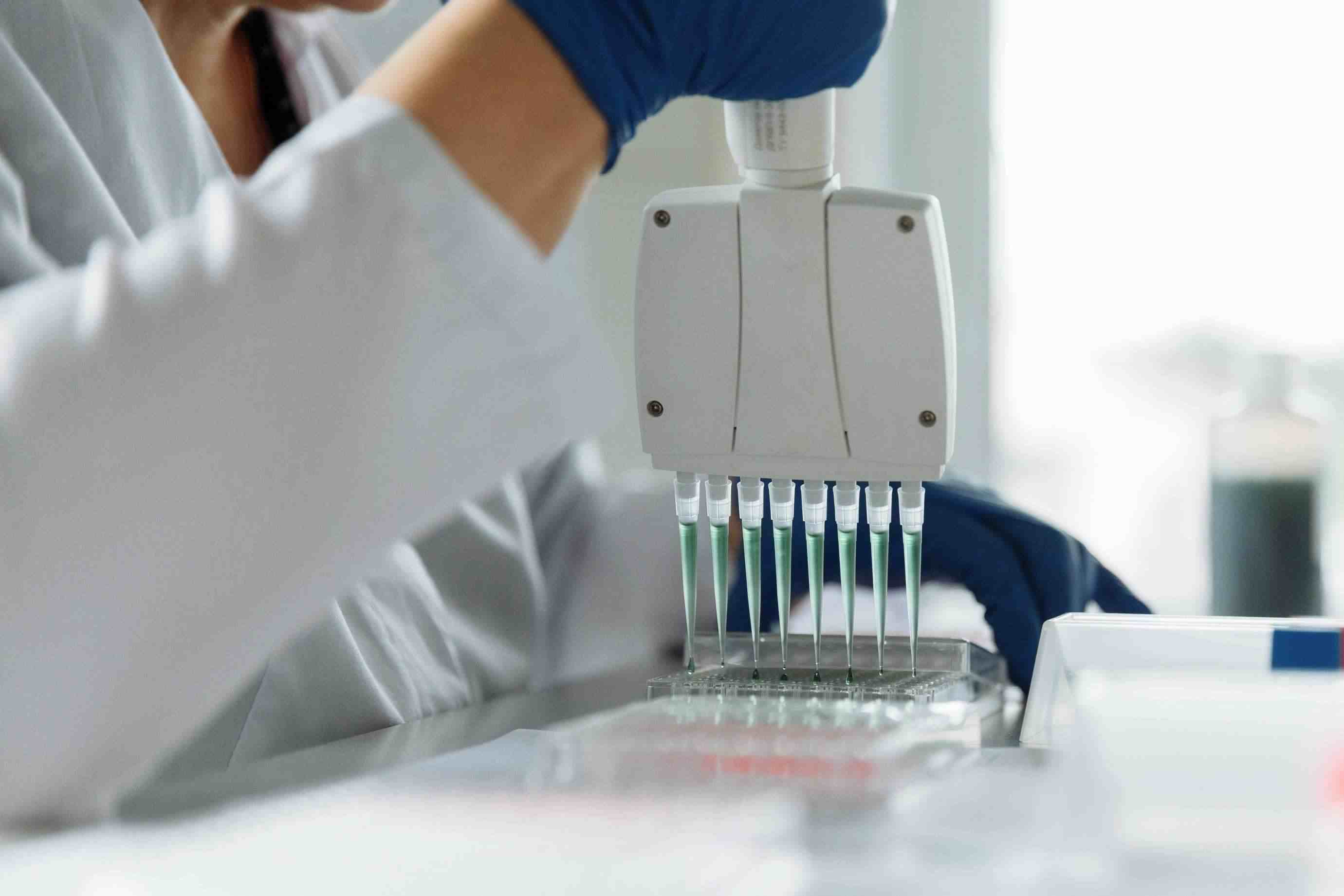
A typical molecular biology workflow traverses two distinct operational domains: the computational dry-lab design phase and the physical wet-lab execution phase. In traditional laboratory informatics architectures, these domains are served by disjointed point solutions:
- The Desktop Silo: Computational biologists and bench scientists engineer expression cassettes, select restriction enzymes, and design cloning primers on local desktop applications (e.g., SnapGene, Vector NTI, or legacy freeware). The resulting plasmid maps (.dna, .gb) are stored on local hard drives or ad-hoc cloud file drives.
- The Generic Notebook Silo: Experimental execution—PCR thermocycling conditions, transformation efficiency, antibiotic selection plates, and mini-prep concentrations—is documented in a standalone Electronic Lab Notebook (ELN) or generic wiki tool.
- The Manual Handoff Gap: To link the two, scientists manually export sequence screenshots, copy-paste primer sequences into static tables, or upload unindexed flat files as attachments.
This disconnected architecture causes acute operational friction. If a scientist updates a primer binding coordinate or swaps a promoter in the desktop sequence file, the corresponding ELN record and downstream transfection SOP remain unaltered. Weeks later, when a construct yields uncharacterized Western blot anomalies, auditing whether the cell line was transformed with construct version 1.2 or modified version 1.4 requires hours of forensic file tracking.
Architectural Core: How Connected Workflows Operate
A truly connected molecular biology ecosystem unifies construct engineering, sample inventory, and experimental records into a single relational database. Within the ZettaLab workspace, this synergy is embodied by the native integration between ZettaGene (molecular design engine) and ZettaNote (structured laboratory notebook):
| Workflow Stage | Disconnected Legacy Process | Connected ZettaLab Ecosystem Workflow |
|---|---|---|
| 1. Construct Design | Scientist designs plasmid in desktop app; saves local file pET28a_Insert_v3.dna. |
Scientist designs construct in ZettaGene; features, reading frames, and Type IIS overhangs validate in real time. |
| 2. Primer Generation | Manual calculation of melting temperature via online calculators; copy-pasting sequences into an Excel order sheet. | Automated junction primer derivation with thermodynamic QC; primers register directly into the lab inventory with unique IDs. |
| 3. Experiment Initiation | Scientist opens ELN, types protocol from memory, takes screenshot of plasmid map to insert as a static PNG. | Scientist instantiates a validated cloning SOP in ZettaNote; dynamic construct widget links directly to the live ZettaGene plasmid map. |
| 4. Wet-Lab Execution | Enzyme lot numbers and thermocycler steps entered as unstructured free text. | Structured parameter tables capture reagent lots, enzyme volumes, and reaction kinetics with inherited metadata. |
| 5. Verification & QC | Sanger sequencing .ab1 trace files saved in separate folder; alignment verified by visual eye inspection. | Trace files uploaded directly to the linked construct; automated alignment overlays highlight point mutations against the design model. |
| 6. Knowledge Archival | Physical sample labeled with marker; plasmid map isolated on personal laptop. | Construct published to the organizational Plasmid Library with verified lineage linking to the exact execution notebook. |
Key Technical Advantages of Unified Sequence-to-Notebook Architectures
1. Dynamic Living Constructs vs. Static Image Artifacts
In disconnected systems, an ELN contains only static images or PDF exports of plasmid maps. When embedded as an image, functional biological metadata—such as exact nucleotide coordinates, restriction cut sites, feature annotations, and translation tracks—is stripped of computational utility. In a connected system, the construct embedded within the experiment record is a dynamic biological object. Scientists can click directly on features, inspect translational reading frames, copy exact fragment coordinates, or trigger in silico restriction digest simulations directly from the notebook interface.
2. Closed-Loop Primer Lifecycle Management
Cloning failures frequently trace to oligo mislabeling or order slip-ups. When virtual cloning tools communicate directly with lab documentation:
- Primers designed during in silico Gibson or Golden Gate assembly inherit exact 5-prime extension tails and target annealing coordinates.
- Oligos automatically populate the lab central registry with calculated melting temperatures, secondary structure warnings, and vendor order specifications.
- When the primer pair is subsequently referenced in PCR amplification SOPs, the system automatically checks reagent compatibility and tracks physical tube freezer coordinates.
3. Real-Time Collaboration and Distributed Peer Review
Modern synthetic biology projects require cross-disciplinary coordination. A computational biologist may design a metabolic pathway containing 15 multi-gene constructs, while a wet-lab molecular biology team handles high-throughput Gibson assembly in 96-well formats. Connected cloud workspaces allow team members to simultaneously review construct maps, leave contextual comments on junction coordinates, and approve assembly plans before reagents are consumed.
Diagnostic Matrix: Resolving Data Lineage Failures
Organizations transitioning to connected workflows frequently resolve recurring systemic issues:
| Observed Laboratory Bottleneck | Underlying Information Silo | Connected Platform Solution |
|---|---|---|
| Unverified Clone Variants in Freezer | Scientists transform plasmids and freeze glycerol stocks without recording which design iteration was actually transformed. | Mandatory construct-to-sample linkage: registering a physical freezer tube requires linking an approved, verified ZettaGene construct model. |
| Repetitive In Silico Re-Annotation | When sharing files across team members, feature annotations (e.g., Kozak sequences, epitope tags) are lost during format conversion. | Centralized feature database: custom genetic elements are recognized and auto-annotated across the entire organization. |
| Failure to Replicate Published Protocols | Written protocols omit critical buffer salt concentrations or enzyme incubation times, recorded only in personal notebooks. | Modular SOP templates enforce parameter capture; variable fields must be filled before the experiment record can be marked complete. |
Strategic Implementation Guide for Biotech Leadership
For research directors and scientific founders building scalable discovery infrastructure, establishing connected workflows early in company development yields compound operational dividends. Rather than stitching together a patchwork of legacy desktop tools, Dropbox folders, and generic documentation wikis, adopting a natively integrated molecular biology platform establishes a single source of truth for all genetic constructs and experimental data.
By connecting sequence engineering in ZettaGene with structured laboratory records in ZettaNote, biotechnology organizations eliminate administrative data transfer, ensure complete 21 CFR Part 11 compliance readiness, and empower their scientists to focus on biological innovation rather than digital file management.
References
- Carbonell, P., et al. (2018). An automated design-build-test-learn pipeline for large-scale synthetic biology. Communications Biology, 1(1), 66. DOI: 10.1038/s42003-018-0076-9.
- Hillson, N., et al. (2019). Building a global alliance of biofoundries. Nature Biotechnology, 37(5), 502-504. DOI: 10.1038/s41587-019-0100-1.
- Wilkinson, M. D., et al. (2016). The FAIR Guiding Principles for scientific data management and stewardship. Scientific Data, 3, 160018. DOI: 10.1038/sdata.2016.18.
- Ellis, T., et al. (2011). DNA assembly for synthetic biology: from parts to pathways and beyond. Integrative Biology, 3(2), 109-118. DOI: 10.1039/c0ib00070a.
Related Articles