Why Is Document Alignment Translation Critical for Modern Molecular Biology Research
Meta Description: Discover how document alignment translation bridges sequence analysis and protein function in molecular biology, and why leading labs are adopting integrated platforms.
Introduction: The Hidden Bridge Between Genes and Proteins
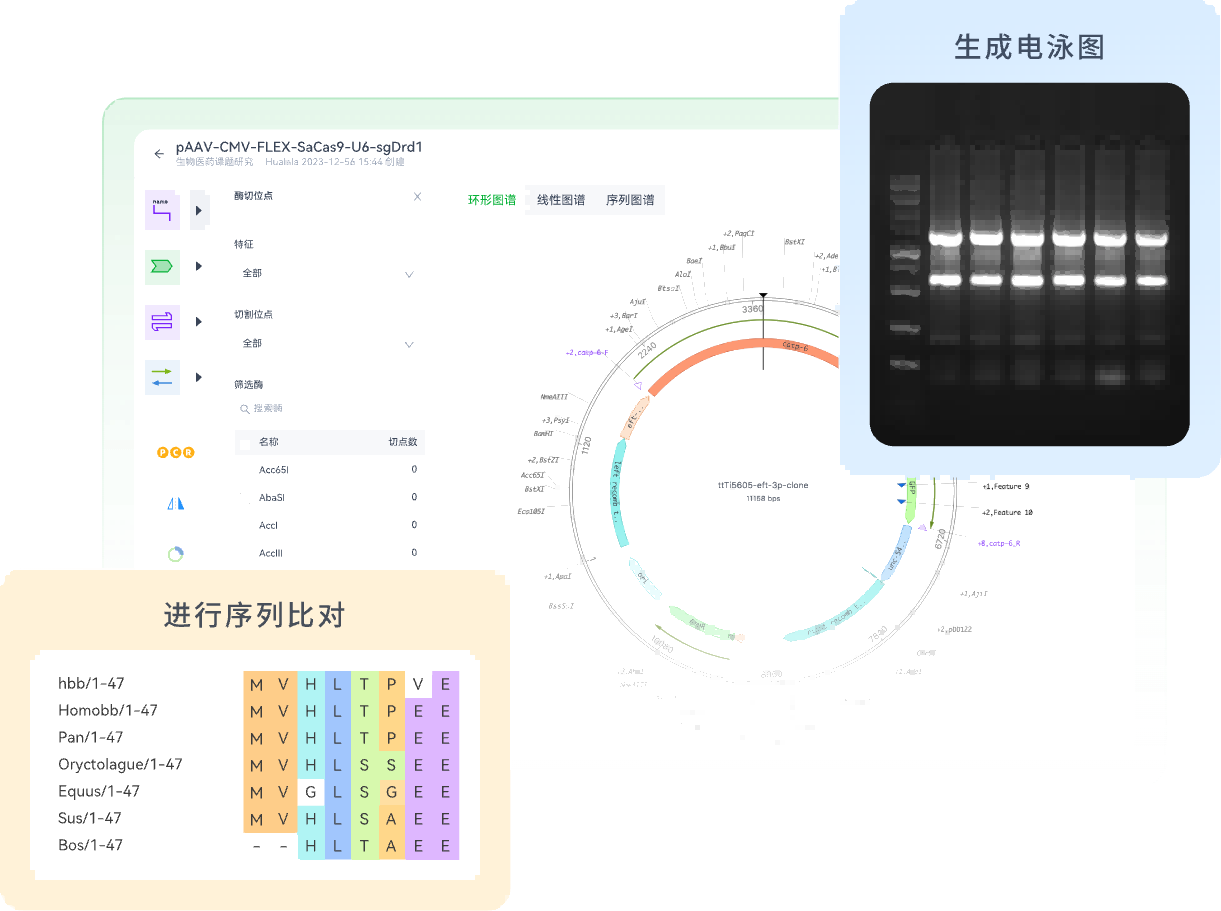
Every breakthrough in molecular biology starts with the same fundamental question: how does a stretch of nucleotides translate into a functional protein? The answer lies at the intersection of two powerful computational techniques — document alignment translation. This process involves aligning nucleotide or amino acid sequences and translating between genetic code and protein-level information to reveal biological meaning that neither approach can uncover alone.
In pharmaceutical R&D, academic genomics, and clinical diagnostics, document alignment translation has become a cornerstone of everyday workflows. Whether you are characterizing a novel gene, identifying conserved functional domains, or preparing regulatory documentation for a drug submission, the ability to align sequences accurately and translate them into interpretable biological context is non-negotiable.
This article explores the science behind document alignment translation, the tools that make it possible, and the strategies that top-performing laboratories use to integrate these analyses into efficient, collaborative research pipelines.
What Exactly Is Document Alignment Translation?
At its core, document alignment translation refers to the combined computational process of:
- Sequence alignment — arranging nucleotide or amino acid sequences to identify regions of similarity and difference.
- Biological translation — converting nucleotide sequences into their corresponding amino acid sequences based on the genetic code.
- Integrated interpretation — using aligned, translated data to infer gene function, evolutionary relationships, and structural properties.
Unlike standalone alignment or translation, document alignment translation treats these steps as a unified analytical workflow. The key insight is simple but profound: comparing protein-level sequences often reveals functional similarities that nucleotide-level comparisons miss, due to the redundancy of the genetic code.
Pairwise Alignment and Translation
Pairwise alignment compares two sequences to find the optimal matching of residues. When combined with translation, researchers can:
- Compare coding regions across species by aligning their protein products.
- Detect synonymous versus non-synonymous mutations.
- Identify frameshifts or premature stop codons that may affect protein function.
Common algorithms include Needleman–Wunsch (global alignment) and Smith–Waterman (local alignment), both of which remain widely used in both academic and industrial settings.
Multiple Sequence Alignment (MSA)
Multiple sequence alignment extends pairwise methods to three or more sequences. Tools such as TranslatorX take a particularly elegant approach: they translate nucleotide sequences into amino acids, perform protein-level alignment, and then back-transcribe to nucleotide coordinates. This strategy leverages the higher information content of amino acid sequences to produce more accurate nucleotide alignments — a perfect example of document alignment translation in practice.
Why Document Alignment Translation Matters in Real Research
Case Study: Identifying Conserved Functional Domains
A 2023 study published in Nature Communications demonstrated that integrating alignment with translation improved the detection of conserved protein domains by approximately 34% compared to nucleotide-only analysis. The research team aligned over 12,000 gene families from 47 bacterial genomes, translating each coding sequence before clustering.
The practical impact was significant: several previously uncharacterized genes were reclassified based on their conserved domain architecture, accelerating drug target identification for a pharmaceutical partner.
Case Study: Regulatory Document Translation in Pharma
Beyond pure sequence analysis, document alignment translation takes on a second meaning in the pharmaceutical industry: aligning and translating regulatory documents across languages with strict terminological consistency. Regulatory submissions for IND (Investigational New Drug), NDA (New Drug Application), and BLA (Biologics License Application) require precise, aligned translations — where every technical term must map consistently across documents.
This is where AI-powered translation systems designed for regulatory compliance have become invaluable. Platforms that combine terminology management with document alignment ensure that a phrase like "pharmacokinetic profile" is translated identically across hundreds of pages of supporting documentation.
Key Methods and Algorithms in Document Alignment Translation
BLAST and Its Role in Aligned Translation
The Basic Local Alignment Search Tool (BLAST) remains the workhorse of sequence comparison. When researchers submit a nucleotide query, BLAST can automatically translate it in all six reading frames and compare against protein databases — a built-in document alignment translation workflow that has powered genomics research for over three decades.
TranslatorX and the Back-Translation Strategy
TranslatorX is a specialized tool that explicitly implements the document alignment translation paradigm:
- Step 1: Translate input nucleotide sequences into amino acid sequences.
- Step 2: Perform multiple sequence alignment on the protein sequences (typically using MAFFT or ClustalW).
- Step 3: Map the protein alignment back onto the original nucleotide sequences.
This approach produces nucleotide alignments that respect codon boundaries, making them suitable for downstream phylogenetic analysis. Studies have shown that TranslatorX-based alignments result in more accurate phylogenetic trees compared to direct nucleotide alignment methods.
Structural Alignment Approaches
For proteins with known or predicted 3D structures, structural alignment methods such as DALI and TM-align compare protein folds directly. When combined with sequence-level document alignment translation, researchers can distinguish between convergent evolution (similar structures from different origins) and true homology.
How Leading Teams Integrate Document Alignment Translation into Their Workflows
Challenge 1: Fragmented Toolchains
Most laboratories rely on a patchwork of tools — one for alignment, another for translation, a third for visualization, and yet another for collaboration. This fragmentation introduces errors, version conflicts, and significant overhead.
Challenge 2: Data Consistency Across Teams
When multiple researchers work on the same project, ensuring that everyone uses the same reference sequences, alignment parameters, and translation frames is critical. Manual file sharing and email-based coordination inevitably lead to discrepancies.
Challenge 3: Regulatory Compliance
For pharma and biotech companies, every computational step must be documented, reproducible, and audit-ready. Ad-hoc analysis pipelines fail to meet GLP (Good Laboratory Practice) requirements.
Integrated Platforms: The Next Evolution of Document Alignment Translation
ZettaGene: Unifying Alignment, Translation, and Visualization
ZettaLab's ZettaGene platform addresses the fragmentation problem by integrating sequence alignment, biological translation, visualization, and editing in a single cloud-based environment. Research teams can align nucleotide sequences, translate them in all six reading frames, and compare protein-level conservation — all within one unified interface.
Key capabilities relevant to document alignment translation include:
- Sequence alignment and translation in one platform: No switching between BLAST, TranslatorX, and separate visualization tools.
- Real-time collaboration: Multiple team members can view and edit the same alignment simultaneously, with full version history.
- Enterprise-grade security: Data encryption, role-based access control, and audit trails satisfy GLP and GxP requirements.
- Primer design integration: After alignment and translation, researchers can design primers directly from the aligned view, ensuring specificity across related sequences.
For example, a molecular biology team working on antibody engineering might use ZettaGene to align dozens of variable region sequences, translate them to compare CDR motifs, and then design degenerate primers — all within a single session.
ZettaNote: Documenting the Analysis Process
While ZettaGene handles the computational side, ZettaNote provides a GLP-compliant electronic lab notebook where researchers can document every step of their document alignment translation workflow. Experiment records are automatically time-stamped, version-controlled, and searchable — meeting the documentation requirements of regulatory audits.
AI Translation Agent: Bridging Languages in Regulatory Submissions
ZettaLab's AI Translation Agent tackles the second dimension of document alignment translation — ensuring that regulatory documents maintain terminological consistency across languages. Built specifically for pharmaceutical submissions, it:
- Maintains a domain-specific terminology database for IND, NDA, and BLA documentation.
- Aligns translated documents with source documents to verify completeness and accuracy.
- Provides traceability for every translation decision, supporting regulatory inspection readiness.
Best Practices for Effective Document Alignment Translation
1. Always Translate Before Aligning Coding Sequences
The redundancy of the genetic code means that nucleotide-level alignment of coding regions can miss important functional similarities. Translating to amino acid sequences first — and then aligning — captures more biological signal.
2. Use Codon-Aware Alignment Tools
When nucleotide-level resolution is required (e.g., for phylogenetic analysis of coding regions), use tools like TranslatorX that perform protein-level alignment and back-translate. This preserves codon boundaries and produces more accurate results.
3. Validate with Multiple Reading Frames
Not all ORFs are obvious. Tools that translate in all six reading frames and compare against protein databases can reveal hidden coding potential, especially in newly sequenced genomes.
4. Document Every Computational Step
Regulatory compliance demands reproducibility. Integrated platforms that automatically log parameters, reference databases, and intermediate results save enormous effort during audits.
5. Maintain a Centralized Terminology Glossary
For teams working across languages or disciplines, a shared terminology glossary prevents inconsistencies — whether the task involves biological sequence translation or regulatory document translation.
The Future of Document Alignment Translation
AI-Driven Alignment and Functional Prediction
Machine learning models such as AlphaFold and ESMFold have revolutionized protein structure prediction. The next frontier is integrating these predictions with document alignment translation workflows: aligning sequences, translating them, predicting structures, and mapping conserved functional sites in a single automated pipeline.
Real-Time Collaborative Analysis
Cloud-native platforms like ZettaGene are making it possible for geographically distributed teams to perform document alignment translation collaboratively, with real-time synchronization and integrated version control. This model is rapidly replacing the traditional paradigm of local installations and file-based sharing.
Cross-Domain Applications
The principles of document alignment translation extend beyond molecular biology. Natural language processing researchers have adapted alignment algorithms to compare and align multilingual documents, maintaining sentence-level correspondence across translations — a parallel challenge with surprisingly similar computational foundations.
Conclusion: From Fragmentation to Integration
Document alignment translation is not a single technique but a unified analytical philosophy: align, translate, interpret, and collaborate. As biological data grows in volume and complexity, the teams that adopt integrated platforms — combining sequence alignment, biological translation, visualization, collaboration, and compliance-ready documentation — will be the ones that accelerate discovery.
Whether you are characterizing a novel gene family, preparing a multi-language regulatory submission, or engineering next-generation therapeutics, the tools and strategies outlined in this article provide a roadmap for turning raw sequence data into actionable biological insight. The era of fragmented toolchains is ending; the era of unified, AI-augmented document alignment translation has arrived.
Related Articles