Chemistry Lab Notebook: From Paper Record to Reproducibility Infrastructure
The Chemistry Lab Notebook Is No Longer Just a Record
For decades, the chemistry lab notebook was exactly what its name suggested: a bound stack of pages where researchers scribbled observations, pasted printouts, and hoped nothing spilled on their work. That role is changing fast. As chemical research generates more data than any individual can track mentally—high-throughput screening, multi-step synthesis logs, analytical spectra by the thousands—the lab notebook has shifted from a passive archive to active infrastructure. It now underpins three capabilities that modern chemistry cannot function without: reproducibility, regulatory compliance, and long-term knowledge retention.
This isn't a minor workflow upgrade. It's a structural shift in how laboratories manage their most important asset: experimental knowledge.
Why Reproducibility Demands More Than Paper
Chemistry has a reproducibility problem, and it's not new. When another group cannot replicate a published synthesis, the reasons often trace back to incomplete documentation—implicit knowledge that never made it onto the page, ambiguous concentrations, or skipped purification steps. A traditional paper chemistry lab notebook makes these gaps almost inevitable. Handwritten entries vary in detail. Printouts get detached. Conditions that seemed obvious at the bench go unrecorded.
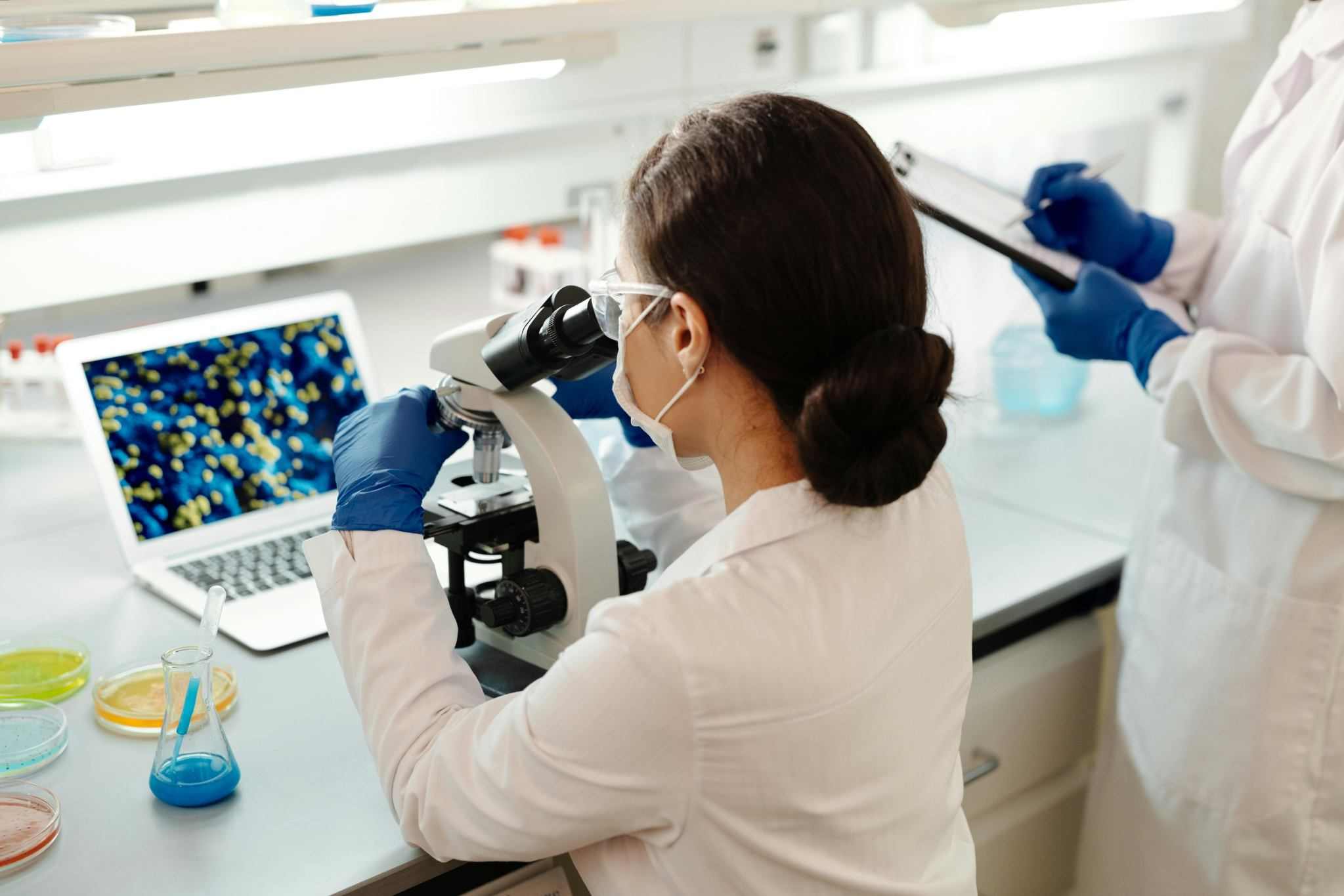
Electronic lab notebooks (ELNs) address this by enforcing structured data entry through templates that prompt researchers to capture critical parameters: reagent sources, lot numbers, temperature profiles, atmospheric conditions, and instrument settings. Automated data capture from analytical instruments—HPLC, NMR, mass spectrometers—eliminates transcription errors entirely. Version control and audit trails mean every change is tracked, so the question "did someone modify this result?" has a definitive answer.
The impact is measurable. Labs that adopt standardized ELN workflows report fewer repeated experiments and faster method transfers between team members. When a chemistry lab notebook functions as a structured data source rather than a freeform journal, reproducibility stops being a matter of individual diligence and becomes a system property.
Compliance: From Nice-to-Have to Non-Negotiable
In regulated chemistry environments—pharmaceutical development, contract research organizations, petrochemical quality labs—the lab notebook is a legal document. Regulatory frameworks including Good Laboratory Practice (GLP), Good Manufacturing Practice (GMP), and FDA 21 CFR Part 11 impose strict requirements on data integrity, traceability, and access control.
Paper notebooks can technically meet these requirements, but the burden is enormous. Every page needs witnessing, dating, and signing. Corrections must be single-line strikethroughs with initials. Physical storage must be secured, indexed, and retrievable for audits that may happen years later. The overhead is significant, and the risk of non-compliance from a single missed signature or a coffee-stained page is real.
A digital chemistry lab notebook handles compliance requirements programmatically: automated timestamps on every entry, cryptographic audit trails that log who changed what and when, role-based access controls that restrict who can view or edit sensitive data, and electronic signatures that are legally recognized under Part 11. The system enforces what paper relies on humans to remember. For organizations preparing IND, NDA, or BLA submissions, this isn't optional—it's infrastructure.
Knowledge Retention in a High-Turnover Environment
Chemistry research teams face a persistent challenge: institutional memory walks out the door when a postdoc leaves, a PhD student graduates, or a senior scientist retires. Paper notebooks technically stay in the lab, but finding specific information in a shelf of handwritten volumes is impractical. The data exists, but it's effectively lost.
A well-implemented chemistry lab notebook solves this by making experimental knowledge searchable and connected. Full-text search across thousands of experiments, cross-referencing between related protocols, linked datasets attached to their corresponding entries—these capabilities transform a notebook from a record-keeping exercise into an institutional knowledge base. When a new team member needs to understand why a particular protecting group was chosen three years ago, the answer is a search query away rather than a multi-day archaeological dig through lab shelves.
This matters especially in multi-site organizations. A pharmaceutical company running parallel synthesis programs in three countries needs knowledge to flow between sites without shipping physical notebooks across oceans. Cloud-based ELNs make this possible, with fine-grained permissions ensuring that sensitive intellectual property stays protected while collaborative data sharing remains fluid. Platforms like Zettalab are designed around this exact need—combining a GLP-ready electronic lab notebook (ZettaNote) with molecular biology tooling and team collaboration in a single cloud workspace, so that experimental design, execution documentation, and cross-site knowledge transfer stay connected rather than fragmented across disconnected tools.
The Case for Caution: Where ELNs Still Fall Short
The transition from paper to digital is not without real problems. Researchers report several persistent frustrations with current ELN systems. Integration gaps between ELNs and standard chemistry tools—ChemDraw for structure drawing, LIMS for sample tracking, SDMS for instrument data—force manual data transfers that introduce the very errors ELNs are supposed to eliminate. Vendor lock-in is a legitimate concern: if a provider goes out of business or raises prices, migrating years of structured data to another platform can be difficult or impossible, sometimes leaving labs with nothing more than static PDF exports.
Searchability, ironically, remains a weakness. Several studies have documented scientists repeating experiments because previous results in their own ELN were difficult to locate. The tools for recording data have outpaced the tools for finding and reusing it. Additionally, the physical reality of chemistry labs—corrosive fumes, wet benches, glove boxes—makes using laptops or tablets inconvenient and sometimes hazardous, creating situations where researchers still reach for paper first and transfer to the ELN later, introducing delay and potential information loss.
These limitations don't invalidate the shift toward digital lab notebooks, but they do mean that the transition requires careful tool selection, adequate training, and realistic expectations. A poorly chosen ELN can be worse than a well-maintained paper notebook.
The Trajectory Points Toward Infrastructure, Not Accessories
National research data initiatives are accelerating this shift. Germany's NFDI4Chem project, for example, is a government-funded effort to standardize electronic lab notebook use across all of chemistry, built on FAIR data principles—making research data Findable, Accessible, Interoperable, and Reusable. This is not a vendor marketing campaign; it's institutional recognition that the chemistry lab notebook has become research infrastructure.
The economics reinforce this direction. The cost of maintaining paper-based compliance systems in regulated environments—secure storage, manual auditing, dedicated quality staff for notebook review—often exceeds the cost of ELN subscriptions. When the digital option is both more capable and more cost-effective, adoption follows naturally.
For individual labs, the practical path forward is clear: evaluate ELN options against your specific workflow (synthesis-heavy labs need different features than analytical labs), prioritize integration with your existing instrument ecosystem, and plan for a transition period where both systems coexist. Solutions such as Zettalab's unified R&D platform—where ZettaNote handles structured experiment documentation with audit-ready exports while ZettaGene and ZettaCRISPR connect sequence design directly to lab records—illustrate how the tool landscape is converging toward integrated workflows rather than standalone notebook applications. The goal is not to digitize paper habits but to adopt a system that makes your chemistry lab notebook genuinely useful for the next scientist who needs to build on your work.
The chemistry lab notebook was once where you wrote down what happened. Now it's where your lab's knowledge lives, where your compliance records are maintained, and where your next breakthrough finds its foundation. Treat it like infrastructure, because that's what it has become.
Related Articles