Biotechnology Software Tools: Choosing What Actually Fits Your Lab Workflow
Why Biotechnology Teams Need Purpose-Built Software
Modern biotechnology moves faster than the spreadsheets and disconnected applications most labs rely on. From sequence editing and cloning simulation to regulatory documentation, every stage of R&D generates data that must be tracked, shared, and audited. Biotechnology software tools exist to close the gaps between experimental design, execution, and documentation—replacing fragmented toolchains with integrated workflows that reduce errors and accelerate discovery.
Whether you work in drug discovery, agricultural biotech, or academic molecular biology, the software you choose directly affects how fast your team can move from hypothesis to result. This guide breaks down the major categories of biotech software, highlights leading platforms in each, and explains what to look for when building your lab's digital stack.
Core Categories of Biotechnology Software Tools
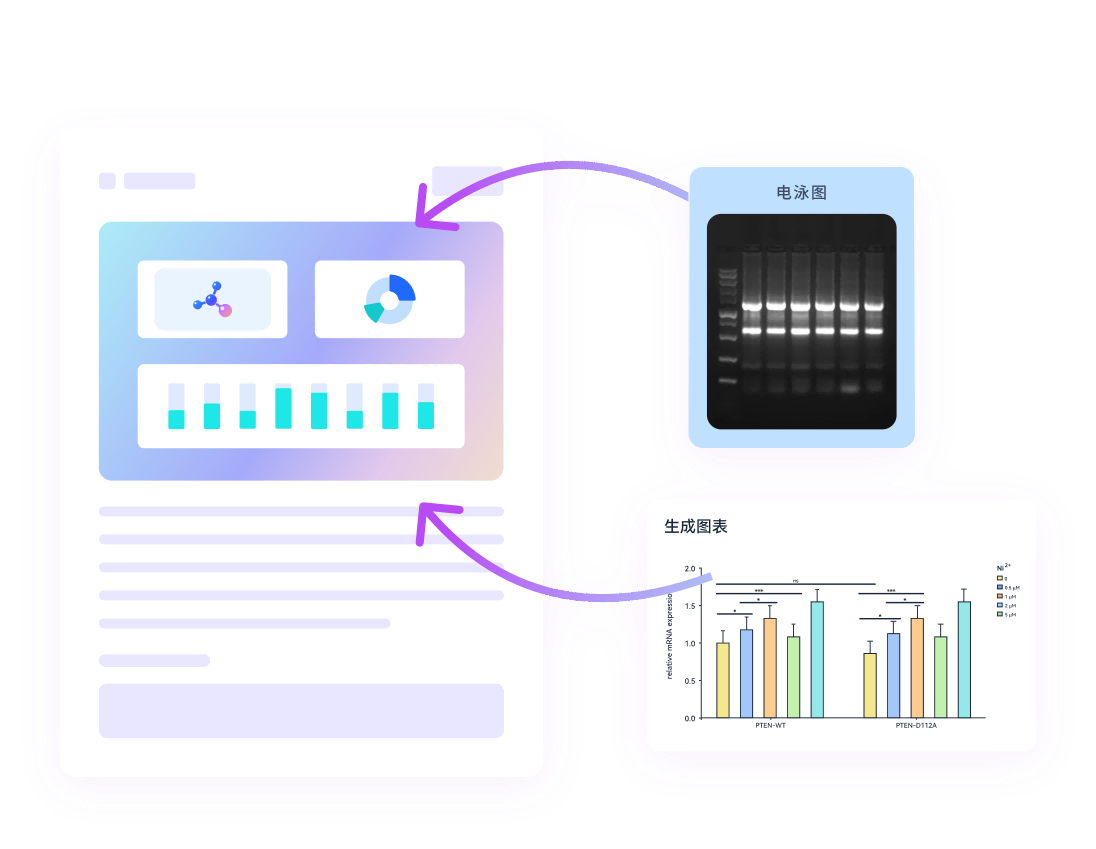
The biotech software landscape is broad, but most tools fall into a few essential categories. Understanding these categories helps teams identify gaps in their current workflow and evaluate replacements.
Sequence Analysis and Molecular Biology Platforms
Sequence analysis remains the backbone of computational biology. Tools like BLAST (Basic Local Alignment Search Tool) let researchers compare nucleotide and protein sequences against massive databases to identify homologous regions and functional similarities. For multiple sequence alignment, MAFFT handles large datasets with speed, while GATK (Genome Analysis Toolkit) provides comprehensive pipelines for variant calling in next-generation sequencing data.
Beyond basic alignment, modern molecular biology platforms have expanded into full design environments. SnapGene enables researchers to visualize DNA sequences, simulate cloning procedures, and plan experiments digitally before touching a pipette. Benchling offers a cloud-based alternative that combines sequence editing with plasmid design, collaboration, and data management. Geneious integrates cloning, genomics, primer design, and phylogenetic analysis into one desktop application, making bioinformatics accessible to researchers without programming backgrounds.
Electronic Lab Notebooks (ELN) and LIMS
Paper notebooks and shared drives create version chaos in multi-site teams. Electronic Lab Notebooks and Laboratory Information Management Systems solve this by providing structured, searchable, and auditable experiment records.
LabKey offers enterprise-grade biotech software for antibody research, including sample tracking, plate management, and a connected ELN that links notebook entries to samples and assay results. Their Biologics LIMS is used by organizations like Janssen Pharmaceuticals for cell line development workflows.
The value of an integrated ELN increases when it connects directly to molecular tools. Rather than switching between a sequence editor, a file share, and a word processor, teams can document experiments alongside the sequences and data they reference—maintaining traceability from design through submission.
CRISPR Design and Gene Editing Tools
CRISPR-Cas9 has made gene editing faster and cheaper, but designing effective guide RNAs (gRNAs) and analyzing editing outcomes still requires computational support. Dedicated CRISPR design tools help researchers select target sites, predict off-target effects, and design sequencing primers for validation.
In 2026, these tools are increasingly integrated into broader R&D platforms rather than existing as standalone applications. This integration means gRNA design, sequence validation, and experiment documentation happen in the same workspace, reducing handoff errors between design and execution stages.
AI-Powered Drug Discovery Platforms
Artificial intelligence is reshaping how biotech companies identify drug candidates. Platforms like Atomwise use deep learning to predict molecular interactions and assess drug efficacy, screening billions of compounds virtually. Insilico Medicine combines generative AI for molecule design with clinical data analysis through tools like PandaOmics and Chemistry42. NVIDIA Clara Discovery provides GPU-accelerated drug design infrastructure for teams that need to run large-scale molecular simulations.
AlphaFold 3 has been a breakthrough for structural biology, predicting three-dimensional protein structures and their interactions with ligands. This capability reduces the need for expensive experimental determination and guides mutagenesis studies with computational predictions that were impossible just a few years ago.
Key Factors for Evaluating Biotech Software
Choosing the right biotechnology software tools requires looking beyond feature checklists. The following factors determine whether a tool will actually improve your team's workflow or just add another layer of complexity.
| Factor | What to Evaluate |
|---|---|
| Integration Depth | Does the tool connect sequence design, documentation, and collaboration, or does it create another silo? |
| Collaboration Features | Can multiple team members edit simultaneously? Are permissions granular enough for multi-site programs? |
| Compliance Readiness | Does the ELN support audit trails, version history, and GLP-ready documentation? |
| Desktop vs. Cloud | Do bench scientists need offline desktop access? Is web-only sufficient for your workflow? |
| Cost Structure | Per-seat pricing can scale quickly for larger teams. Look for annual discounts and volume pricing. |
The Shift Toward Unified R&D Workspaces
A clear trend in 2026 is the move away from standalone tools toward unified cloud platforms that combine molecular biology, documentation, and team collaboration. The appeal is straightforward: fewer tool switches mean fewer data silos, fewer version conflicts, and faster handoffs between team members.
Platforms like Benchling have demonstrated this model by combining sequence editing with project management and compliance features. ZettaLab takes the unified approach further by integrating its ZettaGene molecular biology toolkit—including sequence visualization, plasmid construction, automated Gibson Assembly and PCR primer design, and cloning simulation—with ZettaNote (a GLP-ready ELN), ZettaCRISPR for gene-editing design, a scalable Plasmid Library with filters for CRISPR, fluorescent proteins, and viral packaging, and an AI Translation Agent for biopharma regulatory workflows like IND, NDA, and BLA documentation. Native desktop clients for Mac and Windows provide bench-friendly access alongside the cloud workspace, bridging the gap between desktop-first tools and browser-only platforms.
For teams managing vector engineering pipelines—from library search through cloning simulation, primer design, and final documentation—a unified workspace can eliminate the file-shuffling that traditionally slows projects down. Gene editing workflows benefit similarly when gRNA design, alignment validation, and ELN entries live in the same project space.
Open-Source Tools That Still Matter
Not every lab has the budget for commercial platforms, and many researchers in academia and early-stage startups rely on open-source alternatives. These tools remain essential parts of the biotech software ecosystem.
- Galaxy: A free, web-based platform for data-intensive biology that supports everything from read preprocessing to differential expression analysis. Its workflow system makes computational methods reproducible without requiring programming skills.
- Bioconductor: A vast collection of R packages for genomic data analysis, including RNA-Seq, epigenomics, and statistical learning. It emphasizes reproducible research through curated workflows and package standards.
- Biopython: Python libraries for sequence analysis, structural biology, and phylogenetic reconstruction. Ideal for researchers who want to build custom analysis pipelines.
- Primer3: A widely used open-source tool for designing PCR primers, hybridization probes, and sequencing primers with fine-grained parameter control.
Open-source tools work best when paired with structured documentation. A lab that runs Bioconductor pipelines in Galaxy but documents results in a shared ELN gains the cost advantage of open source without sacrificing traceability.
Emerging Capabilities to Watch
Several capabilities are reshaping what biotech software can do in 2026 and beyond:
- AI-powered bioprocess monitoring: Platforms like Invert's Bioprocess AI unify fragmented datasets across instruments to enable real-time monitoring and early deviation detection in biomanufacturing.
- Regulatory-grade AI translation: For teams filing IND, NDA, or BLA submissions across jurisdictions, AI translation agents that maintain terminology consistency and structural alignment across languages are becoming critical.
- Scalable plasmid libraries: Searchable databases of validated plasmids with rich filters—covering everything from CRISPR to fluorescent proteins to viral packaging—help teams select vectors faster and start projects sooner.
- Automated primer design: Tools that automate Gibson Assembly and PCR primer design reduce manual calculation errors and accelerate cloning workflows, especially for complex multi-fragment assemblies.
Making the Right Choice for Your Lab
The best biotechnology software tools are the ones your team will actually use consistently. Start by mapping your current workflow: identify where data is lost between tools, where version conflicts arise, and where compliance requirements demand better traceability.
For small academic labs, a combination of open-source tools plus a lightweight ELN may be sufficient. For biotech and pharma teams running multi-site programs with regulatory obligations, an integrated platform that connects molecular biology, documentation, and collaboration is increasingly the practical choice. Platforms like ZettaLab, which offers a Standard plan starting at $9.9/month with a 60-day full-feature trial, let teams evaluate the full workflow—from sequence design through audit-ready documentation—before committing.
The software landscape will continue evolving as AI capabilities mature and cloud platforms expand. The teams that benefit most will be those that choose tools fitting their actual workflow—not the ones with the longest feature list.
Related Articles