21 CFR Part 11 Compliant ELN: What Regulated Labs Should Evaluate
A 21 CFR Part 11 compliant electronic lab notebook (ELN) is most valuable when it enables research teams to document experiments in a manner that meets FDA standards for electronic records and electronic signatures—ensuring data integrity, auditability, and legal equivalence to paper records. For molecular biology and biotech teams operating in regulated environments, a Part 11 compliant ELN is not optional; it is foundational to regulatory success, inspection readiness, and research credibility. This guide covers what a 21 CFR Part 11 compliant ELN is, the core regulatory requirements, what to evaluate when selecting a compliant platform, and how Zettalab supports regulated research workflows.
What Is a 21 CFR Part 11 Compliant ELN?
A 21 CFR Part 11 compliant ELN is an electronic lab notebook designed to meet the criteria set forth in Part 11 of Title 21 of the Code of Federal Regulations—the FDA regulation that governs the use of electronic records and electronic signatures in FDA-regulated industries. The regulation applies to any system used to create, modify, maintain, archive, retrieve, or transmit records required under FDA regulations.
The core purpose of Part 11 is to ensure that electronic records are as trustworthy, reliable, and legally equivalent to paper records, with electronic signatures carrying the same legal weight as handwritten signatures. A compliant ELN does not simply claim to meet these standards—it incorporates specific technical and procedural controls that make compliance demonstrable: secure audit trails, role-based access controls, electronic signature capabilities, and system validation.
It is important to understand that Part 11 does not require laboratories to use electronic records. Rather, it defines the conditions under which electronic records are acceptable substitutes for paper. If a laboratory chooses to use an ELN, that ELN must meet the specific technical and procedural standards of Part 11. The validation burden rests entirely with the organization using the system.
Who Must Comply with 21 CFR Part 11?
21 CFR Part 11 applies to any FDA-regulated organization that uses electronic systems to create, manage, or store records required under FDA rules. This includes pharmaceutical companies, biotechnology firms, medical device manufacturers, contract manufacturing organizations (CMOs/CDMOs), and research institutions operating under FDA oversight.
For molecular biology and biotech teams, this means that any ELN used to document experiments that support IND, NDA, BLA, or other regulatory submissions must be Part 11 compliant. Similarly, ELNs used in GLP or GxP environments must meet these standards to ensure data integrity and regulatory acceptance.
Core Requirements of a 21 CFR Part 11 Compliant ELN
Organizations must address several key components to meet Part 11 compliance. Understanding these requirements is essential for evaluating any ELN platform.
Audit Trails (§11.10(e)). This is the primary audit trail provision for closed systems. A compliant ELN must generate secure, computer-generated, time-stamped audit trails that independently record the date and time of operator entries and actions that create, modify, or delete electronic records. Record changes must not obscure previously recorded information. Audit trail documentation must be retained for a period at least as long as required for the subject electronic records and must be available for agency review and copying.
Electronic Signatures (Subpart C). Each electronic signature must be unique to one individual and cannot be reused or reassigned. The identity of the individual signing electronically must be rigorously verified. Signatures must be linked to their respective electronic records to ensure they cannot be excised, copied, or otherwise transferred to falsify a record. Non-biometric signatures must employ at least two distinct identification components—typically a user ID and password.
Access Control and Security (§11.10(d), §11.10(g)). System access must be limited to authorized individuals through individual user accounts. Role-based access should limit users to necessary functions only, with password complexity, expiration, and lockout policies enforced. Authority checks must ensure that only authorized individuals can use the system, electronically sign a record, alter a record, or perform the operation at hand.
System Validation (§11.10(a)). Any software used to manage electronic records must be validated to ensure accuracy, reliability, consistent intended performance, and the ability to discern invalid or altered records. Validation should include Installation Qualification (IQ), Operational Qualification (OQ), and Performance Qualification (PQ), documented and following a risk-based approach.
Record Protection and Retention (§11.10(c)). Records must be protected to enable accurate and ready retrieval throughout the records retention period. Electronic records must be readily retrievable, viewable in a human-readable format, and secure from loss or corruption.
Ability to Generate Copies (§11.10(b)). The system must generate accurate and complete copies of records in both human-readable and electronic form suitable for inspection, review, and copying by the agency.
Why 21 CFR Part 11 Compliance Matters for Research Teams
For molecular biology and biotech teams, Part 11 compliance is not merely a regulatory checkbox—it is integral to research integrity, regulatory success, and intellectual property protection.
Regulatory Submission Readiness. Teams preparing IND, NDA, BLA, or other regulatory submissions must demonstrate that their electronic records meet FDA standards for data integrity and security. A Part 11 compliant ELN provides the technical foundation for audit-ready documentation, reducing the burden of retrospective record reconstruction when regulators request inspection.
Data Integrity. Data integrity failures consistently rank among the top FDA 483 observations. Records that are altered without detection, corrections that obscure original entries, and missing audit trails are frequently cited. A compliant ELN addresses these vulnerabilities through immutable audit trails, access controls, and electronic signatures that provide a tamper-evident record of who did what and when.
Inspection Readiness. Regulatory inspections can occur with little notice. A compliant ELN ensures that records are organized, searchable, and retrievable, enabling teams to respond to inspector requests efficiently. When audit trails are secure and complete, inspectors can trust that the records they review are complete and unaltered.
Intellectual Property Protection. In regulated biopharma, experiment records contain proprietary information about drug candidates, assay development, and manufacturing processes. A compliant ELN protects this intellectual property through secure authentication, role-based permissions, and comprehensive audit trails that establish clear ownership and chain of custody.
Key Features to Evaluate in a 21 CFR Part 11 Compliant ELN
Selecting a Part 11 compliant ELN requires assessing specific features that support regulatory requirements. Not all ELNs are designed for regulated environments, and features that suffice for academic research may be inadequate for GLP or GxP workflows.
Complete and Immutable Audit Trails. The ELN must automatically generate audit trails for every action: creation, modification, deletion, viewing, and signature. Audit trails must be immutable—no user, including administrators, should be able to alter or delete audit trail entries. The audit trail must capture the original entry, the new entry, the reason for the change, the date and time of the change, and the electronic signature.
21 CFR Part 11 Compliant Electronic Signatures. The ELN must support electronic signatures that meet Part 11 requirements: unique to each individual, requiring at least two distinct identification components, and permanently linked to the signed record with printed name, date/time, and signature meaning.
Granular Role-Based Access Control. The platform should support individual user accounts with configurable permissions that control who can view, edit, sign, or administer specific experiments, projects, or sections. Permission changes themselves should be audited.
Structured Templates with Version Control. Consistent documentation is essential for compliance. The ELN should support customizable templates that enforce documentation standards, with version control that tracks template changes over time.
System Validation Support. The ELN should be designed to support validation activities, including IQ, OQ, and PQ. The vendor should provide documentation and support for validation efforts—though the organization itself bears the validation burden.
Comprehensive Data Export. Regulated records must be producible in accurate and complete copies for inspection. The ELN should support export in standard formats (PDF, CSV) that preserve metadata, audit trails, and electronic signatures.
Standalone Documentation vs. 21 CFR Part 11 Compliant ELN
| Aspect | Standalone Documentation | 21 CFR Part 11 Compliant ELN |
|---|---|---|
| Audit Trail | Manual or none | Automatic, immutable, time-stamped |
| Electronic Signatures | Not supported | Part 11 compliant |
| Access Control | File-level or none | Granular, role-based, individual accounts |
| Validation | User-dependent | System validated, supports CSV |
| Record Retention | User-managed | Automated with retention policies |
| Regulatory Acceptance | Not accepted for Part 11 | Designed for regulatory equivalence |
| Inspection Readiness | Manual record assembly | Audit-ready, searchable records |
The comparison above highlights a fundamental difference in how compliance is achieved. Standalone documentation places the burden of compliance on individual researchers and manual processes, while a Part 11 compliant ELN embeds compliance into the platform itself.
Common Pitfalls in 21 CFR Part 11 Compliance
Even with the right ELN, compliance can fail if implementation is mishandled. Several pitfalls are worth anticipating.
Assuming Vendor Compliance Equals Organizational Compliance. A vendor may claim that their ELN is "compliant," but the organization remains responsible for validation, configuration, and procedural controls. "The vendor said it was compliant" is not an acceptable defense in a regulatory inspection.
Neglecting Audit Trail Review. Audit trails are not only for regulators—they are valuable tools for identifying issues and improving practices. Regularly review audit logs to ensure that access and modifications are appropriate.
Using Shared Accounts. Shared accounts break attribution and are not acceptable under Part 11. Every user must have an individual account with unique credentials.
Inadequate Correction Practices. Corrections that obscure the original entry are among the most common FDA 483 observations. Always preserve the original and document the reason for change.
Underestimating Validation. System validation is a non-negotiable requirement. Organizations must plan for and document validation activities.
How Zettalab Supports 21 CFR Part 11 Compliant ELN Workflows
Zettalab is designed as a cloud-based R&D workspace that prioritizes data integrity, auditability, and regulatory readiness. For teams evaluating a 21 CFR Part 11 compliant ELN, Zettalab offers several relevant capabilities.
ZettaNote provides a structured electronic lab notebook with comprehensive, immutable audit trails that meet the requirements of 21 CFR Part 11 §11.10(e). Every change to an experiment record is automatically captured with a timestamp and user identification, and audit trails cannot be modified by any user. The platform supports individual user accounts with configurable permissions, ensuring that every action is attributable to a specific researcher. ZettaNote is positioned as "GLP-Ready" and "audit-ready," with enterprise-level security designed to support regulated research scenarios.
ZettaFile provides team-friendly file storage with fine-grained permission management and version control. File versioning ensures that the history of document changes is preserved alongside experiment records, maintaining a complete audit trail for all research materials.
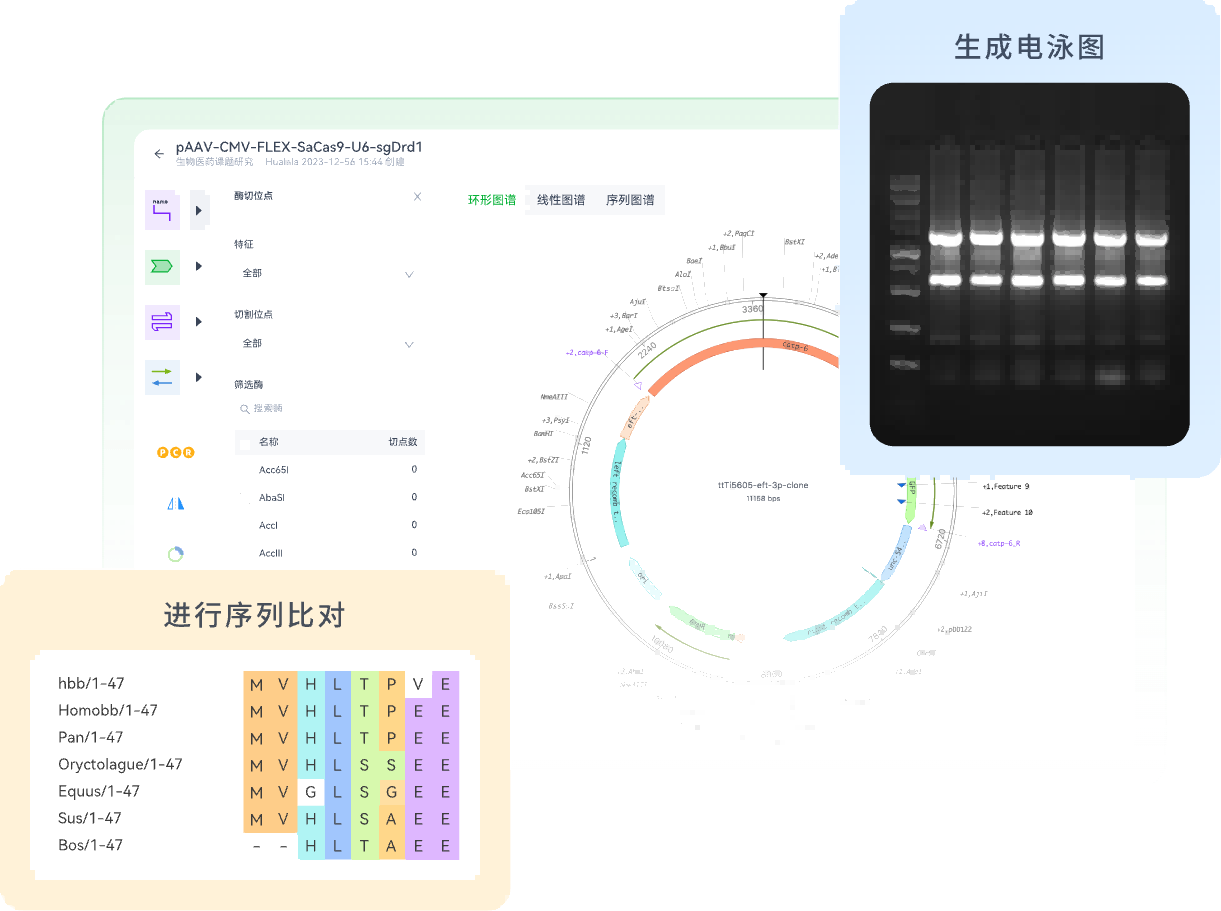
ZettaGene supports DNA sequence visualization, editing, plasmid construction, primer design, and sequence alignment. By keeping sequence design tools in the same audit-ready workspace as experiment records, ZettaGene enables researchers to maintain traceability between experimental design and documentation—a key requirement for data integrity in regulated environments.
AI Translation Agent provides regulatory-grade AI translation for global biopharma submissions, delivering high-accuracy document translation, terminology consistency, structural alignment, and enterprise-grade security for IND, NDA, and BLA submissions.
Together, these components support a workflow where Part 11 compliance is not an afterthought but an integrated part of the research process. Teams can design sequences, document experiments, store project files, and collaborate within an environment designed to support regulatory requirements and data integrity.
Implementation Considerations for 21 CFR Part 11 Compliant ELN Adoption
Adopting a Part 11 compliant ELN requires attention to both technical and organizational factors.
Establish Validation Protocols. A compliant ELN must be validated to ensure accuracy, reliability, and consistent performance. Develop a validation plan that includes IQ, OQ, and PQ. Document all validation activities and retain records for regulatory review.
Define Documentation Standards. Compliance depends on consistent documentation practices. Establish clear standards for how experiments should be documented, what information must be included, and how records should be organized. Templates in the ELN can enforce these standards.
Configure Permissions and Access Controls. Define role-based permissions that reflect the team's structure and regulatory requirements. Ensure that only authorized individuals can access, modify, or sign records. Regularly review and update permissions as team members join, leave, or change roles.
Implement Electronic Signature Policies. Establish written policies governing who may apply electronic signatures and what constitutes a valid signature event. Train team members on the proper use of electronic signatures and the legal significance of signing records.
Train Team Members on Compliance Practices. Even the most compliant ELN is vulnerable if users do not follow proper practices. Provide training on documentation standards, electronic signature use, audit trail awareness, and data integrity principles. Emphasize that compliance is a shared responsibility.
Prepare for Inspection. Ensure that the ELN can generate accurate and complete copies of records for inspection purposes. Test the export and review process regularly so that the team is prepared to respond to regulator requests efficiently.
FAQ
What is a 21 CFR Part 11 compliant ELN?A 21 CFR Part 11 compliant ELN is an electronic lab notebook designed to meet FDA standards for electronic records and electronic signatures. It incorporates secure audit trails, role-based access controls, electronic signatures, and system validation to ensure that electronic records are trustworthy, reliable, and legally equivalent to paper records.
What are the core requirements of 21 CFR Part 11 for an ELN?Core requirements include secure, computer-generated, time-stamped audit trails that record every action (§11.10(e)); electronic signatures unique to each individual with at least two identification components (Subpart C); role-based access controls limiting system access to authorized individuals (§11.10(d)); and system validation to ensure accuracy and reliability (§11.10(a)).
What is an audit trail under 21 CFR Part 11?An audit trail is a secure, computer-generated, time-stamped log that independently records the date and time of operator entries and actions that create, modify, or delete electronic records. Audit trails must be immutable—they cannot be modified by any user—and must be retained for the same period as the subject records.
What are the requirements for electronic signatures under Part 11?Electronic signatures must be unique to one individual and cannot be reused or reassigned. They must be verified with multiple authentication factors and linked to their respective electronic records so they cannot be excised, copied, or otherwise transferred. Non-biometric signatures must use at least two distinct identification components.
Does 21 CFR Part 11 require me to use an ELN?No. 21 CFR Part 11 does not require the use of electronic records. It defines the conditions under which electronic records are acceptable substitutes for paper. If you choose to use an ELN, it must meet specific technical and procedural standards.
What is system validation and why is it important?System validation ensures that an ELN is accurate, reliable, and performs consistently. It includes Installation Qualification (IQ), Operational Qualification (OQ), and Performance Qualification (PQ). The organization using the system bears the validation burden—vendor claims of compliance do not substitute for organizational validation.
How does Zettalab support 21 CFR Part 11 compliance?Zettalab's ZettaNote provides structured, audit-ready ELN documentation with immutable audit trails, role-based permissions, and enterprise-level security. ZettaFile adds secure file storage with versioning, and ZettaGene keeps sequence tools in the same compliant workspace—all designed to support regulated research workflows.
What are the most common FDA 483 observations related to ELNs?Common observations include missing audit trails on electronic systems, inadequate correction practices that obscure original entries, and failure to retain original data. Corrections that overwrite or delete electronic records without preserving the original are frequently cited.
Conclusion
A 21 CFR Part 11 compliant ELN is essential for research teams operating in regulated environments. The right ELN should provide immutable audit trails, Part 11-compliant electronic signatures, granular access controls, and support for system validation—all aligned with the requirements of 21 CFR Part 11 and ALCOA+ principles. Verification of immutability, individual user accounts, and regular audit trail review are equally important; compliance is achieved through the combination of platform capabilities and organizational practices.
Zettalab offers a cloud-based R&D workspace with ZettaNote for structured, audit-ready ELN documentation; ZettaFile for secure file storage with versioning; and ZettaGene for sequence design and analysis—all within an environment designed to support 21 CFR Part 11 compliance and regulatory requirements. Teams interested in exploring how a 21 CFR Part 11 compliant ELN can support their regulated research can start with a free trial or request a demo to see the platform in action.
Related Articles