Life Science Lab Notebook: Multi-Discipline Documentation
Life science research spans molecular techniques, cell culture, organismal studies, and field observations, often within the same institution or research program. This breadth creates documentation challenges that single-discipline lab notebooks were never designed to address. When records for different research domains live in separate systems or follow incompatible formats, connecting findings across disciplines becomes a manual and error-prone process. A life science lab notebook that supports cross-discipline documentation helps teams maintain coherent research narratives even as their work moves between molecular, cellular, and organismal levels.
What Distinguishes Life Science Documentation from Single-Discipline Notebooks
A lab notebook designed for a single discipline operates within well-defined boundaries. A molecular biology notebook tracks sequences, primers, and cloning experiments. A microbiology notebook records strain maintenance and growth conditions. Each follows the documentation logic of its field without needing to connect to records outside that scope.
Life science research, however, frequently crosses these boundaries. A drug discovery project may involve molecular target identification, cell-based screening, animal model validation, and tissue analysis. A genetics study may connect breeding records with molecular genotyping and phenotypic characterization across multiple organizational levels. Documentation that fragments across discipline-specific notebooks loses the connections between these stages.
A life science lab notebook addresses this by providing a unified documentation environment where records from different research domains coexist and connect. The notebook accommodates the documentation requirements of each discipline while maintaining cross-references that preserve the research narrative across domain boundaries. This unified approach is particularly valuable for institutions where research programs span multiple departments or where interdisciplinary collaboration is routine.
Cross-Discipline Traceability in Life Science Research
Traceability across research disciplines is one of the most demanding aspects of life science documentation. Within a single discipline, traceability follows a relatively straightforward path: experiment records link to their protocols, materials, and results. Across disciplines, the traceability chain must bridge different types of records, different naming conventions, and different documentation standards.
Consider a research program studying gene function. The molecular biology team generates sequence constructs and cloning records. The cell biology team tests expression in cell lines and documents microscopy results. The genetics team creates organismal models and tracks phenotypic outcomes. Each team's documentation is internally coherent, but connecting a phenotypic observation in the genetics records to the original construct design in the molecular biology records requires navigating across separate documentation systems.
A life science lab notebook that supports cross-discipline traceability provides linking mechanisms that connect related records across domain boundaries. Shared identifiers, such as project codes, specimen IDs, or construct names, serve as bridges between discipline-specific entries. The documentation system should make these connections navigable so that a researcher reviewing one record can trace its relationships to records in adjacent disciplines without reconstructing the chain manually.
This capability matters most when research outcomes face scrutiny. Publication reviewers, regulatory auditors, and internal quality teams need to follow the documentation chain from initial hypothesis through experimental validation across all disciplines involved. Fragmented documentation makes this traceability difficult and increases the risk of gaps that undermine research credibility.
Structuring a Template Library for Diverse Life Science Disciplines
Templates are where multi-discipline documentation either succeeds or fails. If each discipline uses entirely different template formats, cross-referencing becomes inconsistent and comparison across domains becomes impractical. If a single template is imposed across all disciplines, it inevitably fails to capture the specific data that each domain requires.
The solution lies in a tiered template architecture. A shared base layer provides universal fields that every life science discipline includes: experiment objective, materials, methods summary, results, and interpretation. This base layer ensures that all records share a consistent structural foundation, making cross-references meaningful and search results comparable regardless of discipline.
Discipline-specific extensions then add the specialized fields each domain needs. A molecular biology extension adds sequence references, primer details, and construct maps. A cell biology extension adds culture conditions, passage records, and imaging parameters. A microbiology extension adds strain identifiers, growth media, and incubation conditions. A genetics extension adds organismal stock numbers, crossing schemes, and genotyping results.
The governance of these extensions matters as much as their design. Without coordination, different groups within the same institution create overlapping or incompatible extensions that reintroduce the fragmentation the shared base was meant to prevent. A template governance process, managed by someone with visibility across disciplines, ensures that extensions remain distinct, well-maintained, and genuinely useful to the teams that rely on them.
Connecting Life Science Records to Domain-Specific Data Sources
Life science research generates data from a wide range of instruments and platforms. Sequencing instruments produce raw data files. Microscopy systems generate image stacks. Culture databases track cell line histories. Specimen repositories maintain sample inventories. Field equipment records environmental measurements and GPS coordinates. A life science lab notebook must either integrate with these data sources or provide practical mechanisms for researchers to associate their data with experiment records.
The challenge is not simply storing data but maintaining the connection between data files and the documentation that gives them context. A microscopy image without its associated experiment record loses interpretive value. A sequencing result disconnected from the sample preparation record becomes difficult to validate. Multi-discipline research amplifies this challenge because data from different domains follow different formats, metadata standards, and storage conventions.
A practical approach starts with identifying the data sources that matter most for the team's cross-discipline workflows. Molecular biology groups may prioritize connections to sequencing platforms and sequence analysis tools. Cell biology groups may focus on imaging system integration and culture database connectivity. Genetics teams may need links to breeding management systems and genotyping pipelines. Prioritizing the highest-value integrations and expanding over time prevents the documentation system from becoming an isolated repository disconnected from active research data.
File management for large datasets also requires attention. Life science research frequently involves microscopy images, sequencing files, and spectral data that exceed the storage assumptions of traditional notebook tools. A documentation system that accommodates these file types and links them to experiment records supports the practical reality of life science data volumes.
Scaling Documentation Across Multi-Discipline Life Science Teams
As life science organizations grow, the documentation system must scale across teams that span multiple disciplines. This introduces governance requirements that single-discipline adoption does not encounter.
Permission structures must reflect both discipline boundaries and cross-discipline collaboration. A molecular biology researcher may need full access to molecular records but read-only access to cell culture documentation. Collaborative projects that span disciplines require shared spaces with permission rules that differ from discipline-specific areas. Defining these structures before the user base grows large prevents disruptive restructuring later.
Naming conventions and metadata standards require agreement across disciplines. When each group uses different terminology for similar concepts, cross-discipline search and comparison become unreliable. Establishing shared conventions early, while the organization is small enough for direct communication, creates habits that persist as the team expands.
Data retention and export policies must account for the diverse regulatory and archival requirements of different disciplines. Molecular biology records may need to connect with patent documentation. Cell culture records may face cell line authentication requirements. Specimen records may have long-term archival obligations. A retention policy designed for one discipline may not serve another, and the documentation system must accommodate this variation.
Training and onboarding also become more complex in multi-discipline environments. New researchers need to understand not only how to use the notebook but also how their discipline's documentation connects with records in adjacent fields. Orientation programs that include cross-discipline documentation awareness help researchers understand their role in the broader research narrative.
How ZettaNote Supports Life Science Lab Notebook Requirements
ZettaNote provides structured documentation capabilities designed for research teams that work across multiple life science disciplines. Its template system, cross-referencing, annotations, and permission-aware collaboration support the unified documentation approach that multi-discipline life science research demands.
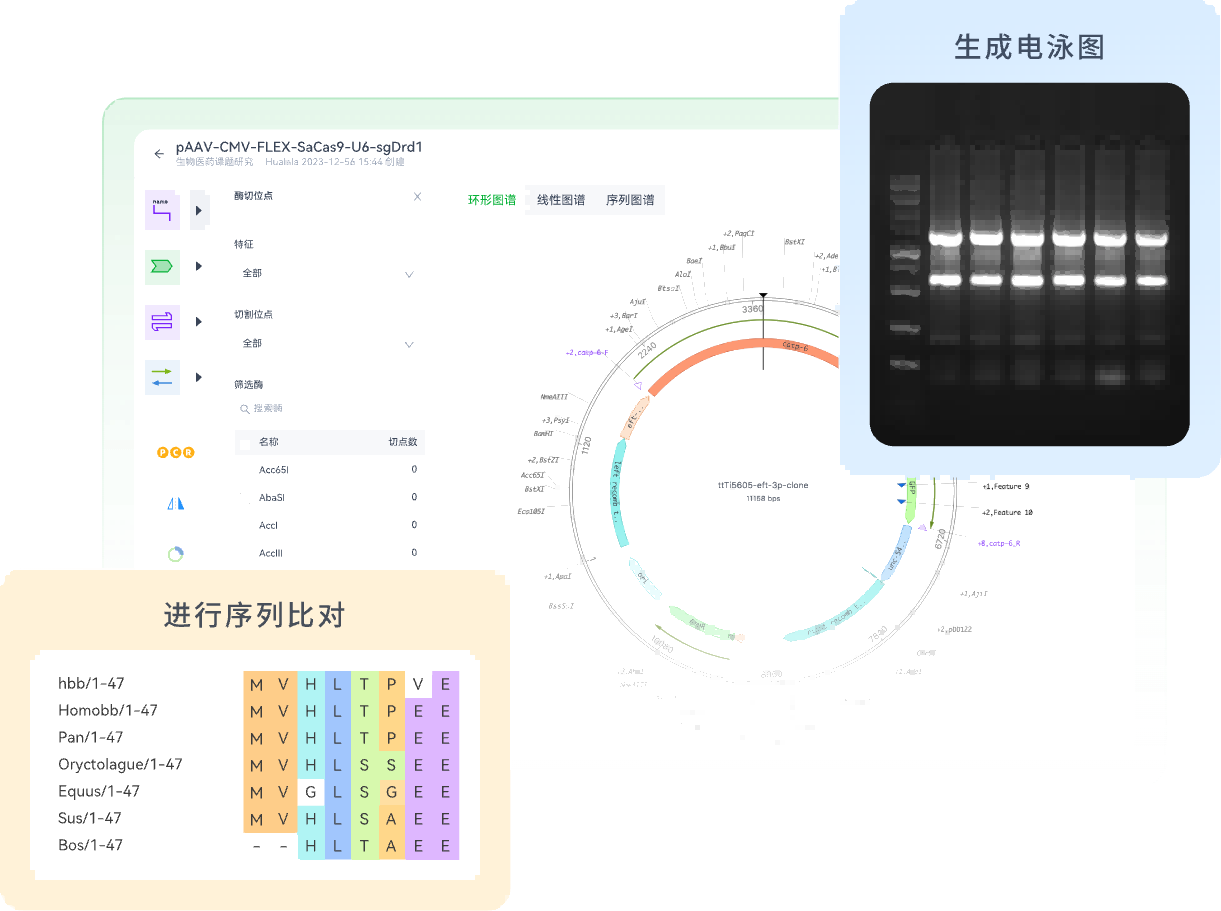
The Zettalab ecosystem extends this documentation foundation with specialized tools that connect experiment records to domain-specific data. ZettaGene provides molecular biology tools for sequence and plasmid management, keeping molecular records within the same workspace as broader experiment documentation. ZettaCRISPR supports gene editing design workflows, linking CRISPR construct records to experimental outcomes. ZettaFile manages large research files, including imaging datasets and sequencing data, connecting file storage to experiment records.
For life science teams evaluating a lab notebook platform, the relevant question is whether the system can handle the breadth of multi-discipline research without fragmenting records across disconnected tools or sacrificing the specialized depth each discipline requires. ZettaNote addresses this by providing documentation infrastructure that scales across life science domains while maintaining the cross-discipline connections that make research records coherent and traceable.
FAQ
What makes a life science lab notebook different from a general lab notebook?
A general lab notebook provides documentation tools designed for a single discipline or a generic workflow. A life science lab notebook must accommodate the documentation requirements of multiple research disciplines, including molecular biology, cell biology, microbiology, genetics, and organismal studies. The key difference is cross-discipline traceability: the ability to connect records across domains so that findings at one level of biological organization remain linked to related work at other levels. Life science notebooks also need template flexibility that supports discipline-specific data while maintaining a consistent structural foundation across the organization.
How do life science teams manage templates across different research disciplines?
A tiered template approach works best for multi-discipline life science teams. A shared base layer provides universal fields such as objective, materials, methods, results, and interpretation, ensuring structural consistency across all records. Discipline-specific extensions add the specialized fields each domain requires, such as sequence references for molecular biology, strain identifiers for microbiology, or crossing schemes for genetics. Template governance is important: without coordination, different groups create overlapping or incompatible extensions that undermine cross-discipline consistency. A governance process with visibility across disciplines helps maintain a coherent template library.
What is the best way to transition from multiple discipline-specific notebooks to a unified system?
Transitioning should follow a phased approach that starts with cross-discipline projects where fragmentation causes the most problems. Identify the documentation connections that researchers currently struggle to maintain across separate systems and implement the unified notebook for those workflows first. Map the relationships between discipline-specific records to define cross-references and shared identifiers. As researchers experience the benefits of connected documentation for their most complex projects, adoption of the unified system for discipline-specific work tends to follow naturally. Forcing immediate migration of all records across all disciplines simultaneously increases resistance and documentation errors.
How does cross-discipline traceability work in a life science lab notebook?
Cross-discipline traceability connects related records across different research domains. For example, a phenotypic observation in a genetics record links to the breeding scheme, the genotyping assay records, and the molecular analysis that identified the variant. A life science notebook supports this through cross-references, shared identifiers such as project codes or specimen IDs, and relationship links between records. The goal is to enable researchers to navigate from any record to its connected records in adjacent disciplines without reconstructing the chain manually through text citations or separate spreadsheets.
What data sources should a life science lab notebook integrate with?
Integration priorities depend on the team's research focus. Molecular biology groups benefit from connections to sequencing platforms and sequence analysis tools. Cell biology teams need microscopy system integration and culture database connectivity. Genetics teams require links to breeding management and genotyping systems. Field biology groups need GPS data capture and specimen database connections. A practical approach is to audit which cross-discipline workflows generate the most data friction and prioritize those integrations first. File management for large datasets such as imaging files and sequencing data should also be considered as part of the integration strategy.
How do life science organizations handle documentation governance across multiple disciplines?
Multi-discipline governance requires policies on naming conventions, template versioning, permission structures, and data retention that account for the diverse requirements of each discipline. Permission structures should reflect both discipline boundaries and cross-discipline collaboration needs. Data retention policies must accommodate the regulatory and archival obligations of different research domains. Governance frameworks should be established before the documentation system scales beyond the first few groups. Training should cover both platform mechanics and the cultural expectation that documentation connects across disciplines, not just within them.
Conclusion
Life science research that spans multiple disciplines requires documentation infrastructure capable of maintaining coherence across diverse research domains. A life science lab notebook addresses this by providing unified documentation with cross-discipline traceability, tiered templates, and data source integration that reflect the reality of interdisciplinary research workflows. Teams that manage documentation as a connected system rather than a collection of discipline-specific silos build research records that are more navigable, more defensible, and more useful across the organization. ZettaNote provides the documentation foundation for this approach, with specialized tools that connect experiment records to molecular biology data, gene editing designs, and research files within the same workspace.
Related Articles