Research Record Software for Molecular Biology | Integrated ELN & Sequence Platform
Specialized research record software for molecular biology solves the unique workflow and documentation crisis plaguing cloning, CRISPR gene editing, cell line engineering, and plasmid construction labs: disjointed stacks of standalone sequence editors, blank electronic lab notebooks (ELNs), generic cloud storage drives, and handwritten paper notebooks create permanent data silos, broken design-to-bench traceability, unreproducible experimental results, and costly compliance gaps for academic groups, biotech startups, and regulated GLP preclinical teams.
Most molecular biology teams rely on fragmented toolchains: third-party plasmid design software for vector assembly, unstructured ELNs for static file attachments, personal laptop storage for gel and sequencing raw data, and inconsistent free-text logging formats across students and bench scientists. This disjointed workflow forces researchers to spend 40–60% of their weekly lab time on manual file exports, copy-paste sequence transcription, and cross-referencing disconnected records for manuscripts, grant audits, or investor due diligence. Worse, static outdated sequence attachments create untraceable version mismatches between in silico designs and wet-lab experiments, the leading root cause of failed cloning, inconsistent CRISPR editing efficiency, and rejected journal submissions.
Zettalab’s unified cloud R&D platform delivers a fully integrated research record software ecosystem engineered exclusively for molecular biology workflows, combining native ZettaGene plasmid design, ZettaCRISPR sgRNA/off-target analysis, ZettaNote structured electronic lab notebook, and ZettaFile inline raw data storage within a single connected workspace. This guide breaks down the non-negotiable core features of purpose-built molecular biology research record software, key pain points eliminated by unified connected systems, tangible scientific and operational ROI, and how Zettalab outperforms fragmented standalone lab software suites for all molecular research pipelines.
Unique Molecular Biology Workflow Pain Points Fixed by Dedicated Research Record Software
Molecular R&D follows a linear design-make-test-learn cycle fully dependent on bidirectional linkage between DNA sequence design and wet-lab experimental records — a requirement generic research record software and standalone ELNs cannot accommodate. Fragmented tool stacks create seven persistent lab bottlenecks:
1. Disconnected Sequence Design & Experimental Record Silos
Standard ELNs only support static FASTA, PDF, or screenshot attachments for plasmids and sgRNAs. Any post-hoc edits to vector backbones, protospacers, or insert fragments generate outdated static files that cannot auto-sync to lab logs. This creates untraceable version mismatches between the designed sequence and the actual construct used for transformation or transfection, breaking end-to-end experimental lineage and destroying research reproducibilityzettalab.a....
2. Unstructured Logging Omits Critical Molecular Quantitative Parameters
Blank or universal lab record templates lack dedicated structured fields for molecular workflow variables: vector:insert molar assembly ratios, restriction enzyme batch numbers, transfection concentrations, antibiotic selection durations, indel editing efficiency, and off-target screening metrics. Unregulated free-text logging omits these critical values, making failed cloning and CRISPR trials impossible to replicate or troubleshoot systematically.
3. Scattered Raw Validation Data Violates ALCOA+ Completeness Rules
Agarose gel images, Sanger/NGS sequencing chromatograms, colony screening photos, and DNA quantification exports are stored across personal laptops and generic shared drives, with no permanent binding to matching experiment records. This disconnect violates ALCOA+ “Complete and Available” data integrity standards, creating massive manual file-sorting workloads for manuscript supplementary data and grant audits.
4. No Centralized Institutional Molecular Knowledge Archive
Fragmented research records stored on individual user accounts are permanently lost after student graduation, postdoc rotation, or employee departure. New researchers spend months repeating failed cloning and editing trials simply because optimized assembly conditions, validated sgRNA sequences, and troubleshooting records cannot be located within disjointed tool stacks.
5. Generic Software Lacks Molecular Workflow-Specific Standardization
One-size-fits-all research record systems do not include pre-built cloning, CRISPR, or cell culture templates, forcing every team member to create custom logging formats from scratch. This generates inconsistent, incomparable datasets across lab cohorts, hindering cross-team pipeline collaboration and long-term plasmid library archiving.
6. Cumulative High Costs From Stacked Separate Software Subscriptions
Molecular labs typically pay multiple recurring fees for standalone sequence design tools, basic ELNs, and cloud storage platforms. Fragmented tool stacks inflate limited academic department and startup research budgets while multiplying data silos and manual cross-tool admin labor.
7. Compliance Traceability Gaps for Grants, Publications & GLP Inspections
Disjointed software generates separate, ununified audit trails across sequence editors, logging tools, and storage drives. Auditors, journal reviewers, and venture capital investors require a single continuous lineage from initial construct design to final sequencing validation — fragmented tool stacks cannot deliver this consolidated traceability without weeks of manual data reconciliation.
Must-Have Core Features of Purpose-Built Research Record Software for Molecular Biology
Truly specialized molecular biology research record software unifies design, logging, validation, and storage as native interconnected modules, with built-in molecular workflow guardrails absent from generic lab documentation platforms. Every platform must include these eight non-negotiable capabilities:
1. Native Bidirectional Sequence Design Integration (ZettaGene / ZettaCRISPR)
The defining feature separating molecular-focused research record software from generic ELNs: one-click live linkage between in-platform sequence design tools and experiment log records.
- Full plasmid construction, primer design, multi-fragment assembly simulation, sgRNA protospacer editing, and off-target risk scoring all occur within the same workspace as research logszettalab.a...
- All sequence metadata (vector ID, restriction sites, GC content, mutation variants, PAM positions) auto-populates structured template fields without manual copy-paste
- Real-time automatic sync propagates all post-design sequence edits to every linked experiment log entry, eliminating static outdated file attachment version mismatches
- Cross-reference hyperlinks connect precursor construct iterations, screening trials, and follow-up replicate experiments for full design-to-result traceability
2. Pre-Built, Modular Molecular Workflow Research Record Templates
Pre-configured standardized templates mirror the full linear molecular research pipeline, with locked ALCOA+ core compliance fields plus customizable auxiliary assay sections for lab-specific proprietary workflows:
- Cloning experiment template: Gibson, restriction, Golden Gate, multi-fragment assembly, colony screening, miniprep quantification
- CRISPR gene editing template: sgRNA design reference zone, transfection/electroporation parameters, editing efficiency quantification, off-target validation tables
- PCR & amplification template: thermocycler cycling conditions, primer sequences, gel electrophoresis labeling
- Cell culture & stable clonal line template: passage tracking, mycoplasma testing, selection cycle logging
- GLP-ready preclinical template: electronic signature locking, formal QA review blocks, long-term immutable data retention
Lab admins lock mandatory traceability fields to guarantee uniform team-wide recording, while adding custom fields for specialized viral vector, base editing, or high-throughput screening workflows.
3. Permanent Inline Raw Data Binding (ZettaFile Integrated Storage)
Fixed dedicated raw data attachment zones embedded directly within each research record template, permanently binding all primary validation data to experimental context:
- Supported file formats: gel images, sequencing chromatograms, NGS FASTQ alignment reports, Qubit/Nanodrop quantification CSV exports, cell microscopy photos
- All attached raw data inherits identical tiered role-based access permissions as parent experiment records for IP security and ALCOA+ compliance
- No external generic drive storage required; raw data is indexed and searchable alongside linked sequence and log metadata
4. Unified Cross-Module Immutable Audit Trail Compliance Backbone
A single consolidated, non-deletable audit trail captures every user action across sequence design, research record editing, and raw data uploads:
- Real UTC timestamping and unique user ID attribution for every modification, comment, and file attachment
- Automatic before/after version snapshots preserve original unaltered record and sequence data for full regulatory traceability
- One-click consolidated audit report exports spanning the complete design-make-test-learn molecular lineage for grant, investor, and GLP inspections
- Fully aligned with ALCOA+ data integrity principles and FDA 21 CFR Part 11 electronic record/signature requirements for regulated preclinical labs
5. Lab-Owned Centralized Cloud Archive for Permanent Knowledge Retention
All sequence designs, research records, and raw validation data reside in PI/founder-managed shared project folders, independent of individual researcher user accounts. When students, postdocs, or team members depart, the full proprietary molecular research lineage remains fully searchable and accessible to the lab group, eliminating irreversible loss of optimized cloning and editing protocols.
6. Collaborative Cloud Workflows for Distributed Molecular Teams
Browser-based cross-device access supports on-bench real-time logging, remote data analysis, and hybrid multi-site lab groups:
- Inline threaded commenting tied directly to specific sequence variants, log steps, or raw gel files for PI/senior researcher remote review
- Tiered role-based permissions separating student data entry, postdoc template customization, and admin compliance governance
- Shared lab-wide plasmid libraries and standardized protocol archives embedded within the research record ecosystem
7. Balanced Standardization & Customization Governance
Dual-lock template architecture delivers the critical middle ground for molecular research teams: locked core ALCOA+ traceability fields guarantee audit-ready baseline data across all users, while auxiliary workflow sections remain fully editable for exploratory novel assays, proprietary screening pipelines, and evolving molecular construct designs.
8. One-Click Consolidated Publication & Audit Export Functionality
Structured research record templates generate self-contained PDF export packages combining linked sequence design history, complete experimental logs, labeled raw validation data, and condensed audit trail summaries. Molecular researchers instantly compile journal manuscript supplementary data, grant audit archives, and investor due diligence data room deliverables without weeks of manual cross-file sorting.
Core Scientific & Business ROI of Unified Molecular Biology Research Record Software
1. Eliminate Unreproducible Molecular Research Results
Native sequence-log linkage and standardized quantitative template fields capture every variable impacting cloning assembly and CRISPR editing efficiency. Any bench scientist can fully replicate past successful vector construction and gene editing trials without guesswork, drastically cutting reagent waste and redundant failed experiments.
2. Accelerate Journal Manuscript Submission & Peer Review
Modern genetics and molecular biology journals mandate full end-to-end experimental traceability, complete sequence design records, labeled gel validation data, and off-target specificity analysis. Unified research record software organizes all required publishable data in consolidated export packages, cutting months of manual supplementary data compilation work.
3. Streamline Grant, Investor & Regulatory Audit Preparation
Fully attributable, continuous design-to-result lineage consolidated in single exportable packages satisfies grant data retention rules, VC technical due diligence requirements, and GLP preclinical inspection standards, eliminating weeks of disjointed document sorting across separate software tools.
4. Protect Proprietary Molecular IP & Simplify Patent Filing
Every research record captures full user attribution, real-time timestamps, and linked construct design history, creating legally defensible lab documentation of invention development timelines. Complete traceable molecular records streamline patent drafting, FTO analysis, and resolve inventorship disputes during funding or partnership negotiations.
5. Reduce Cumulative Lab Software Operating Costs
All-in-one unified research record platforms eliminate overlapping recurring subscriptions for standalone plasmid editors, basic disjointed ELNs, and generic cloud storage drives, drastically lowering cumulative SaaS overhead for cash-limited academic labs and seed-stage biotech startups.
6. Shorten New Researcher Onboarding Time
Pre-built standardized molecular workflow templates, native sequence sync automation, and centralized lab archives eliminate months of undocumented protocol training for incoming graduate students and new bench hires, reducing documentation errors and accelerating productive lab work.
Zettalab: Integrated Research Record Software Built Exclusively for Molecular Biology
Unlike generic ELN platforms that treat sequence design and raw data storage as afterthought add-ons, Zettalab’s unified cloud R&D platform is engineered from the ground up as connected research record software for molecular cloning, CRISPR gene editing, and cell engineering pipelines. The fully integrated Zettalab ecosystem delivers all core molecular-focused research record capabilities in a single subscription:
1. Native ZettaGene & ZettaCRISPR Sequence Design Integration
Zettalab’s exclusive bidirectional sequence-log connectivity eliminates static file attachment silos, the primary flaw of competing standalone ELNs. Researchers design vectors, primers, and sgRNA guides within the platform’s molecular design modules, then one-click link full iteration history directly into dedicated research record template sequence reference zones. All real-time sequence edits automatically propagate to every linked experiment log entry to eliminate version mismatch riskszettalab.a....

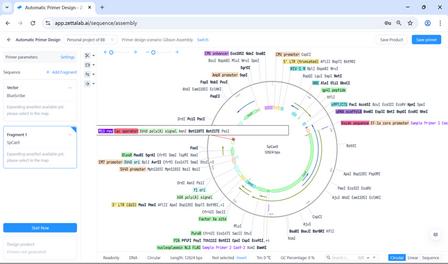
ZettaGene plasmid design interface
2. Pre-Built Molecular Workflow Research Record Templates
ZettaNote ships fully validated cloning, CRISPR, PCR, and cell culture research record templates pre-configured with locked ALCOA+ compliance core fields and dedicated native sequence linkage modules. Lab admins customize auxiliary assay sections for proprietary viral vector, base editing, or high-throughput screening workflows without rewriting foundational traceability architecture.
3. ZettaFile Inline Raw Data Binding for Complete Validation Traceability
All gel images, sequencing chromatograms, and functional assay exports attach inline within matching research record entries, permanently bound to full experimental context. Attached raw data inherits synchronized tiered access permissions aligned with lab IP security policies, fully satisfying ALCOA+ “Complete and Available” raw data retention requirements without scattered personal device storage silos.
4. Single Unified Cross-Module Immutable Audit Trail
Every sequence design edit, research record parameter modification, raw data upload, and team peer comment generates one non-deletable UTC-timestamped audit trail with full user attribution. Automatic record snapshots preserve original baseline experimental data, generating fully defensible audit summaries for academic grant reviews, biotech investor data rooms, and regulated GLP preclinical inspections.
5. Lab-Owned Centralized Molecular Archive to Prevent Knowledge Loss
All research records, customized template variants, and linked sequence assets live in founder/PI-controlled shared cloud project folders, independent of individual scientist user accounts. During student graduation, team rotation, or employee departure, the full proprietary molecular research lineage remains intact, searchable, and reusable for ongoing pipeline optimization.
6. Tiered Academic & Startup-Focused Pricing
Zettalab offers dedicated discounted subscription tiers for university molecular labs and early-stage biotech startups, plus extended 60-day free trial periods for PIs and lab managers to fully test the complete integrated research record ecosystem before committing to a subscription, accommodating constrained research budgets without sacrificing core molecular integration functionality.
Fragmented Traditional Molecular Lab Workflow vs Zettalab Integrated Research Record Software Workflow
Legacy Disjointed Tool Stack Workflow (High Silo & Reproducibility Risk)
- Design plasmids and sgRNA in third-party standalone sequence software, export static outdated FASTA/PDF files for manual attachment
- Record cloning/CRISPR parameters in unstructured blank ELN pages or paper notebooks, omitting critical quantitative molecular variables
- Gel, sequencing, and DNA quantification raw data stored on personal laptops, permanently lost after team turnover
- No standardized cross-team logging templates creating inconsistent, incomparable molecular datasets
- Weeks of manual cross-file reconciliation required for manuscript supplements, grant audits, and patent drafting
- Cumulative recurring costs from stacked separate sequence editor, cloud storage, and basic ELN software subscriptions
Zettalab Unified Molecular Research Record Workflow (Traceable & Cost-Effective)
- Complete all vector, insert, and sgRNA design in native ZettaGene/ZettaCRISPR molecular modules
- One-click auto-link full live sequence iteration history into pre-built standardized molecular research record templates
- Log all transfection, assembly, screening, and validation parameters in locked ALCOA+ structured fields contemporaneously during bench work
- Attach all gel, sequencing, and functional raw validation data inline via integrated ZettaFile storage
- Unified cross-module immutable audit trail auto-captures every design edit, research record modification, and file upload
- One-click export consolidated traceable PDF packages combining linked sequence history, complete research logs, and labeled raw data for publications, grants, and regulatory review
Molecular Biology Research Record Software Evaluation Checklist
- Does the platform offer native bidirectional linkage between molecular sequence design tools and research experiment records?
- Are pre-built dedicated templates available for core molecular workflows (cloning, CRISPR, PCR, cell culture)?
- Is inline raw data storage permanently bound to matching research record entries without external drive silos?
- Does the system generate a single unified cross-module audit trail covering sequence, log, and raw data actions?
- Can core ALCOA+ traceability compliance fields be locked to standardize team-wide molecular recording?
- Are all lab molecular data assets archived in PI/lab-owned shared folders to prevent permanent knowledge loss during turnover?
- Does the platform offer affordable tiered pricing for academic molecular labs and seed-stage biotech startups?
- Is the software fully scalable from non-regulated academic discovery to GLP-ready preclinical molecular pipelines?
FAQ
1. Why can’t generic standalone ELNs serve as sufficient research record software for molecular biology labs?
Generic ELNs lack the two most critical molecular biology capabilities: native live sequence design sync and workflow-specific structured cloning/CRISPR template architecture. Static file attachments create permanent design-bench traceability mismatches, while blank unstructured log pages generate inconsistent, incomplete molecular data that breaks reproducibility and audit compliance standards.
2. How does integrated research record software improve molecular research reproducibility?
Unified platforms auto-populate full sequence metadata, standardize quantitative reaction parameter recording, permanently bind validation raw data to experimental context, and document all troubleshooting iterations in dedicated template sections. Every molecular experiment retains a complete, unbroken design-to-result lineage that any researcher can replicate without missing critical workflow variables.
3. Is Zettalab’s research record software suitable for both academic student labs and GLP-regulated biotech preclinical teams?
Yes. The core integrated molecular research record architecture fits all molecular lab types. Academic labs leverage lightweight flexible exploratory logging and student knowledge retention features for grant-audit-ready publishable data, while biotech preclinical teams unlock additional GLP modules (electronic signature locking, annual system validation) without platform migration or data reconstruction.
4. Can integrated molecular research record software cut lab software budget expenses?
Absolutely. Zettalab’s all-in-one ecosystem unifies sequence design, structured research logging, and raw data storage within a single subscription, eliminating overlapping recurring costs for separate plasmid editors, generic cloud drives, and disjointed standalone ELN platforms for cash-limited academic and startup molecular labs.
5. How does integrated research record software simplify molecular patent filing and IP protection?
Every research record captures full user attribution, real-time timestamps, and linked sequence design iteration history, creating complete, legally defensible documentation of molecular construct invention timelines. Standardized traceable records streamline patent drafting, FTO analysis, and resolve inventorship questions during investor or commercial partnership negotiations.
Closing Thoughts
For modern molecular biology labs focused on plasmid construction, CRISPR gene editing, and cell line engineering, fragmented stacks of standalone sequence editors, generic ELNs, and disconnected storage drives create irreversible research silos, unreproducible experimental results, and costly compliance and IP risks. Purpose-built integrated research record software for molecular biology rearchitects lab documentation around the natural design-make-test-learn molecular discovery cycle, unifying sequence design, wet-lab logging, raw validation data, and team collaboration in a single connected, traceable workspace.
Zettalab’s unified cloud R&D platform delivers a fully integrated research record software ecosystem engineered exclusively for molecular biology workflows, combining native ZettaGene/ZettaCRISPR sequence linkage, pre-built standardized cloning and CRISPR research record templates, inline bound raw data storage, a single cross-module immutable audit trail, and lab-owned permanent molecular knowledge archives. Zettalab eliminates the core documentation pain points plaguing academic molecular groups, seed-stage biotech startups, and regulated GLP preclinical gene therapy vector labs, accelerating research pipeline progress, simplifying publication and audit preparation, and building long-term scalable ALCOA+/GLP-compliant molecular data infrastructure.
Molecular research teams seeking to replace disjointed lab tool stacks with unified, traceable research record software can schedule a personalized Zettalab molecular workflow demo to explore the integrated sequence-log research record ecosystem, test one-click plasmid/sgRNA linkage functionality, and review the full pre-built molecular template library, or start a free extended trial to deploy standardized connected research recording across their bench team.
Related Articles