Free Lab Notebook Software for Biotech Teams: What Startups and Small Labs Should Know
Free lab notebook software has become an increasingly viable option for biotech startups, small research teams, and academic labs looking to move away from paper notebooks without committing to expensive commercial platforms. For biotech teams operating on limited budgets—where every dollar counts toward reagents, equipment, and personnel—a free ELN can provide the structured documentation, searchability, and collaboration features that paper notebooks simply cannot offer. But "free" means different things to different providers, and understanding what you're actually getting is essential before making a choice. This guide covers the landscape of free lab notebook software for biotech teams, what to expect from different types of free offerings, the limitations you need to be aware of, and how to evaluate whether a free ELN is the right fit for your team.
What Is Free Lab Notebook Software?
Free lab notebook software encompasses two main categories: open-source ELNs that are free to use, modify, and self-host, and freemium commercial ELNs that offer a free tier with limited features alongside paid upgrades.
Open-source ELNs provide the source code for free, allowing institutions to deploy the software on their own servers with full control over data storage and customization. Examples include eLabFTW, openBIS, SciNote, and LabID. These solutions typically require technical expertise to install and maintain but offer complete data ownership, unlimited users, and no recurring subscription fees.
Freemium commercial ELNs offer a free version with core functionality included, while advanced features, additional storage, or expanded team capabilities require a paid subscription. Examples include Benchling, LabArchives, labfolder, and Lab Thread. These platforms are typically cloud-based, easy to set up, and require no technical maintenance.
The global ELN market is projected to grow significantly through 2032, with free offerings playing an important role—lowering the barrier to entry for academic and early-stage biotech researchers and serving as an on-ramp for teams that may eventually transition to paid plans as their needs grow.
Why Biotech Teams Need Lab Notebook Software
For biotech teams, the transition from paper to digital documentation is not merely an upgrade—it is a strategic necessity.
Reproducibility and Data Integrity. Biotech research generates complex, data-intensive experiments that paper notebooks cannot adequately capture. Digital records with structured fields, version control, and audit trails ensure that experiments can be reproduced and data integrity maintained. ELNs offer robust data security features, including user access controls, audit trails, and data encryption, minimizing the risk of loss, damage, or unauthorized modification.
Intellectual Property Protection. In biotech, research data is intellectual property. Digital records with timestamps and user attribution establish clear dates of conception—critical for patent prosecution. Electronic lab notebooks improve the traceability of experiments and can serve as proof of authenticity, originality, authorship, and anteriority of a result.
Team Collaboration. Biotech research is inherently collaborative. ELNs facilitate seamless collaboration among researchers—data, protocols, and observations can be easily shared with colleagues regardless of location, accelerating the pace of discovery.
Regulatory Readiness. For biotech teams that may eventually face regulatory scrutiny, documentation practices established early must support the audit trails and data integrity that regulators expect.
Open-Source Free ELN Options
Open-source ELNs offer complete freedom—no licensing fees, full control over data, and unlimited users—but require technical expertise to deploy and maintain.
eLabFTW is the most popular open-source electronic lab notebook for research labs. It allows you to conveniently document and organize experiments and offers a flexible database in which a wide variety of object types such as antibodies, plasmids, or cell lines can be managed. All work steps are logged in an audit-proof manner: data cannot be deleted and changes are recorded in a traceable manner using time stamps. eLabFTW is accessed via browser, supports unlimited users, and has been translated into 17 languages.
openBIS is a free, open-source ELN-LIMS platform developed at ETH Zürich, designed for managing scientific information and supporting research data workflows from bench to publication. It offers a flexible ELN-LIMS and FAIR data management platform for scientific research. openBIS is particularly suited for academic life science laboratories and supports sample and project tracking, omics data management, and FAIR-compliant research data management.
SciNote is a free open-source electronic lab notebook that enables scientists to store, organize, and manage their research data. It is a platform for researchers in academia and industry who need an ELN with inventory management and project management capabilities. SciNote's modular design enables interoperability with various lab instruments and existing software.
LabID is an open-source web-based platform for research data management in life science institutes, featuring sample and dataset management, an inventory management system, and an electronic lab notebook. It also features a "workflow integration" to keep track of the execution of workflows such as Galaxy or Nextflow.
CloneCoordinate is a free, open-source electronic laboratory notebook specifically designed for cloning and fully implemented in Google Sheets. By maintaining a real-time, automatically prioritized task list, a uniform physical sample inventory, and standardized data structures, CloneCoordinate enables productive, collaborative cloning for individuals or teams.
Freemium Commercial ELN Options
Freemium commercial ELNs offer easy setup, cloud-based access, and built-in features—but with user limits, storage caps, and feature restrictions.
Benchling is one of the most widely used free ELN platforms in molecular biology. Its academic plan includes the Electronic Lab Notebook, Molecular Biology suite, CRISPR tools, primer design, sequence alignments, and basic collaboration features. The academic plan is completely free and designed specifically for individual academics, university labs, and classes. Benchling AI is now available to all scientists with free access for academic scientists. However, advanced automation features are locked behind enterprise-tier pricing plans.
LabArchives offers a free edition that allows users to own up to two notebooks, upload individual file attachments up to 25MB, and supports up to 1GB of total storage across the account. The free edition can easily be upgraded to paid Professional Edition or Enterprise Accounts. LabArchives is a cloud-based ELN that allows users to access data from anywhere with an internet connection.
labfolder is an electronic lab notebook that helps to document, organize, and share research data. The free version offers unlimited entries and projects, unlimited file formats upload, one group with a maximum of three scientists, full audit trail, and automated time stamps. The free version includes 3GB of storage for projects and data. Users consistently praise labfolder for being "easy to manage experiment data, even in group projects" and "free for small teams, affordable for larger groups," with protocol templates saving significant time.
Lab Thread launched a free version of its Unified Lab Software Platform in March 2026, available to academic and non-profit researchers worldwide. Academic users can access a DNA sequence viewer, an electronic notebook system, and accompanying templates that remove the need for extensive set-up processes. The platform also offers in-depth project management functionality, allowing teams to view and record methods, data, DNA constructs, and experimental analysis digitally. The academic version is available to small academic and non-profit labs of up to five users.
TeselaGen offers a Community Edition that is completely free. In Community Edition, you can use the Electronic Laboratory Notebook, the Molecular Biology Toolkit, and the Registry Toolkit. However, enterprise-level features such as Barcodes and Labs and Projects sections are only available for commercial accounts.
What to Look for in a Free Lab Notebook for Biotech Teams
When evaluating free lab notebook software for a biotech team, consider these factors.
Sequence Data Integration. For molecular biology and biotech labs, sequence data integration is essential. Does the platform support FASTA files, plasmid maps, primer sequences, and alignment results? Benchling offers built-in DNA sequence alignment and primer design. Lab Thread includes a DNA sequence viewer. If you work with sequences, prioritize platforms that support them.
Storage and User Limits. Free versions often cap storage and users. LabArchives offers 1GB total storage and 25MB per file. labfolder offers 3GB storage and a maximum of three scientists per group. Lab Thread limits free access to five users. Ensure the limits align with your team's needs.
Data Ownership and Portability. Understand the terms of service. Can you export your data in standard formats? What happens if you stop using the platform? With open-source solutions, data ownership is clear—you control your own data. With freemium platforms, it's essential to understand what happens to your data if you stop paying or if the platform changes its pricing model.
Collaboration Features. Does the platform support team collaboration? Can multiple researchers work on the same experiment record? Are there commenting and review workflows? For biotech teams, collaboration is not a luxury—it is essential.
Audit Trails and Compliance. If your team may eventually face regulatory scrutiny, consider whether the platform supports audit trails, access controls, and data encryption. ELNs offer robust data security features, including user access controls, audit trails, and data encryption, minimizing the risk of loss, damage, or unauthorized modification.
Scalability. If your team grows, can the platform grow with you? Free tiers are often entry points to paid plans. Understand the upgrade path and costs before committing.
Free vs. Paid: Understanding the Trade-offs
| Aspect | Free Version | Paid Version |
|---|---|---|
| User Limits | Often restricted (1-5 users) | Unlimited or expanded |
| Storage | Limited (1GB-3GB) | Expanded (100GB+ per user) |
| Features | Core documentation only | Advanced features, integrations, automation |
| Support | Limited or community | Priority support |
| Compliance | Basic audit trails | Advanced compliance features (21 CFR Part 11) |
| Data Control | Vendor-managed | Full control (open-source) or enhanced |
How Zettalab Supports Biotech Teams—Including a Free Trial
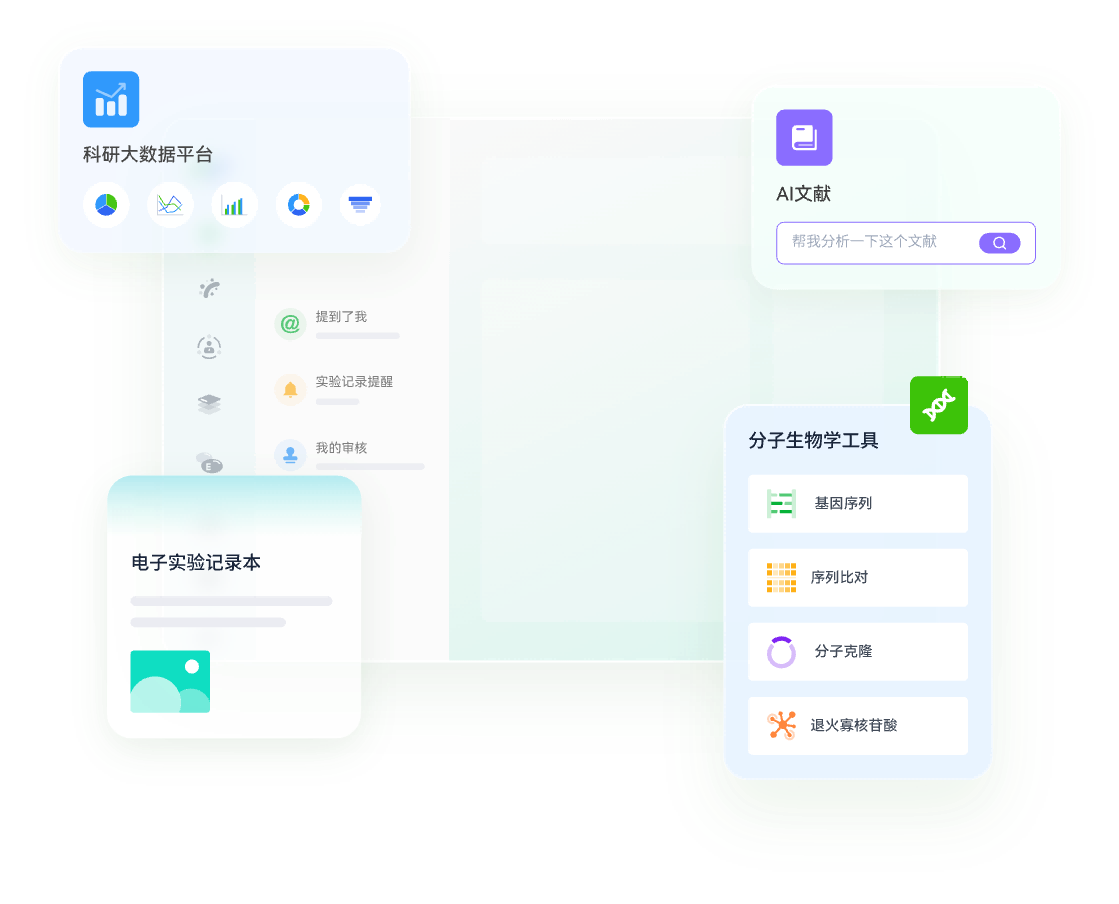
Zettalab is designed as a cloud-based R&D workspace that brings molecular biology tools, experiment documentation, file storage, and team collaboration into a unified platform. While Zettalab is a commercial platform, it offers researchers the opportunity to explore its capabilities through a free trial—allowing biotech teams to evaluate whether the platform fits their workflows before committing.
ZettaNote provides a structured electronic lab notebook with customizable templates that enforce consistent documentation across the team. Team members can create templates for common experiment types—cloning, PCR, protein expression, cell culture, sequencing—ensuring that every experiment captures the information most relevant to that workflow. The platform supports template versioning, automatic timestamps, and user attribution, enforcing the ALCOA+ principles of data integrity.
ZettaGene supports DNA sequence visualization, editing, plasmid construction, primer design, and sequence alignment. By keeping sequence design tools in the same workspace as experiment records, ZettaGene enables researchers to link experimental observations directly to the sequence data that informed them—eliminating the context switching that plagues disconnected workflows.
ZettaCRISPR provides CRISPR-Cas9 guide RNA design, sgRNA design, and sequencing primer design for gene editing experiments, with design outputs connecting directly to downstream sequence validation and experiment records.
ZettaFile provides team-friendly file storage with permission management, online document editing, and batch upload and download. Researchers can attach sequencing traces, gel images, protocols, and other files to experiment records, keeping all relevant materials in one place with clear access controls.
For biotech teams evaluating their options, Zettalab offers a free trial that provides access to the platform's core capabilities—allowing researchers to experience how an integrated, connected documentation system can transform their workflows before making a commitment.
FAQ
What is the best free lab notebook software for biotech teams?The "best" free ELN depends on your specific needs. Benchling is excellent for molecular biology labs needing integrated sequence tools. eLabFTW provides full-featured open-source ELN capabilities for teams with technical expertise. LabArchives offers a user-friendly interface suitable for general research. Evaluate based on your workflow, team size, and storage needs.
Is there truly free lab notebook software for biotech?Yes, but "free" often comes with limitations. Open-source ELNs like eLabFTW and openBIS are completely free to use and modify, with unlimited users. Commercial ELNs like Benchling, LabArchives, and labfolder offer free tiers with core functionality, though advanced features and expanded capacity require paid upgrades.
What are the limitations of free lab notebook software?Common limitations include restricted number of users (1-5 users in many free plans), limited storage space (1GB-3GB), missing advanced features like automation or integration, and limited customer support. Open-source solutions require technical expertise to deploy and maintain.
Can I use a free ELN for a biotech startup team?Yes, but consider your team size and growth trajectory. labfolder's free plan supports up to three scientists. Lab Thread's free version supports up to five users. For larger teams, you may need to consider paid plans or open-source solutions that support unlimited users.
What is the difference between open-source and freemium ELNs?Open-source ELNs are free to use and modify, with full control over data and unlimited users, but require technical expertise to deploy and maintain. Freemium commercial ELNs are cloud-based, easy to set up, and require no technical maintenance, but have user limits, storage caps, and feature restrictions.
Should biotech startups choose open-source or freemium ELNs?It depends on your team's technical expertise and growth plans. If you have IT support or technically skilled members and want full data control, open-source ELNs like eLabFTW or openBIS are excellent choices. If you prefer easy setup, cloud access, and don't mind eventual upgrades, freemium options like Benchling or LabArchives may be better.
What security features should a free ELN have?Look for user access controls, audit trails, data encryption, and secure storage. ELNs offer robust data security features, including user access controls, audit trails, and data encryption, minimizing the risk of loss, damage, or unauthorized modification.
How does Zettalab compare to free ELN options?Zettalab offers an integrated R&D workspace combining ELN documentation (ZettaNote), sequence design (ZettaGene), gene editing tools (ZettaCRISPR), and secure file storage (ZettaFile) in a unified platform. Biotech teams can explore these capabilities through a free trial to evaluate workflow fit before committing.
Conclusion
Free lab notebook software has made digital documentation accessible to biotech teams that might otherwise be unable to afford commercial ELN platforms. Open-source solutions like eLabFTW, openBIS, and SciNote offer complete control and zero recurring costs for teams with technical expertise. Freemium platforms like Benchling, LabArchives, and labfolder provide easy-to-use, cloud-based solutions with academic and small-team-friendly free tiers.
However, "free" comes with trade-offs: limited storage, restricted user counts, missing advanced features, and, in the case of open-source solutions, the need for technical expertise to deploy and maintain. The hidden costs of implementation time, training, and potential migration should be factored into any decision.
The most important consideration is not whether an ELN is free, but whether it actually supports the way your team works. A free ELN that is frustrating to use—one that is hard to configure, slows researchers down, or makes past results difficult to find—is not a good value at any price. The goal is to find a documentation system that makes research more efficient, reproducible, and collaborative—whether that system is free, open-source, or paid.
Zettalab offers an integrated R&D workspace that brings molecular biology tools, experiment documentation, and team collaboration together in one platform. Biotech teams interested in exploring how a connected documentation system can support their work can start with a free trial to experience the platform's capabilities firsthand.
Related Articles