Recombinant Protein Expression: From Construct to Evidence
Recombinant protein expression connects a designed sequence to a physical product that must be detected, purified, and shown to be fit for use. A high expression signal is not the only objective. Identity, solubility, folding, modification, purity, activity, and consistency may all influence whether the result answers the research question.
Recombinant protein expression is the production of a protein from an engineered nucleic acid construct introduced into a selected host system. A reliable workflow preserves the relationship between construct version, host, culture or expression conditions, purification steps, and quality evidence.
The Recombinant Protein Expression Workflow
| Stage | Main decision | Evidence to preserve |
|---|---|---|
| Target definition | Which protein form and boundaries are needed? | Reference sequence, isoform, domains, mutations, intended use |
| Construct design | How will the coding sequence be expressed and purified? | Vector, promoter, signal sequence, tags, junctions, reading frame |
| Host selection | Which system can produce the required protein characteristics? | Host, strain or cell line, rationale, expected modifications |
| Expression testing | Which conditions produce usable material? | Culture, induction or transfection, time, temperature, controls, fractions |
| Purification | How will the target be enriched without losing required properties? | Steps, buffers, fractions, yields, deviations |
| Quality assessment | Is the material suitable for its next use? | Identity, purity, integrity, aggregation, activity, acceptance decision |
Design the Construct for the Required Protein
Begin with a versioned target sequence and define the protein form: full length, domain, mature form, fusion, variant, or tagged construct. Confirm the reading frame, start and stop logic, cloning junctions, and any signal peptide or localization sequence. Tags can simplify detection or purification but may also alter behavior, so their position and removal strategy should match the experiment.
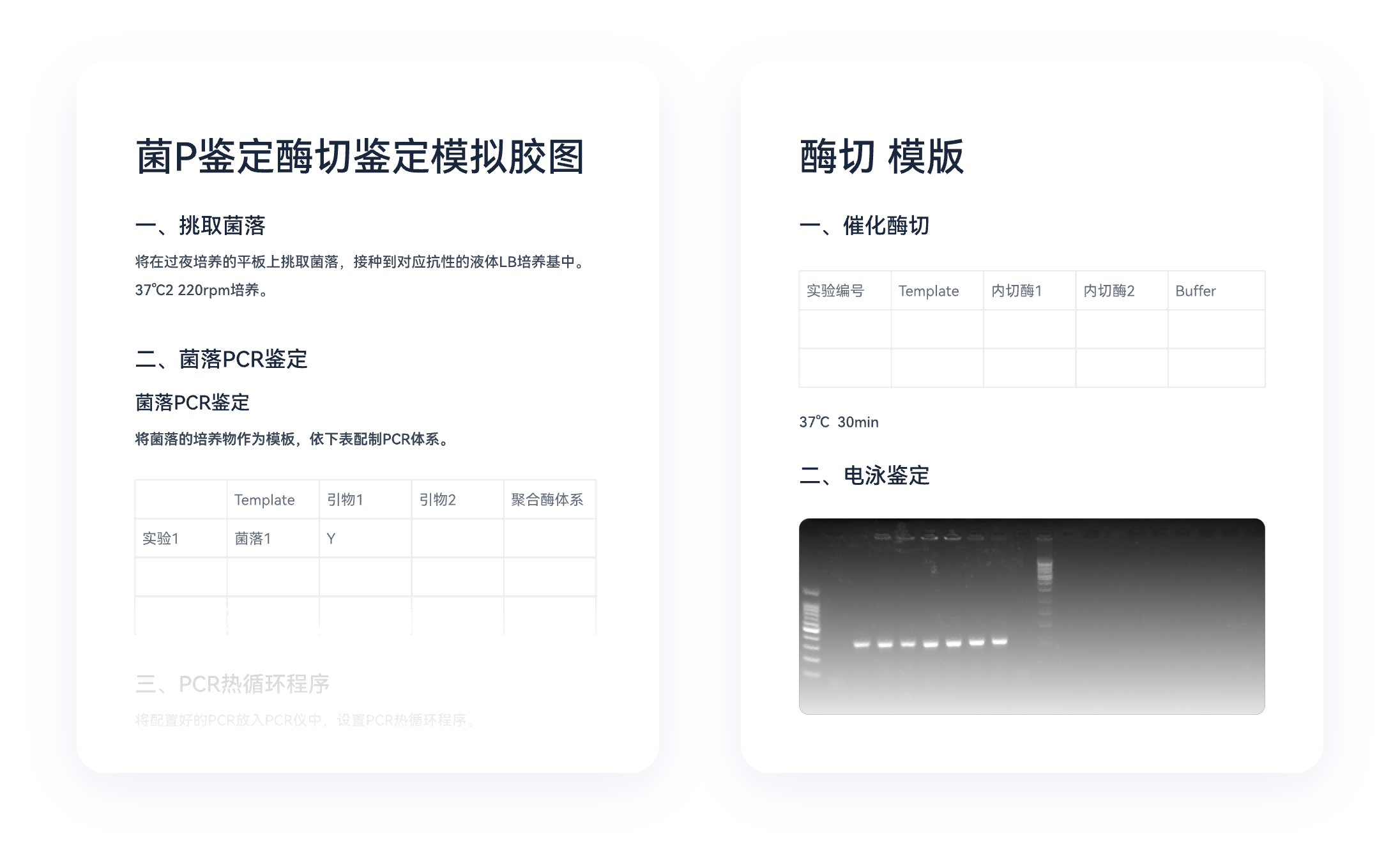
Sequence choices can affect expression without changing the amino acid sequence, but optimization should be tied to the selected host and design rationale. Preserve both the source biological sequence and the engineered coding sequence. ZettaGene molecular biology tools support sequence editing, plasmid construction, primer design, alignment, and translation within a connected research workspace.
Choose a Host by Protein Requirements, Not Habit
Bacterial systems can be efficient for many proteins but may not provide the folding environment or post-translational processing required by others. Yeast, insect, mammalian, cell-free, and additional systems offer different balances of expression, processing, scalability, speed, and operational complexity.
Define the properties that are essential for downstream use. A reagent for an initial binding screen may tolerate different characteristics from a structural biology sample or a functional protein requiring specific modifications. Host selection should also consider toxicity, secretion, membrane association, disulfide formation, and available purification strategy.
Evaluate Expression Before Optimizing It
Expression testing should distinguish total target signal from usable protein. Separate or otherwise assess soluble and insoluble fractions when relevant, and include controls that help identify background signals. Record the exact construct, host, culture history, expression conditions, harvest point, sample preparation, and analytical method.
Optimization is most informative when each experiment tests a defined hypothesis. Changing host, temperature, time, inducer, medium, construct boundaries, and tag simultaneously may produce a better result without revealing why. Use a structured matrix appropriate to the workflow and preserve unsuccessful conditions because they narrow future decisions.
Connect Purification and Quality Results to the Source Construct
Purification records should show how each fraction relates to the source expression batch. Capture buffers, columns or resins, run conditions, pooled fractions, concentration steps, yields, and deviations. Store raw chromatograms and gel images with identifiers that match the experiment record.
Quality evidence should be selected for intended use and may include identity, purity, integrity, oligomeric state, aggregation, concentration, modification, and functional activity. One clean band does not establish every required property. The Zettalab guides offer examples of structured molecular biology records, and the Plasmid Library can support vector discovery subject to independent sequence, availability, licensing, and suitability checks.
Frequently Asked Questions
What is a recombinant protein expression system?
An expression system combines an engineered nucleic acid construct with a host and the methods used to produce the encoded protein. It includes more than the organism or cell type. The vector, promoter, regulatory elements, signal sequences, tags, host strain or cell line, culture conditions, and expression method all contribute to the result. Different systems support different levels of folding, secretion, modification, throughput, and scale. Selection should begin with the required characteristics and intended use of the protein rather than a single goal of maximizing expression.
How do I choose between bacterial and mammalian protein expression?
Compare the protein's folding, modification, localization, complexity, and functional requirements with the capabilities and constraints of each system. Bacterial expression may offer speed and operational simplicity for suitable targets, while mammalian cells may be more appropriate when native-like processing or secretion is important. Neither category guarantees a successful or functional product. Consider construct design, host toxicity, expected yield, purification, analytics, scale, time, and resources. Small, well-controlled tests can provide better evidence than choosing solely from sequence length or common laboratory practice.
Why can high protein expression still produce an unusable result?
A strong expression signal may represent insoluble, aggregated, truncated, incorrectly folded, improperly modified, or inactive protein. Detection methods may also recognize a tag or fragment rather than the desired intact product. Evaluate the relevant fraction and apply quality tests matched to downstream use. Record sample preparation because extraction conditions can change what appears soluble or detectable. The objective is usable protein with adequate identity and quality, not the largest total band. Optimization should therefore track both expression quantity and the properties that determine fitness for purpose.
What should be recorded during protein expression optimization?
Record the construct and sequence version, host, culture history, medium, vessel, starting density, expression or induction method, timing, temperature, harvest, controls, and sample-fraction preparation. Link each condition to raw analytical outputs and a defined assessment such as soluble yield or activity. State the hypothesis behind each change and preserve failed conditions. When purification follows, maintain batch and fraction identifiers so a final sample can be traced back to the exact expression condition. This prevents an optimized protocol from becoming detached from the evidence that supports it.
Conclusion
Recombinant protein expression is a chain of decisions from target definition and construct design through host selection, expression, purification, and quality assessment. Each result should remain linked to the exact sequence and experimental conditions that produced it. Optimization is most efficient when it tests clear hypotheses and evaluates usable protein, not expression signal alone. To connect construct design with experiment and file records across this workflow, contact Zettalab.
Related Articles