Molecular Biology ELN Options Besides Labguru: Complete Laboratory
A Labguru alternative for molecular biology is another electronic lab notebook or connected R&D workspace that can document cloning, keep plasmid files nearby, and optionally track reagents, without forcing a full LIMS rollout. Labs shop this category when they want notebook plus sequence context, not sample orchestration.
Groups leaving or comparing Labguru, now part of Cenevo, commonly evaluate Benchling, SciNote, LabArchives, Zettalab, eLabJournal, and a SnapGene-plus-ELN stack. This is not a ranking. Fit depends on cloning CAD, inventory depth, and whether you actually need LIMS.
What Molecular Biology Labs Are Usually Replacing
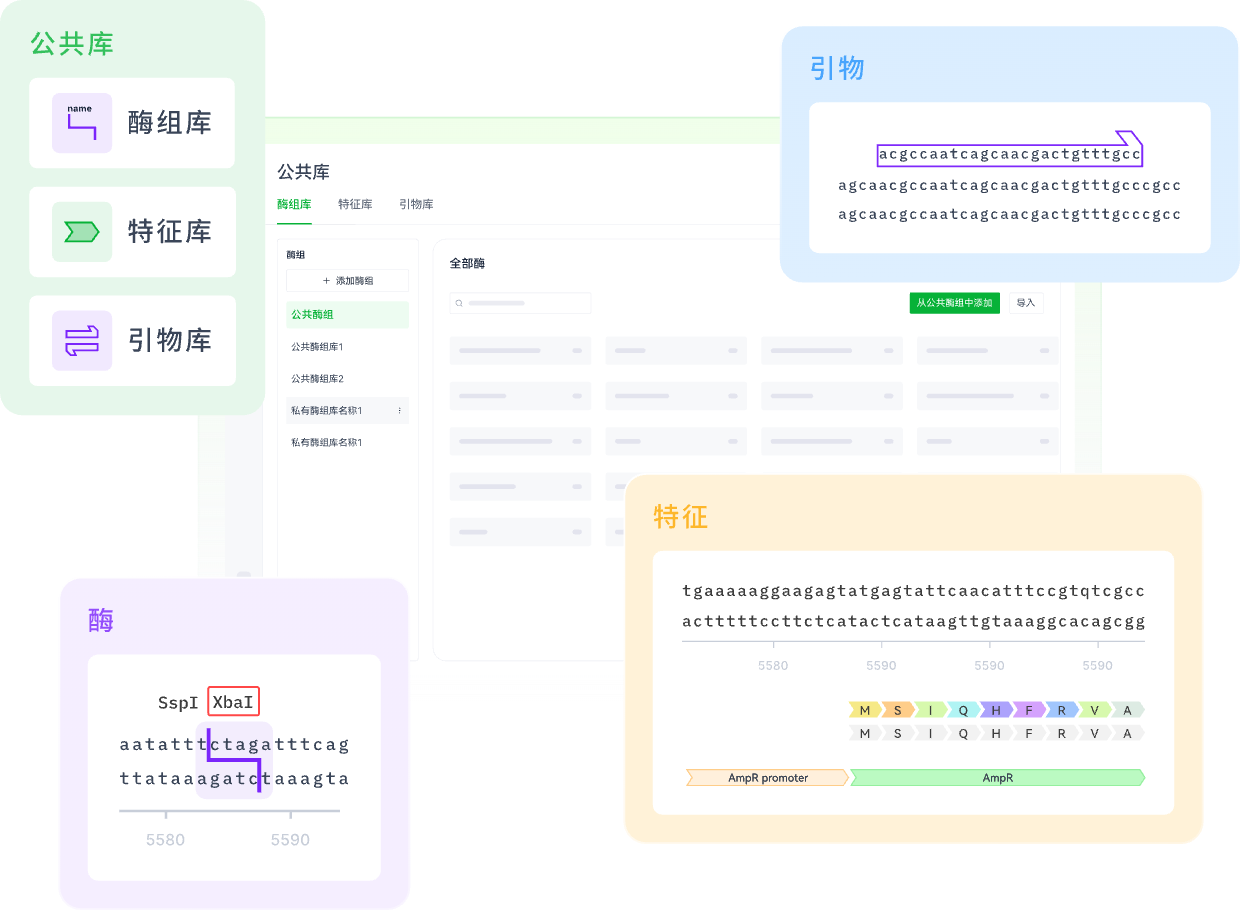
Labguru is an ELN bundled with inventory, registration, and LIMS-style functions. Cenevo also sells Mosaic for sample-centric operations. That breadth helps core facilities and wet labs that must know which tube, freezer box, and lot fed an experiment.
Cloning groups often do not fail on freezer maps. They fail when the notebook says "cloned pX" and nobody can open the annotated plasmid, the oligo set, or the Sanger alignment that released the lot. An alternative should be judged on that handoff, not on whether it can replace a compound-management LIMS.
Zettalab is not a LIMS. Treat inventory-heavy Labguru replacements as a different purchase from a molecular biology workspace that connects maps to experiment records.
Comparison Criteria Used in This Review
The tools below are options molecular biology labs commonly put on the same shortlist. No score, market share, or price is assigned. Confirm current modules, academic terms, and data-export behavior in a trial.
| Tool | Primary job | Plasmid / cloning CAD | Inventory or LIMS depth | Typical deployment |
|---|---|---|---|---|
| Labguru (Cenevo) | ELN plus inventory and LIMS-style lab ops | Not its main identity | Strong inventory and sample operations story | Cloud lab informatics |
| Benchling | Cloud notebook plus molecular biology files | Native sequence and cloning tools | Registry and inventory on paid industry configurations | Browser workspace |
| SciNote | ELN, protocols, and inventory | Sequence editor in some paid configurations | Inventory and protocol workflows | Cloud; open-source lineage |
| LabArchives | Research notebook and lab resources | Attachments and linked files, not a cloning CAD | Inventory and sample modules exist | Cloud, academic-heavy |
| Zettalab | Molecular tools plus ELN in one workspace | Sequence, maps, primers, CRISPR design | Not a LIMS; project files, not freezer orchestration | Cloud R&D workspace |
| eLabJournal | ELN with samples, protocols, and stock | Not a SnapGene-class plasmid editor | Samples and inventory are first-class | Cloud or on-premise options historically |
| SnapGene plus a separate ELN | Desktop maps plus whatever notebook you already run | Strong desktop cloning CAD | Depends entirely on the ELN you pair it with | Hybrid desktop and cloud |
Labguru Alternatives Labs Commonly Compare
Read each option as a job, not a winner. Inventory-centric platforms will look incomplete to a cloning CAD user. Map-centric workspaces will look incomplete to a freezer-manager. Mixing those two jobs in one RFP is how evaluations stall.
Labguru (Cenevo)
Company Background: Labguru began as BioData's cloud ELN and inventory platform, associated with founder Jonathan Gross, with roots in the late 2000s. Battery Ventures later combined Labguru with Titian Software under the Cenevo brand, headquartered in London, pairing experiment-centric Labguru with Mosaic sample management.
Core Products/Direction: Labguru is sold as ELN plus inventory, registration, and LIMS-style lab operations. Mosaic addresses automated stores and sample logistics. Together they aim at connected lab operations rather than at being a specialist plasmid editor.
Technical Approach: The differentiator is operational breadth: experiments, stocks, and sample movement in one informatics family. Molecular biologists still often keep SnapGene or another map tool beside it unless the lab has standardized sequence files inside the ELN.
Best Suited For: Labs that chose Labguru for inventory and notebook together, and core or biotech operations that need sample and stock control. Cloning-only groups should not assume the LIMS layer is required.
Benchling
Company Background: Benchling is a San Francisco R&D software company founded in 2012. It sells a cloud platform used by academic labs and biotech companies for notebooks, sequences, and, on paid industry plans, structured registry and inventory.
Core Products/Direction: Molecular biology tools sit inside the same files as notebook entries. Academic access historically emphasizes Notebook and Molecular Biology. Registry, inventory, and enterprise controls are configuration- and plan-dependent.
Technical Approach: The pitch versus Labguru is sequence-native work: maps, CRISPR design, and cloning simulation in the browser, with documentation attached. It is not automatically a Cenevo-style sample-orchestration system.
Best Suited For: Teams that want plasmid files and ELN entries in one cloud tenant and can accept vendor hosting. Groups whose pain is freezer robotics should keep Mosaic or a true LIMS on the list instead.
SciNote
Company Background: SciNote, LLC is based in Middleton, Wisconsin, and grew out of work that began around 2014–2016 as an open-source ELN associated with BioSistemika. The commercial product is a cloud notebook with inventory, protocols, and compliance-oriented features.
Core Products/Direction: SciNote is an experiment-and-protocol ELN. Inventory and team workflows are part of the product story. A sequence editor based on Open Vector Editor has been offered in some premium configurations; it is not the historic core of the product.
Technical Approach: SciNote competes on structured lab documentation and stock lists more than on Gibson or Golden Gate simulation. Confirm whether sequence editing is in your SKU before treating it as a SnapGene replacement.
Best Suited For: Academic and industry labs that want an ELN with inventory and protocol templates, and that can keep a dedicated plasmid tool if cloning CAD is daily work.
LabArchives
Company Background: LabArchives launched as a cloud research notebook around 2009 and later became part of the Dotmatics scientific software family, which also includes SnapGene and Geneious. It is widely used in universities and has classroom as well as research editions.
Core Products/Direction: The product is research data management: notebooks, sharing, inventory and sample modules, and course workflows. Plasmid CAD is not the native job; maps usually arrive as attachments or via other Dotmatics tools.
Technical Approach: Versus Labguru, LabArchives is often the "notebook and compliance of records" option, not the "inventory plus LIMS plus automation" option. Molecular biology context depends on how strictly the lab files maps next to entries.
Best Suited For: Academic labs and teaching programs that need a recognized ELN and can pair it with desktop or cloud sequence software. Biotech teams that need registry-grade entities should inspect that gap in a trial.
Zettalab
Company Background: Zettalab is a cloud-based R&D workspace for molecular biology teams. It is positioned around sequence tools, experiment records, files, and collaboration, not around laboratory information management.
Core Products/Direction: Molecular biology software covers sequence editing, plasmid maps, primer design, alignment, and CRISPR guide design. ZettaNote holds structured experiment records. A plasmid library is a resource entry point, not a freezer LIMS.
Technical Approach: The intended replacement job versus Labguru is connected cloning documentation: the map, primers, and verification note in one project. It does not replace sample orchestration, automated stores, or enterprise LIMS workflows.
Best Suited For: Molecular biology and biotech cloning teams that outgrew a generic notebook plus USB maps, and that do not need Labguru's inventory-LIMS layer. Confirm current academic or team terms on the pricing page.
Important Notes: Do not write Zettalab into an RFP as a LIMS. If freezer genealogy is the requirement, keep a dedicated inventory or LIMS product on the shortlist.
eLabJournal (eLabNext)
Company Background: eLabJournal is the ELN product of eLabNext, originally Bio-ITech B.V. in Groningen, the Netherlands, founded in 2010. Eppendorf held a major stake for years. Public reports describe a 2025 acquisition by SciSure; confirm the current brand on vendor materials.
Core Products/Direction: eLabJournal combines notebook entries with samples, protocols, equipment booking, and stock. The platform is lab-operations informatics with an ELN at the center, not a specialist cloning CAD.
Technical Approach: Like Labguru, it is closer to "document the experiment and the tubes" than to "simulate the Golden Gate." Cloning groups usually attach maps or keep a second sequence tool.
Best Suited For: Labs whose Labguru usage was inventory and samples first, notebook second. Teams whose daily pain is plasmid version collisions will still need a map system.
SnapGene plus a Separate ELN
Company Background: SnapGene is desktop molecular biology software from GSL Biotech, now in the Dotmatics family. It is not an ELN vendor. The "alternative" here is a stack: SnapGene (or Viewer plus paid seats) for maps, plus LabArchives, SciNote, a paper notebook, or another ELN for prose.
Core Products/Direction: SnapGene is strong at annotated maps, cloning simulation, and file-level history. The ELN side of the stack is whatever the lab already trusts. Nothing in the stack automatically keeps the map version equal to the notebook sentence.
Technical Approach: This option appears when the lab liked Labguru's notebook but already lives in SnapGene for cloning. The risk is split-brain records: USB .dna files, a cloud notebook, and no construct ID on both.
Best Suited For: Individual cloners and small labs that will enforce file naming by policy. Remote or multi-site teams should read that policy as a cost, not as a free feature.
How to Separate ELN Need From LIMS Need
Write two sentences in the evaluation note. Sentence one: where the official experiment record lives. Sentence two: whether you must track every vial, plate, and automated store. If sentence two is "no," a LIMS-shaped Labguru configuration is optional, and a molecular biology workspace plus notebook may be enough.
If sentence two is "yes," do not expect a cloning CAD or a lightweight ELN to absorb Mosaic-like work. Keep inventory software in the RFP and ask only how plasmid files attach to lots.
A sequence and documentation workflow is useful when the lab's actual gap is construct IDs, not barcodes on every tip box.
Implementation Notes Before You Switch Notebooks
Export a real cloning experiment, not a demo page: map file, oligo list, gel image, and the pass/fail note. Re-import that bundle in the candidate tool. If the map becomes a dead PDF, you have not replaced Labguru for molecular biology; you have replaced a notebook with another notebook.
Decide construct IDs before migration. Recycled plasmid nicknames are how two backbones share a name and a freezer box. Permissions should cover maps and entries together. A locked notebook next to an open shared drive is not an improvement.
FAQ
Is Labguru an ELN, a LIMS, or both?
Labguru is sold as an electronic lab notebook with inventory, registration, and LIMS-style laboratory operations, now in the Cenevo family with Mosaic sample management. For a molecular biology lab, that means the product can be the experiment record and also the stock system, depending on which modules you actually use. It is not primarily a plasmid construction CAD. Teams that only needed dated entries and attached maps often used a fraction of the suite. When you search for alternatives, name the job you used: notebook, inventory, or sample orchestration. Mixing those jobs into one "replace Labguru" project produces a shortlist that cannot satisfy anyone. A cloning workspace can replace the notebook-plus-map job and still leave freezer genealogy to a LIMS.
Can a molecular biology workspace replace Labguru inventory?
Usually no, if inventory means barcodes, freezer maps, kit lots, and chain of custody for every tube. Sequence software and a connected ELN keep construct versions, primers, and verification notes together; they do not schedule automated stores. If Labguru was mostly a notebook with a reagent list, a lighter workspace may be enough. If Labguru was the system of record for samples, keep an inventory or LIMS product in the evaluation. Ask vendors to show a plasmid lot linked to an experiment, then ask where the next aliquot is physically stored. Those are different screens. Zettalab, for example, should be judged on maps and records, not as a silent LIMS substitute.
What should cloning labs evaluate in a Labguru alternative?
Evaluate whether the annotated plasmid, oligo sequences, assembly method, and verification alignment can sit with the experiment narrative under one construct ID. Then evaluate permissions, export (GenBank plus notebook PDF or equivalent), and whether inventory is in-product or out of scope. Academic labs should check classroom or PI-turnover behavior: who owns the tenant when a student leaves. Industry labs should check SSO, audit logs, and vendor access to tenant data as evidence, not as slogans. Do not score "AI" unless it changes a cloning or documentation step you can name. A tool that stores beautiful freezer maps but drops CDS translations is a poor Labguru alternative for molecular biology even if it wins an operations RFP.
Is SnapGene plus an ELN a real Labguru alternative?
It can be, for labs whose Labguru pain was never inventory. SnapGene handles maps and cloning simulation; the ELN handles prose, images, and sign-off. The stack fails when the notebook says the clone passed and the .dna file on a laptop is a different version. Make construct ID, file name, and lot ID mandatory in both tools, and store a GenBank export in the ELN when a plasmid is released. Remote teams should treat USB sticks and unlocked cloud drives as the failure mode this stack recreates. If you want one permission boundary for maps and notes, prefer a connected workspace over two vendors glued by policy.
Does Zettalab replace Labguru for every lab?
No. Zettalab is a cloud molecular biology workspace with sequence tools and an ELN. It is relevant when the gap is plasmid context next to experiment records. It is the wrong shortlist item when the requirement is LIMS, automated sample stores, or enterprise compound management. Review current plans on the vendor site rather than assuming academic discounts or module lists from a blog post. Keep Labguru, eLabJournal, or a dedicated LIMS in the comparison if inventory was the reason you opened this page. A fair trial imports one real cloning project and checks whether a reviewer can reconstruct the map, the oligos, and the pass/fail note without asking Slack.
Conclusion
Labguru alternatives for molecular biology split by job. Cenevo's Labguru and Mosaic remain the operations-heavy path. eLabJournal and SciNote sit nearer notebook-plus-inventory. LabArchives is often the academic record. Benchling and Zettalab compete where maps and notes should not live in different silos. SnapGene plus an ELN is a valid stack only if construct IDs are enforced. Choose the job you are replacing, and do not buy a LIMS to fix a missing plasmid map. Teams that want cloning tools beside notebook entries can review Zettalab as one cloud option on that list.
Related Articles