sgRNA Design Tools Besides Guidescan Databases for Research Labs
A GuideScan alternative for sgRNA design is another tool that proposes CRISPR spacers and estimates off-targets, whether as a genome-wide guide database, a web scorer, a vendor portal, or a workspace next to the destination plasmid. GuideScan and GuideScan2 are built to enumerate guides and off-targets across genomes, including custom assemblies.
Cloning teams commonly also run CRISPOR, CHOPCHOP, Benchling, Zettalab, IDT design tools, and CRISPRscan. This is not a ranking. A database that lists every gRNA is not the same job as a plasmid editor that pastes one spacer into a U6 cassette.
What GuideScan and GuideScan2 Are Built to Do
GuideScan (Perez and colleagues, Genome Biology, 2017) introduced genome-wide CRISPR guide RNA databases with exhaustive off-target enumeration rather than sampling. GuideScan2 (Schmidt, Pritykin, and colleagues, Genome Biology, 2025) rebuilt indexing so databases for Cas9 and Cas12a, and for custom genomes, can be constructed with far less memory and time, with a web presence at guidescan.com and CLI code on GitHub.
That job is specificity infrastructure: can I trust that this spacer is unique under a defined mismatch model, on this build, including non-coding sequence. It is not, by itself, oligo design for your house backbone or an ELN snapshot of the clone.
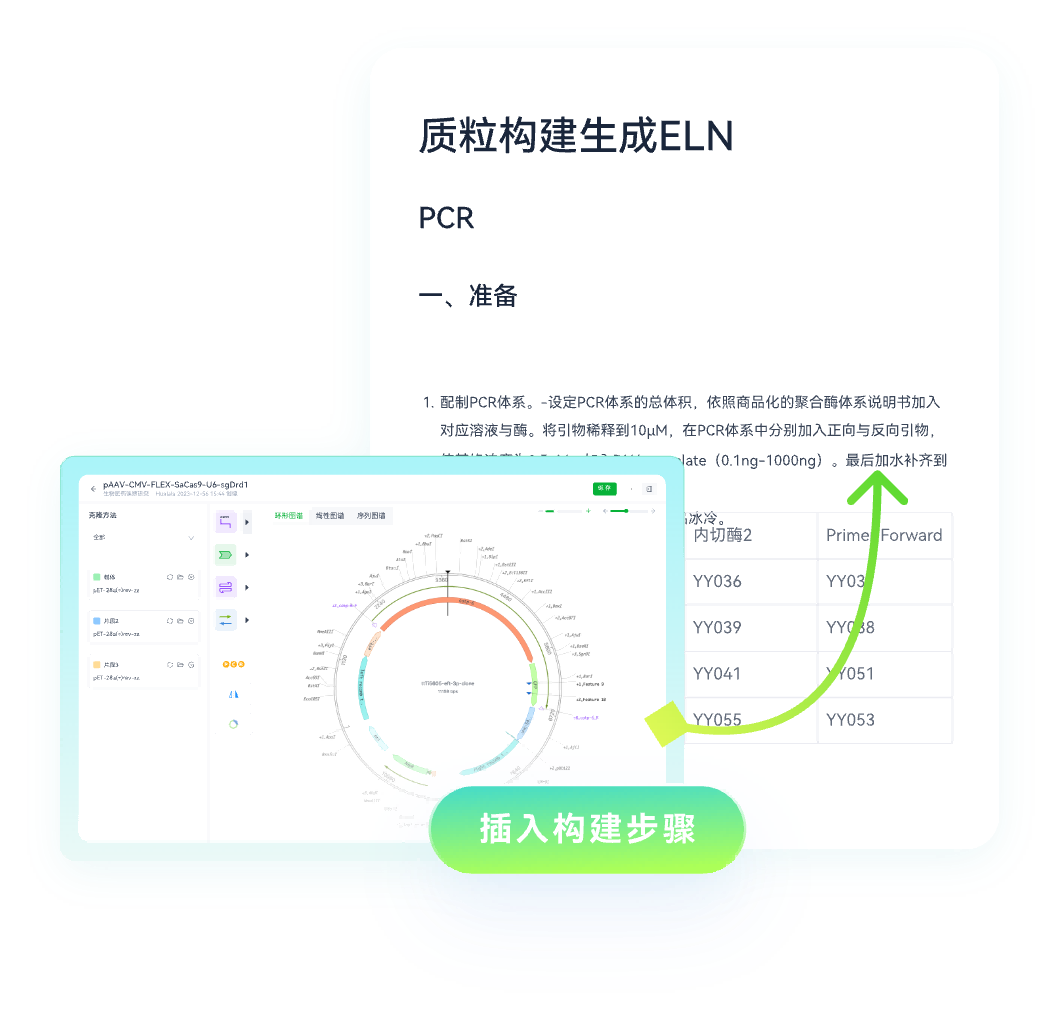
Labs leave or supplement GuideScan when they need a different PAM menu, a cited primer output, a reagent catalog, or the spacer already sitting on a map.
Comparison Criteria Used in This Review
No numeric scores and no claimed editing rates. Inspect genome coverage, off-target method, cloning handoff, and whether parameters are saved.
| Tool | Primary job | Off-target posture | Cloning handoff | Where it runs |
|---|---|---|---|---|
| GuideScan / GuideScan2 | Genome-wide gRNA databases and library design | Exhaustive enumeration in published method | Export spacers; map is separate | Web databases plus CLI |
| CRISPOR | Per-sequence guide scoring | MIT and CFD-style scores, many genomes | Oligos and PCR primers for common Cas9 backbones | Academic web server |
| CHOPCHOP | Gene-centric design across nucleases | Off-targets plus activity-style features | Site list; cloning is external | Academic web server |
| CRISPRscan | Activity-oriented scoring, zebrafish heritage | On-target models plus specificity context | Spacer list; cloning is external | Academic web server |
| Benchling | Guides inside a sequence file | In-platform search; confirm genomes in tenant | Spacer stays on the construct | Cloud workspace |
| Zettalab | Guides next to maps and ELN | On- and off-target scoring in the workspace | Spacer reviewed on the destination plasmid | Cloud workspace |
| IDT | Design aligned to Alt-R reagents | Vendor rules for catalog nucleases | Order RNA or oligos; plasmid CAD separate | Vendor portal |
sgRNA Tools Labs Compare with GuideScan
Keep GuideScan when you need a library or a custom-genome off-target sweep. Add a second tool when the next object is a verified plasmid or a chemical sgRNA order.
GuideScan and GuideScan2
Company Background: GuideScan is an academic project, not a commercial ELN vendor. The original database paper is from 2017. GuideScan2, published in Genome Biology in 2025, lists authors including Schmidt, Pritykin, Leslie, Ventura, and collaborators, with software under an open-source CLI.
Core Products/Direction: Precomputed gRNA databases for selected genomes and nucleases, plus tools to build indexes for custom genomes and to design libraries. The site is a lookup and analysis layer. It does not store your lab's plasmid versions.
Technical Approach: Differentiation is completeness of off-target enumeration and scalable index construction, including work on confounding low-specificity guides in published screens. Cloning labs still copy the accepted spacer elsewhere.
Best Suited For: Screen design, custom genomes, and a second check when another tool's off-target table looks too clean. Not sufficient as the only cloning record.
CRISPOR (UCSC / TEFOR)
Company Background: CRISPOR is an academic web server associated with Jean-Pierre Concordet and Maximilian Haeussler, described in a 2018 Nucleic Acids Research paper, with hosting that has included TEFOR and UCSC genomics resources.
Core Products/Direction: Paste a sequence, pick genome and PAM, get ranked guides with MIT and CFD-style scores, predicted off-targets, and often PCR primers plus cloning oligos for widely used Cas9 backbones.
Technical Approach: Versus GuideScan, CRISPOR is the "score this interval and give me oligos" server. GuideScan is the "database of the genome" engine. Many labs run both on a disputed spacer.
Best Suited For: Academic cloning of a few guides into standard U6 plasmids, with a citation-friendly method. Unusual assemblies may still need GuideScan2-style custom indexes.
CHOPCHOP (University of Bergen)
Company Background: CHOPCHOP is an academic CRISPR (and later broader editor) design server maintained at the University of Bergen, with versions that expanded nucleases and knock-in or regulation modes.
Core Products/Direction: Gene name or sequence in, ranked sites out, with off-target information, predicted activity features, and options across knockout, knock-in, activation, and repression style designs depending on version.
Technical Approach: CHOPCHOP is gene-centric and multi-nuclease. GuideScan is genome-index-centric. If you need Cas12a or a non-standard PAM menu, check CHOPCHOP's current list rather than assuming GuideScan's default Cas9 database covers it.
Best Suited For: Groups switching nucleases or model species in one interface. Plasmid context remains a separate map tool.
CRISPRscan
Company Background: CRISPRscan is an academic design resource from the Giraldez laboratory at Yale, originally known for zebrafish activity models and later expanded. It is a scoring site, not a lab workspace.
Core Products/Direction: Guide suggestions with an emphasis on predicted activity in addition to reference matching. Species coverage and models should be read on the current site before you apply a zebrafish-era assumption to mammalian work.
Technical Approach: GuideScan's published emphasis is exhaustive off-target enumeration. CRISPRscan's historic emphasis is on-target activity prediction. Those are different failure modes: cutting the wrong locus versus not cutting the right one. Record which you optimized.
Best Suited For: Teams that want an activity-oriented academic score, especially in models the site documents well. Not a cloning ELN.
Benchling
Company Background: Benchling is a San Francisco R&D platform (2012) with CRISPR design inside sequence files rather than as a public genome database.
Core Products/Direction: Search guides against a genome in the construct, review off-targets in that UI, and keep the spacer on the plasmid that will be cloned. Academic versus industry CRISPR menus depend on configuration.
Technical Approach: The alternative to GuideScan is context, not a claim of a larger off-target index. Unusual genomes may still need GuideScan2 or CRISPOR as a second pass, with the screenshot or export stored on the Benchling entry.
Best Suited For: Labs already documenting constructs in Benchling. Screen teams that need custom-genome exhaustive search should not retire GuideScan2 on this basis alone.
Zettalab
Company Background: Zettalab is a cloud molecular biology workspace. CRISPR guide design is a step next to maps and records, not a standalone genome-wide database product in the GuideScan2 sense.
Core Products/Direction: Molecular biology tools include CRISPR guide RNA design with on-target and off-target scoring, plasmid construction, and primers. A chosen spacer can be checked on the destination map and linked to an ELN record. A CRISPR vector library is useful only after nuclease and promoter class are chosen.
Technical Approach: Zettalab is a GuideScan alternative for the cloning handoff: the spacer that was scored is the spacer on the U6 cassette. It is not a drop-in replacement for building a custom-genome gRNA database. Unusual assemblies may still need GuideScan2 CLI or CRISPOR as a second check; keep that output with the clone.
Best Suited For: Biotech and academic teams that clone guides and want scores, maps, and notes together. Confirm genomes and PAM support in a trial. Review current plans.
Integrated DNA Technologies (IDT)
Company Background: IDT is a nucleic acid manufacturer in Coralville, Iowa, part of Danaher. Design utilities on the company site serve the Alt-R reagent line as well as oligo ordering.
Core Products/Direction: Guide proposals compatible with IDT crRNA, sgRNA, and Cas9 or Cas12 reagent formats, with a path from accepted design to manufactured RNA. Plasmid archives are not the product.
Technical Approach: Versus GuideScan, IDT is design-to-order chemistry. Exhaustive custom-genome enumeration is not why you open the portal. If you clone a U6 plasmid instead of buying RNA, you still need a map tool.
Best Suited For: Labs ordering chemically modified guides. Poor as the only specificity database for a custom strain screen.
How a GuideScan Hit Should Reach a Clone
Freeze genome build, nuclease, and PAM. Paste the spacer into the scaffold you actually use. Generate oligos for that backbone. Store the GuideScan (or CRISPOR) table with the verification alignment. A cloning and sequence guide is the handoff checklist, not a replacement scorer.
Do not treat a high GuideScan2 specificity value as a wet-lab success prediction. It is a uniqueness filter under a model.
FAQ
What is the difference between GuideScan and CRISPOR?
GuideScan and GuideScan2 are genome-wide gRNA database and index tools that emphasize enumerating off-targets, including on custom genomes via CLI. CRISPOR is a sequence-in, ranked-guides-out web server with widely used MIT and CFD-style scores and convenient cloning oligos for standard Cas9 plasmids. Use GuideScan2 when you are building or querying a whole-genome set, designing a library, or distrusting a tool that might miss off-targets. Use CRISPOR when you have a target interval and want a cited table plus primers this afternoon. Many cloning groups run CRISPOR first and GuideScan2 on the finalists. Record both rather than averaging scores into a fake consensus.
Can a cloud workspace replace GuideScan2?
Not for the database job. A workspace such as Benchling or Zettalab replaces the copy-paste job: spacer onto a map, primers, notebook. GuideScan2 still matters when you need exhaustive off-target search on a non-standard assembly or a library-scale unique-guide filter. The practical architecture is primary daily design in the workspace, second check in GuideScan2 or CRISPOR for disputed sites, with the table attached to the clone record. If your genomes are only human and mouse reference builds and you clone a few guides a month, you may rarely open GuideScan. If you run screens on a private genome, you should not delete the CLI because a CAD has a CRISPR button.
Does GuideScan2 support Cas12a as well as Cas9?
GuideScan2's published description includes database construction for Cas9 and Cas12a (Cpf1) systems and indexes that are not locked to a single PAM length in the same way older tools were. Always confirm the current PAM and species list on guidescan.com or in the CLI documentation for your build. After you pick a Cas12a spacer, do not use Cas9 sgRNA oligo templates. Direct repeats and array architecture differ, and cloning a Cas12a crRNA into a U6-Cas9 scaffold is a wasted week. Whatever tool you use, name the nuclease on the map feature, not only in a chat message.
How should cloning labs store GuideScan output?
Store the spacer string, genome accession or build, nuclease, PAM, date, tool version or database name, and the off-target table or a screenshot that includes parameters. Then store the oligo pair, destination plasmid version, and verification chromatogram. A FASTA of the spacer alone is not an audit trail. If two tools disagree, keep both outputs. Cloud workspaces help when that bundle is one project. Desktop users should freeze a dated export in the ELN when the guide is declared in use. Specificity scores are not lot numbers; they do not replace sequencing the clone.
When is IDT or another vendor portal the right GuideScan alternative?
When you will buy that vendor's RNA or kits and want design rules aligned with that chemistry. It is the wrong alternative when you needed a custom-genome exhaustive off-target database or a plasmid archive. You can still run GuideScan2 or CRISPOR, then order the accepted spacer from IDT. Do not skip the second check because the catalog page was convenient. For plasmid-cloned guides, vendor portals do not remove the need for a map. For RNP workflows, they do not remove the need to record genome build and score snapshot in the experiment record.
Conclusion
GuideScan and GuideScan2 remain the genome-wide database option for exhaustive gRNA off-target work, including custom genomes. CRISPOR and CHOPCHOP are the everyday academic scorers. CRISPRscan adds activity-oriented models. IDT fits design-to-order RNA. Benchling and Zettalab fit spacers that must land on a cloned plasmid and a record. Use a database for uniqueness, a workspace for cloning context, and do not treat either as an editing guarantee. Teams that want guide design next to maps can review Zettalab's molecular biology tools as one cloning-oriented alternative beside GuideScan.
Related Articles