Free Electronic Lab Notebook Software: What Researchers Should Know Before Choosing
Free electronic lab notebook software has become an increasingly attractive option for academic labs, early-stage biotech startups, and individual researchers looking to move away from paper notebooks without committing to expensive commercial platforms. The ELN market has evolved rapidly, with a growing number of free and open-source options available. But "free" means different things to different providers—and understanding what you're actually getting is essential before making a choice. This guide covers the landscape of free ELN software, what to expect from different types of free offerings, the limitations you need to be aware of, and how to evaluate whether a free ELN is the right fit for your research team.
What Is Free ELN Software?
Free ELN software encompasses two main categories: open-source ELNs that are free to use, modify, and self-host, and freemium commercial ELNs that offer a free tier with limited features alongside paid upgrades.
Open-source ELNs provide the source code for free, allowing institutions to deploy the software on their own servers with full control over data storage and customization. Examples include eLabFTW, openBIS, Chemotion, and RSpace. These solutions typically require technical expertise to install and maintain, but offer complete data ownership and no recurring subscription fees.
Freemium commercial ELNs offer a free version—often targeted at academic users—with core functionality included, while advanced features, additional storage, or team collaboration capabilities require a paid subscription. Examples include Benchling, LabArchives, labfolder, and SciNote. These platforms are typically cloud-based, easy to set up, and require no technical maintenance.
The global ELN market was valued at approximately USD 860-925 million in 2025-2026 and is projected to grow at a CAGR of 6-9% through 2032. Free offerings play an important role in this ecosystem—lowering the barrier to entry for academic researchers and serving as an on-ramp for teams that may eventually transition to paid plans as their needs grow.
Popular Free ELN Options for Researchers
Benchling is one of the most widely used free ELN platforms in molecular biology. Its academic plan includes sequence design and analysis tools integrated with protocols, observations, and experimental results. Benchling's free version is specifically formulated for academic researchers. The platform offers specialized features for molecular biology, including DNA sequence alignment and primer design, which are particularly valuable for labs working with DNA constructs. However, advanced automation features are locked behind enterprise-tier pricing plans.
eLabFTW is the most popular open-source ELN for research labs. It provides a secure, organized platform for documenting experiments, managing protocols, and maintaining research data integrity. eLabFTW features a database where any kind of object—antibodies, plasmids, cell lines, boxes—can be stored. It is accessed via browser and can be self-hosted at no cost, though deployment requires technical expertise.
LabArchives offers a free edition that allows users to own up to two notebooks, upload individual file attachments up to 25MB, and supports up to 1GB of total storage. It is a cloud-based ELN that allows users to access data from anywhere with an internet connection, facilitating remote work and collaboration. LabArchives is known for its user-friendly interface, making it suitable for researchers who want a straightforward documentation tool.
openBIS is a free, open-source ELN-LIMS platform developed at ETH Zürich, designed for managing scientific information and supporting research data workflows from bench to publication. It offers a flexible ELN-LIMS and FAIR data management platform for scientific research. openBIS is particularly suited for academic life science laboratories and supports sample and project tracking, omics data management, and FAIR-compliant research data management.
Lab Thread launched a free version of its unified lab software platform in 2026, available to academic and non-profit researchers worldwide. Academic users can access features including a DNA sequence viewer, an electronic notebook system, and accompanying templates. The free version is available to small academic and non-profit labs of up to five users and supports adherence to FAIR data principles increasingly required by major funding bodies.
Other notable free ELN options include Chemotion ELN, an open-source ELN tailored for chemistry and related fields; RSpace, an open-source ELN supported by Harvard Library; SciNote, which offers a free version; PASTA-ELN, an open-source, cross-platform ELN designed from the scientist's perspective; and AI4Green, an open-source ELN that combines data archival and collaboration tools with sustainability metrics.
What You Get for Free—and What You Don't
Free ELN offerings typically include core documentation functionality: the ability to record experiments, organize data, and store records digitally. However, significant limitations are common across free tiers.
User Limits. Many free versions restrict the number of users. Lab Thread's free version is limited to five users. labfolder's free plan allows one group with a maximum of three scientists. For labs with more team members, these limits can be a significant constraint.
Storage Constraints. Storage is often capped in free plans. LabArchives' free edition supports 1GB of total storage. Labfolder's free version limits storage to 3GB. Research labs generating large data files—gel images, sequencing traces, microscopy images—may quickly exceed these limits.
Feature Restrictions. Advanced features are typically reserved for paid tiers. Benchling's advanced automation features are locked behind enterprise pricing. TeselaGen's Community Edition provides access to the Electronic Laboratory Notebook and Molecular Biology Toolkit, but enterprise-level features require commercial accounts. Collaboration and integration features may also require paid upgrades.
Support Limitations. Free versions typically come with limited or no customer support. Open-source solutions require self-support or community forums. Commercial free tiers may offer only basic support, with priority support reserved for paying customers.
Data Portability and Ownership. With open-source solutions, data ownership is clear—you control your own data. With freemium platforms, it's essential to understand the terms of service, particularly what happens to your data if you stop paying or if the platform changes its pricing model.
The Hidden Costs of "Free" ELNs
While free ELN software eliminates direct licensing costs, it's important to consider the full cost of ownership.
Implementation Time. Open-source ELNs require technical expertise to install, configure, and maintain. This may require IT support or dedicated staff time that represents a real cost to the institution. As one analysis notes, "Initial costs: No software cost. Server hardware costs (and/or private cloud-server rental)".
Training and Onboarding. Even free platforms require training. A 2025 survey found that only 62% of scientists say their ELN allows them to work efficiently, and 56% say their ELN is too complex and slows them down. The time spent learning and adapting to a new system represents a real cost.
Migration Costs. If a free ELN no longer meets your needs—because you've outgrown its storage limits, need more users, or require features only available in paid plans—migrating to another platform can be costly and time-consuming.
Shadow AI and Security Risks. A 2026 survey found that 45% of scientists use public generative AI tools through personal accounts to support their work, despite security and compliance risks. Scientists are turning to these tools because existing lab tools can't help them analyze results efficiently. This "shadow AI" use introduces security and IP risks that free ELNs may not adequately address.
When Free ELN Software Makes Sense
Free ELN software can be an excellent choice in several scenarios.
Individual Researchers. For a single researcher or a small lab just getting started, a free ELN provides an opportunity to experience the benefits of digital documentation without financial commitment. It's a low-risk way to determine what features matter most before investing in a paid solution.
Academic Labs with Limited Budgets. Academic labs with constrained budgets can benefit significantly from free ELN options. Platforms like Benchling, LabArchives, and Lab Thread offer academic-specific free tiers. Funders increasingly require FAIR data management plans, and free ELNs provide a way to meet these requirements without additional expense.
Teams with Technical Expertise. Labs with IT support or technically skilled members can leverage open-source ELNs like eLabFTW, openBIS, or Chemotion to gain full control over their data and infrastructure without recurring costs.
Transition from Paper. For labs still using paper notebooks, any ELN—even a free one—represents a significant improvement in searchability, data security, and collaboration. As one user noted, "The best part about this software is no more writing and drawing in a physical notebook".
What to Look for in a Free ELN
When evaluating free ELN software, consider these factors.
Core Documentation Features. Does the platform support structured experiment documentation? Can you create templates? Are entries searchable? These are the fundamental features that make an ELN valuable.
Your Specific Workflow Needs. For molecular biology labs, sequence data integration is essential. Benchling offers built-in DNA sequence alignment and primer design. Lab Thread includes a DNA sequence viewer. If you work with sequences, prioritize platforms that support them.
Storage and User Limits. How much storage do you need? How many users will be on the platform? Free versions often cap both. LabArchives offers 1GB; labfolder offers 3GB. Ensure the limits align with your needs.
Data Ownership and Portability. Understand the terms of service. Can you export your data in standard formats? What happens if you stop using the platform? These questions are critical for long-term data security.
Scalability. If your lab grows, can the platform grow with you? Free tiers are often entry points to paid plans. Understand the upgrade path and costs before committing.
Compliance and Security. If you work with sensitive data or may eventually need to comply with regulatory requirements, consider whether the platform supports audit trails, access controls, and data encryption. As one ELN user noted, "ELNs offer robust data security features, including user access controls, audit trails, and data encryption, minimizing the risk of loss, damage, or unauthorized modification".
The Limitations of Free ELNs: What the Research Shows
A 2026 survey of 150 scientists revealed significant frustration with current ELN tools. Only 62% of scientists say their ELN allows them to work efficiently, and just 5% report being able to analyze experimental results without specialist support. Nearly two-thirds—65%—say they have had to repeat experiments because prior results were difficult to find or reuse.
Other findings highlight specific pain points: 71% of scientists say ELNs are hard to configure or adapt; 56% say their ELN is too complex and slows them down; and 51% spend too much time importing and exporting data. Many scientists describe ELNs as "glorified filing cabinets" that document experiments but don't actively support scientists or guide next steps.
These findings suggest that "free" alone is not enough. The ELN must actually work for the way scientists conduct research—supporting troubleshooting, iteration, and frequent changes in direction. A free ELN that is frustrating to use is not a good value at any price.
How Zettalab Supports Researchers—Including a Free Trial
Zettalab is designed as a cloud-based R&D workspace that brings molecular biology tools, experiment documentation, file storage, and team collaboration into a unified platform. While Zettalab is a commercial platform, it offers researchers the opportunity to explore its capabilities through a free trial—allowing teams to evaluate whether the platform fits their workflows before committing.
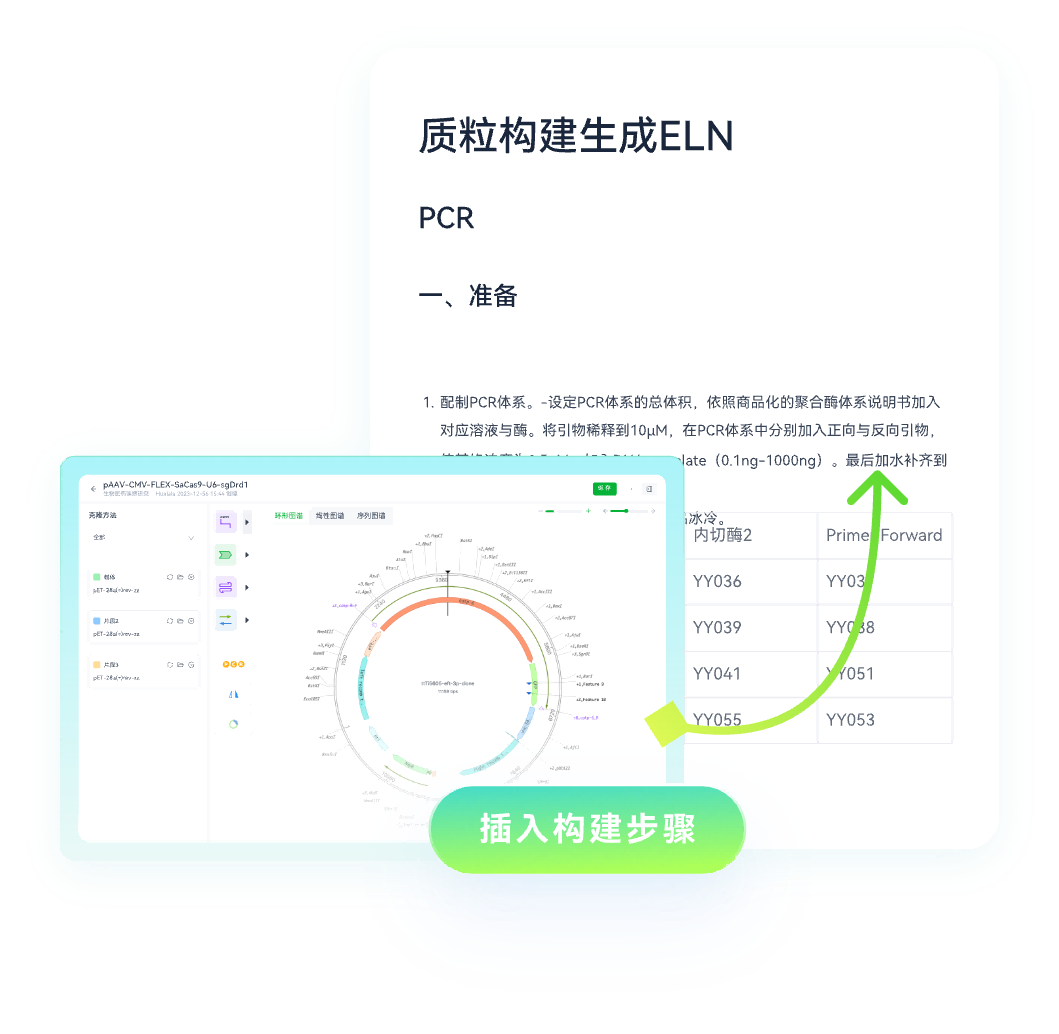
ZettaNote provides a structured electronic lab notebook with customizable templates that enforce consistent documentation across the team. Team members can create templates for common experiment types—cloning, PCR, protein expression, cell culture, sequencing—ensuring that every experiment captures the information most relevant to that workflow. The platform supports template versioning, automatic timestamps, and user attribution, enforcing the ALCOA+ principles of data integrity.
ZettaGene supports DNA sequence visualization, editing, plasmid construction, primer design, and sequence alignment. By keeping sequence design tools in the same workspace as experiment records, ZettaGene enables researchers to link experimental observations directly to the sequence data that informed them—eliminating the context switching that plagues disconnected workflows.
ZettaCRISPR provides CRISPR-Cas9 guide RNA design, sgRNA design, and sequencing primer design for gene editing experiments, with design outputs connecting directly to downstream sequence validation and experiment records.
ZettaFile provides team-friendly file storage with permission management, online document editing, and batch upload and download. Researchers can attach sequencing traces, gel images, protocols, and other files to experiment records, keeping all relevant materials in one place with clear access controls.
For academic and research teams evaluating their options, Zettalab offers a free trial that provides access to the platform's core capabilities—allowing researchers to experience how an integrated, connected documentation system can transform their workflows before making a commitment.
FAQ
What is the best free electronic lab notebook?The "best" free ELN depends on your specific needs. Benchling is excellent for molecular biology labs needing integrated sequence tools. LabArchives offers a user-friendly interface suitable for general research. eLabFTW provides full-featured open-source ELN capabilities for teams with technical expertise. Evaluate based on your workflow, team size, and storage needs.
Is there truly free ELN software?Yes, but "free" often comes with limitations. Open-source ELNs like eLabFTW and openBIS are completely free to use and modify. Commercial ELNs like Benchling, LabArchives, and Lab Thread offer free tiers with core functionality, though advanced features require paid upgrades.
What are the limitations of free ELN software?Common limitations include restricted number of users, limited storage space (1GB-3GB in many free plans), missing advanced features like automation or integration, and limited customer support. Open-source solutions require technical expertise to deploy and maintain.
Can I use a free ELN for collaborative research?Yes, but free versions often limit the number of users who can collaborate. Lab Thread's free version allows up to five users. labfolder's free plan permits one group with a maximum of three scientists. For larger teams, you may need to consider paid plans or open-source solutions that support unlimited users.
What should I look for when choosing a free ELN?Consider your specific workflow needs (sequence data integration, templates, search), storage and user limits, data ownership and export capabilities, scalability for future growth, and security features like audit trails and access controls.
How do free ELNs compare to paid versions?Free versions typically include core documentation functionality but limit advanced features, storage, user count, and support. Paid versions offer more storage, additional users, advanced features (automation, integrations, compliance tools), and dedicated support.
Is open-source ELN software free?Yes, open-source ELNs like eLabFTW, openBIS, and Chemotion are free to use and modify. However, they require technical expertise to install, configure, and maintain, which may represent a hidden cost in terms of IT resources.
How does Zettalab compare to free ELN options?Zettalab offers an integrated R&D workspace combining ELN documentation (ZettaNote), sequence design (ZettaGene), gene editing tools (ZettaCRISPR), and secure file storage (ZettaFile) in a unified platform. Researchers can explore these capabilities through a free trial to evaluate workflow fit before committing.
Conclusion
Free electronic lab notebook software has made digital documentation accessible to researchers who might otherwise be unable to afford commercial ELN platforms. Open-source solutions like eLabFTW and openBIS offer complete control and zero recurring costs for teams with technical expertise. Freemium platforms like Benchling and LabArchives provide easy-to-use, cloud-based solutions with academic-friendly free tiers.
However, "free" comes with trade-offs: limited storage, restricted user counts, missing advanced features, and, in the case of open-source solutions, the need for technical expertise to deploy and maintain. The hidden costs of implementation time, training, and potential migration should be factored into any decision.
The most important consideration is not whether an ELN is free, but whether it actually supports the way your team works. A free ELN that is frustrating to use—one that is hard to configure, slows researchers down, or makes past results difficult to find—is not a good value at any price. The goal is to find a documentation system that makes research more efficient, reproducible, and collaborative—whether that system is free, open-source, or paid.
Zettalab offers an integrated R&D workspace that brings molecular biology tools, experiment documentation, and team collaboration together in one platform. Researchers interested in exploring how a connected documentation system can support their work can start with a free trial to experience the platform's capabilities firsthand.
Related Articles