An experiment documentation system for molecular biology is most effective when it provides a unified, structured environment where researchers can record experiments, manage sequence data, organize files, and collaborate with team members—all while maintaining the traceability, reproducibility, and data integrity that modern molecular biology demands. For molecular biology labs working across DNA design, cloning, PCR, protein expression, and sequencing, a dedicated documentation system is not merely a convenience; it is a foundational infrastructure that determines whether institutional knowledge is preserved or lost, whether experiments can be reproduced or repeated, and whether the lab is prepared for regulatory scrutiny or caught unprepared. This guide covers what an experiment documentation system for molecular biology should include, why fragmented documentation approaches fail, the ALCOA+ principles that underpin trustworthy records, and how to build a system that works for your team.
What Is an Experiment Documentation System for Molecular Biology?
An experiment documentation system for molecular biology is an integrated digital infrastructure—typically built around an electronic lab notebook (ELN)—that enables researchers to document, organize, store, and retrieve experimental data, observations, protocols, and associated files in a structured, searchable, and auditable format. Unlike generic documentation tools or paper notebooks, a molecular biology-focused system is designed to handle the unique data types and workflows of the field: sequence files (FASTA, GenBank), plasmid maps, primer sequences, gel images, sequencing traces, and the complex chains of dependent data that characterize molecular biology research.
An effective system provides more than just a place to type notes. It offers structured templates that enforce consistent documentation, integration with sequence analysis tools that link experimental observations to the sequence data that informed them, file management that keeps gel images and sequencing traces organized and accessible, and collaboration features that enable team members to work together seamlessly.
Why Molecular Biology Needs a Specialized Documentation System
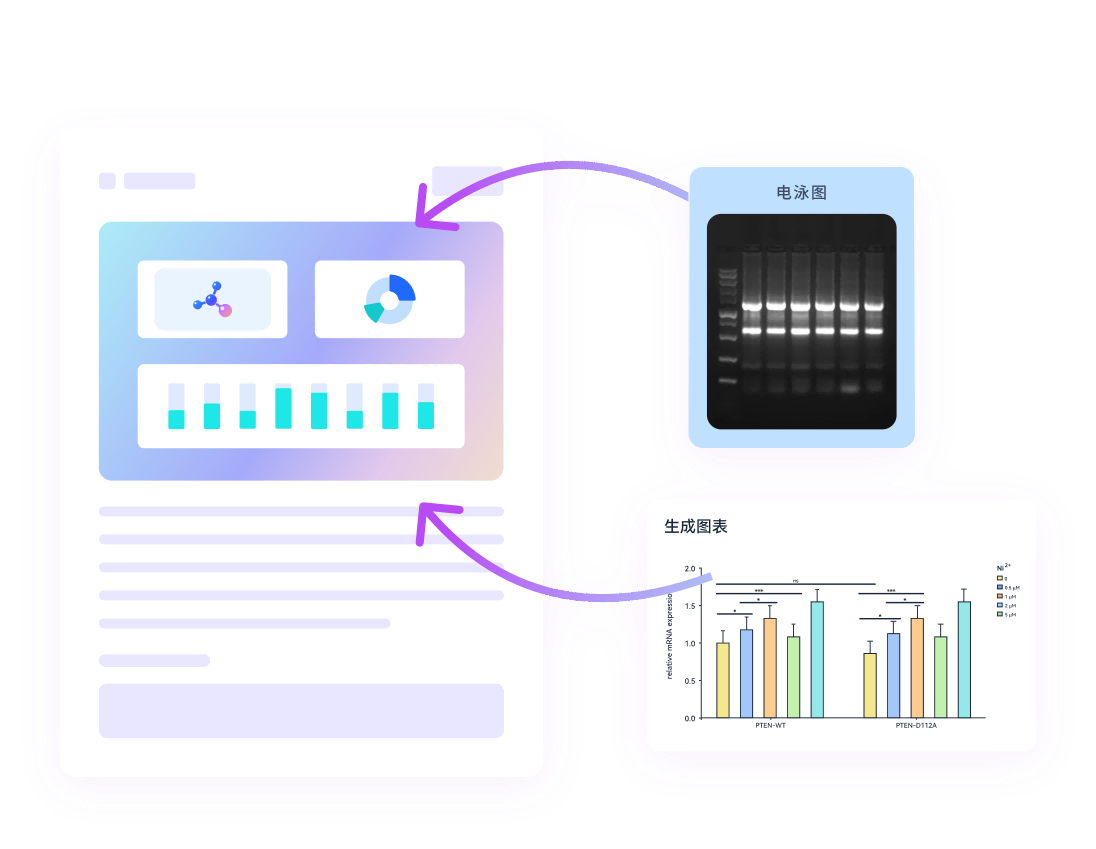
Molecular biology has documentation needs that generic systems cannot address.
Sequence Data Integration. Molecular biology experiments generate and depend on sequence data—FASTA files, plasmid maps, primer sequences, alignment results. A generic documentation system may have no place for this information. A molecular biology-specific system ensures that sequence data is captured, linked, and traceable alongside experimental observations.
Complex Reagent Tracking. Molecular biology experiments use hundreds of reagents—enzymes, buffers, kits, antibiotics, competent cells, plasmids, primers. Each has a source, catalog number, lot number, and storage condition that can affect experimental outcomes. A specialized documentation system prompts researchers to capture this information consistently.
Dependent Data Chains. A cloning experiment depends on specific primer sequences, which depend on specific plasmid maps, which depend on specific sequence alignments. When these relationships are not documented, the experimental context is lost. A molecular biology documentation system captures these dependencies, creating a complete, traceable record.
Reproducibility. Molecular biology experiments are notoriously sensitive to subtle variations—a different lot of enzyme, a slight change in annealing temperature, a different batch of competent cells. Without complete records, experiments cannot be reliably reproduced. A specialized documentation system ensures that every critical detail is captured.
The Failure of Fragmented Documentation
Many molecular biology labs still rely on fragmented documentation practices—paper notebooks, spreadsheets, standalone sequence tools, and shared drives—that create significant problems.
Lost Context. When sequence design happens in one tool and experiment documentation in another, the connection between design decisions and experimental outcomes is lost. Researchers cannot easily determine why a particular primer was chosen or what plasmid map informed a cloning strategy.
Inconsistent Records. When different team members document experiments differently, records become difficult to compare, search, and trust. Different researchers include different levels of detail, use different formats, and capture different information—making it nearly impossible to understand past work without decoding each individual's documentation style.
Search and Retrieval Difficulties. As projects accumulate, finding past experiments becomes increasingly difficult. Paper notebooks are not searchable. Files scattered across drives and folders are difficult to locate. A 2025 survey of 150 scientists found that 65% reported having to repeat experiments because previous results were difficult to find or reuse.
Delayed Documentation. Many scientists end up "weeks behind" in updating their records, trying to reconstruct experiments long after the fact. That delay increases the risk that details will be forgotten or misrecorded, undermining the documentation's role as a faithful account of what actually happened.
Knowledge Loss. When team members leave, their knowledge often leaves with them—unless it was documented in a structured, accessible format. Fragmented documentation systems ensure that institutional knowledge is lost rather than preserved.
The ALCOA+ Framework: A Foundation for Trustworthy Records
The ALCOA+ framework provides the universal standard for data integrity in regulated environments—and a valuable foundation for any molecular biology lab seeking to improve documentation quality. Originally developed by the FDA to promote Good Documentation Practices, ALCOA+ has become the global baseline for trustworthy records.
Attributable. Every record must clearly identify who performed the action, who recorded it, and who reviewed it. In a documentation system, this means individual user accounts with unique credentials—no shared logins—and automatic attribution for every entry.
Legible. Records must be readable and permanent. Digital records eliminate the legibility problems common with handwritten notebooks and ensure that records remain accessible over time.
Contemporaneous. Data and observations should be recorded at the time they are generated—not reconstructed from memory hours or days later. Digital notebooks with time-stamped entries provide a clearer understanding of the timeliness of documentation.
Original. The first recording of any data or observation must be preserved. Corrections should be made as amendments, not by overwriting the original.
Accurate. Records must be free from errors and reflect the actual experimental conditions and results.
Complete. All data, including failed experiments and unexpected results, should be recorded. Selective documentation undermines scientific integrity.
Consistent. Documentation should follow standardized formats across the team.
Enduring. Records must be preserved in a format that remains accessible over time.
Available. Records must be retrievable when needed.
Core Components of an Effective Experiment Documentation System
An effective experiment documentation system for molecular biology rests on several integrated components.
Structured Templates. Templates are the foundation of consistent documentation. They define the sections that every experiment record should include—objective, materials (with lot numbers), methods (with deviations), observations, raw data, analysis, conclusions—ensuring consistency across the team. Templates can be tailored to specific experiment types: cloning, PCR, protein expression, cell culture, sequencing.
Sequence Data Integration. For molecular biology, experiment records must connect directly to sequence data—FASTA files, plasmid maps, primer sequences, alignment results. Keeping sequence tools and experiment records in the same workspace reduces context switching and improves traceability.
Structured Fields and Metadata. Wherever possible, use structured fields—dropdowns, checkboxes, numeric fields, date pickers—rather than free text. Structured data is searchable, sortable, and analyzable in ways that free text is not. Metadata fields—project, experiment type, date, researcher, gene name, plasmid name—enable rapid search and retrieval.
Version Control and Audit Trails. Experiments evolve. Protocols are refined, data are reanalyzed, conclusions are updated. The system should track versions of experiment records, capturing what changed, when, and by whom. Audit trails provide a complete, immutable record of every action—supporting reproducibility, accountability, and regulatory review.
File Management. Experiments generate files—gel images, sequencing traces, data exports, analysis files. An effective system keeps these files organized, versioned, and connected to the experiment records they support.
Team Collaboration. Research in molecular biology is inherently collaborative. The system should enable team members to share records, comment on each other's work, and stay aligned—all within the same platform where documentation happens.
Experiment-Specific Documentation Needs
Molecular biology labs have specific documentation needs that a general system may not address.
Cloning Experiments. Documentation must capture vector information (name, backbone, resistance markers), insert information (gene name, source, size), restriction enzymes used, ligation conditions, transformation method, and screening results (colony PCR, restriction digest, sequencing).
PCR and qPCR. Documentation must capture primer sequences (with melting temperatures and GC content), template DNA (source, concentration), cycling conditions, enzyme and buffer details, and results (gel image, Ct values, melt curves).
Protein Expression and Purification. Documentation must capture expression construct, host strain, induction conditions, lysis method, purification method, and yield and purity assessments (SDS-PAGE, Western blot, activity assay).
Sequencing. Documentation must capture sample information, primer used, sequencing method, and the sequence file itself with alignment to reference.
Why Current ELNs Are Falling Short
A November 2025 survey of 150 scientists across biopharma R&D, contract research organizations, and pharmaceutical manufacturing revealed significant gaps in current ELN solutions. Seventy-one percent of scientists said their ELN is hard to configure or adapt to new experiments. Sixty-five percent reported having to repeat experiments because previous results were difficult to find or reuse. Fifty-one percent said they spend too much time manually importing and exporting data between their ELN and other platforms.
These findings reflect a fundamental problem: many ELNs are designed as generic documentation tools rather than as integrated systems that support the specific workflows of molecular biology. Researchers describe ELNs as "frustrating and ill-suited to the way science actually happens, particularly in research that involves troubleshooting, repetition, and frequent changes in direction".
Building a Documentation System That Works
Implementing an effective experiment documentation system requires attention to both technical and organizational factors.
Start with Templates. Begin by creating templates for your most common experiment types. Don't try to create templates for everything upfront—start with a few essential ones and iterate based on real usage.
Integrate Sequence Tools. For molecular biology, the greatest value comes from connecting sequence design with experiment documentation. Choose a system that keeps these workflows in the same workspace, not separate tools.
Establish Documentation Standards. Define clear expectations for how experiments should be documented, what information must be included, and how records should be organized.
Provide Training. Even the best system is useless if team members don't use it properly. Provide training on how to use templates, why structured documentation matters, and what information should go in each section.
Lead by Example. When principal investigators and lab managers use the documentation system consistently, the rest of the team is more likely to follow.
How Zettalab Supports Experiment Documentation for Molecular Biology
Zettalab is designed as a cloud-based R&D workspace that brings molecular biology tools, experiment documentation, file storage, and team collaboration into a unified platform. For molecular biology teams implementing an experiment documentation system, Zettalab offers several integrated capabilities.
ZettaNote provides a structured electronic lab notebook with customizable templates that enforce consistent documentation across the team. Team members can create templates for common molecular biology experiment types—cloning, PCR, protein expression, cell culture, sequencing—ensuring that every experiment captures the information most relevant to that workflow. Templates can include structured fields, dropdowns, checkboxes, prompts, and placeholders that guide users through the documentation process. The platform supports template versioning, ensuring that templates can evolve as research methods change. Automatic timestamps and user attribution enforce the ALCOA+ principles of contemporaneous recording and attribution.
ZettaGene supports DNA sequence visualization, editing, plasmid construction, primer design, sequence alignment, and translation. By keeping sequence design tools in the same workspace as experiment records, ZettaGene enables researchers to link experimental observations directly to the sequence data that informed them—supporting the completeness and traceability that a well-designed documentation system requires.
ZettaFile provides team-friendly file storage with permission management, online document editing, and batch upload and download. Researchers can attach sequencing traces, gel images, protocols, and other files to experiment records, keeping all relevant materials in one place with clear access controls.
Together, these components support a workflow where experiment documentation is not a separate administrative task but an integrated part of the research process. Teams can design sequences, document experiments, store project files, and collaborate—all within a single workspace designed for molecular biology research.
Implementation Considerations
Adopting an experiment documentation system requires attention to both technical and organizational factors.
Start with a Pilot Project. Rather than rolling out the system to the entire lab at once, begin with a single project or sub-team. This allows researchers to learn the system, provide feedback, and identify workflow adjustments before broader adoption.
Define Documentation Standards. A system is only as useful as the data entered into it. Establish clear expectations for how experiments should be documented, what information must be included, and how records should be organized.
Configure Permissions Thoughtfully. Role-based permissions should reflect the team's actual structure. Principal investigators may need access to all project data, while individual researchers should have appropriate access to their own work and shared resources.
Plan for Data Migration. Existing experiment records, sequence files, and project documents need to be transferred to the new system. Prioritize active projects and frequently referenced data first.
Invest in Training. Even intuitive systems require some learning. Provide training sessions, documentation, and ongoing support to help team members transition.
FAQ
What is an experiment documentation system for molecular biology?An experiment documentation system for molecular biology is an integrated digital infrastructure—built around an electronic lab notebook—that enables researchers to document, organize, store, and retrieve experimental data, observations, protocols, and associated files in a structured, searchable, and auditable format designed for molecular biology workflows.
Why does molecular biology need a specialized documentation system?Molecular biology has unique documentation needs: sequence data integration, complex reagent tracking, dependent data chains (primers→plasmids→cloning), and sensitivity to subtle experimental variations. Generic systems lack the structured fields and integrations needed to capture these effectively.
What is the ALCOA+ framework?ALCOA+ is a set of nine data integrity principles: Attributable, Legible, Contemporaneous, Original, Accurate, Complete, Consistent, Enduring, and Available. It provides the foundation for trustworthy records in regulated environments.
Why are current ELNs falling short for molecular biology?A 2025 survey found that 71% of scientists said their ELN is hard to configure or adapt to new experiments, 65% reported having to repeat experiments because previous results were difficult to find or reuse, and 51% spend too much time manually importing and exporting data.
What should an experiment documentation system include?Key components include structured templates with required fields, sequence data integration, metadata for searchability, version control and audit trails, file management, and team collaboration features.
How do templates support documentation consistency?Templates define the sections that every experiment record should include, ensuring that all critical information—objective, materials (with lot numbers), methods (with deviations), observations, raw data, analysis—is captured consistently across the team.
How does Zettalab support experiment documentation for molecular biology?Zettalab provides ZettaNote for structured ELN documentation with customizable templates, ZettaGene for integrated sequence design and analysis, and ZettaFile for secure file storage—all within a unified cloud-based workspace for molecular biology research.
Is an experiment documentation system suitable for all molecular biology labs?Yes. While the specific implementation may vary, the principles of structured documentation, sequence integration, and traceability benefit molecular biology labs of all sizes—from academic research groups to biotech startups and pharmaceutical R&D organizations.
Conclusion
An experiment documentation system for molecular biology is essential for research teams that value reproducibility, collaboration, and scientific integrity. The right system should combine structured templates that enforce consistency, sequence data integration that maintains experimental context, metadata that enables search, version control and audit trails that support traceability, and team collaboration features that enable seamless teamwork. The ALCOA+ principles provide a foundation for trustworthy records, ensuring that documentation is attributable, legible, contemporaneous, original, accurate, complete, consistent, enduring, and available. Fragmented documentation approaches—paper notebooks, spreadsheets, standalone tools—cannot provide the integration, searchability, and traceability that modern molecular biology demands. A unified documentation system transforms record-keeping from a fragmented burden into a strategic asset that supports reproducible science, protects intellectual property, and prepares teams for regulatory scrutiny.
Zettalab offers a cloud-based R&D workspace that brings these elements together, with ZettaNote for structured ELN documentation with customizable templates, ZettaGene for integrated sequence design and analysis, and ZettaFile for secure file storage with permissions. Teams interested in exploring how an experiment documentation system can transform their molecular biology research practices can start with a free trial or request a demo to see the platform in action.