ELN Integration for Plasmid Design Traceability
ELN integration for plasmid design links an exact construct version with the records and evidence that use it. The goal is traceable design-to-bench context, not a generic attachment.
When a plasmid map and a cloning record live in separate systems, researchers may document a filename without preserving which version it represents. Integration should make the referenced design durable and reviewable even after the construct evolves.
Traceability Depends on Identity and Version
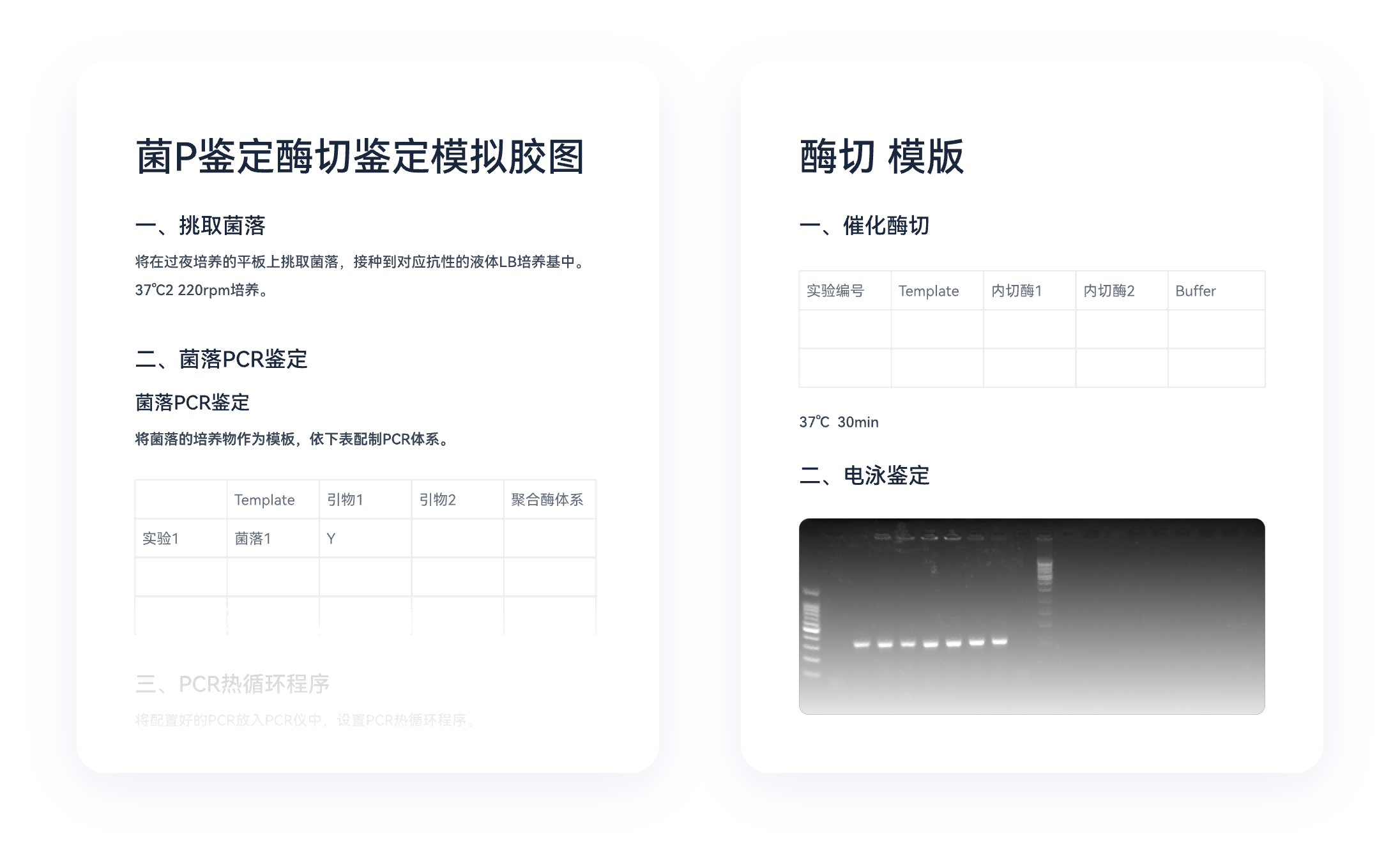
A stable construct identifier answers what the object is; a version answers which design state was used. Both are needed. If an experiment cites only a project name or mutable link, later edits can make the record appear to reference a design that did not exist when the work was performed.
Teams should define identifiers before migration or integration. The scheme should be understandable, unique, and independent of personal naming habits. Verification status should remain separate from design version so a proposed construct is not mistaken for a confirmed physical sample.
References Should Preserve a Snapshot or Immutable Version
An ELN link should resolve to the exact design state used in the experiment or preserve a snapshot with its checksum or equivalent record. A link that always opens the latest editable file weakens traceability because the underlying content can change after the record is reviewed.
What the Design-to-ELN Link Should Carry
| Linked Element | Purpose | Review Evidence |
|---|---|---|
| Construct ID and version | Identifies the exact expected plasmid | Sequence file and annotated map |
| Source components | Shows vector, insert, and component provenance | Referenced records or library entries |
| Primer set | Connects amplification and assembly decisions | Sequences, purpose, and expected products |
| Construction method | Explains how the design reaches the bench | Protocol version and planned junctions |
| Observed evidence | Supports screening and verification conclusions | Images, raw reads, alignments, and notes |
| Review status | Shows whether the record is ready for reuse | Reviewer, date, decision, and limitations |
Use ELN Templates to Capture Molecular Context
A cloning template should prompt researchers to reference the construct version, primer pair, assembly method, expected products, protocol, deviations, and verification plan. It should not require them to paste every sequence into a text field, because duplication creates another version to maintain.
ZettaGene and ZettaNote operate within the Zettalab product workspace. ZettaGene supports plasmid and sequence design, while ZettaNote supports structured experiment documentation, making the combination relevant to design-to-record continuity.
Document Why the Design Changed
A sequence difference may be clear in a comparison, but the reason can still be lost. The record should state whether a change addressed a restriction site, reading frame, tag, promoter, guide cassette, or another experimental requirement. Rationale makes the version history scientifically useful.
Close the Loop with Verification Evidence
After construction, the ELN record should connect observed results with the expected plasmid. Colony-screening data, diagnostic digests, sequencing reads, alignments, and reviewer conclusions each answer different questions. The record should show which evidence supports the final status.
The Zettalab Academy provides workflow guidance for sequence, primer, cloning, and documentation tasks. Labs should adapt templates and evidence requirements to their own validated methods.
Integration Does Not Create Compliance by Itself
Linking designs with experiment records can support traceability and audit-ready documentation, but compliance depends on procedures, validation, access controls, training, review, retention, and quality oversight. Teams should avoid treating a technical integration as proof that every record meets a regulatory requirement.
For security-sensitive workflows, review who can edit designs, approve records, export files, and change permissions. Data ownership and retention rules should cover both the ELN entry and the linked molecular files.
Implement the Connection in a Small Pilot
Begin with one repeated cloning workflow. Define the construct identifier, version rule, template fields, handoff state, and required verification evidence. Run the pilot through a real design revision and check whether the ELN continues to point to the correct prior version.
Teams can measure missing references, time spent locating sequence files, review questions about construct identity, and experiments linked to outdated designs. The Zettalab pricing page can support plan comparison after the workflow requirements are clear.
FAQ
What does ELN integration with plasmid design software mean?
It means an experiment record can reference the exact plasmid design, sequence version, annotations, primers, and related files used in the work. Strong integration preserves identity and version rather than attaching an ambiguous map image or filename. It should also support a path from design through bench execution to verification evidence. The goal is to let a reviewer reconstruct which construct was planned, what was done with it, what results were observed, and how the team reached its conclusion.
Why is a plasmid version important in an ELN record?
Plasmid designs often change during primer review, assembly planning, troubleshooting, or verification. If the ELN points only to the latest file, a later change can alter the apparent context of an earlier experiment. Recording an immutable version or snapshot preserves what the researcher actually used. This is essential for interpreting failed and successful experiments, comparing results, and preventing a validated record from being associated with an untested design revision.
What fields belong in an ELN template for plasmid construction?
The template should include construct ID and version, source vector and insert, primer references, assembly method, protocol version, expected junctions or products, materials, execution details, deviations, screening results, sequencing or alignment evidence, conclusion, review status, and next steps. Fields should link to authoritative molecular records rather than encourage uncontrolled sequence copying. The template can be adapted to the lab's methods while preserving enough context for review and future reuse.
Can an ELN audit trail track plasmid design changes?
An ELN audit trail can track changes made inside the ELN, but it may not capture edits inside a separate plasmid design tool unless the systems are connected appropriately. Teams should evaluate whether design versions, authorship, timestamps, and change context are preserved in the molecular tool and whether the ELN reference remains tied to a specific version. Traceability depends on both systems and the workflow between them, not on the ELN audit trail alone.
How should labs migrate existing plasmid records into an ELN?
Labs should first identify authoritative constructs, assign stable identifiers, remove obvious duplicates, preserve original files, and record verification status. They can then link high-value active designs to current experiments before attempting a full archive migration. Legacy records should not be labeled as verified without supporting evidence. A phased approach lets the team test naming, permissions, templates, and version references while reducing the risk of importing inconsistent metadata at scale.
Conclusion
ELN integration improves plasmid traceability when stable identities, immutable versions, primer context, bench records, and verification evidence remain connected. The relationship must survive design changes and review. Explore ZettaGene and ZettaNote in one R&D workspace to evaluate this design-to-documentation model.
Related Articles