Laboratory Digital Records Are Reshaping How Modern Labs Work
For a long time, laboratory records were treated as static documentation. Scientists ran the experiment, wrote down what happened, attached supporting material, and archived the notebook. That model worked when teams were smaller, data volumes were lower, and research moved at a slower pace.
That is no longer the reality.
Modern labs generate huge amounts of information across experiments, instruments, files, protocols, images, and team discussions. In that environment, laboratory digital records have become far more than a replacement for paper. They are now a core part of how research teams preserve context, collaborate efficiently, and build reusable scientific knowledge.
Why Paper Records No Longer Match Digital Science
Paper notebooks still offer familiarity, but they struggle to support the real demands of modern research.
A paper record cannot be searched instantly. It cannot easily connect to raw data files, instrument outputs, or shared project folders. It cannot support distributed review or real-time collaboration across teams. And when context is split between notebooks, folders, and messages, even detailed records can become hard to interpret later.
That gap is exactly why laboratory digital records are gaining importance. They help turn isolated notes into structured, accessible research assets.
What Laboratory Digital Records Really Include
The term laboratory digital records goes beyond typed notes or scanned notebook pages. In a strong scientific environment, digital records usually include:
- Experiment descriptions and observations
- Protocols and method updates
- Raw and processed data files
- Images, figures, and attachments
- Revision history
- Linked project context
- Team comments and collaboration trails
- Access controls and auditability
The real value comes from how these elements stay connected. A digital record is useful not because it exists online, but because it preserves the full story of the work.
The Shift From Storage to Scientific Memory
One of the biggest changes in lab informatics is the move from simple storage toward usable scientific memory.
A file server can store information. A cloud drive can hold folders. But neither automatically creates a reliable research record. Labs need systems that make it possible to understand past work months or years later without depending on the memory of the original researcher.
That is why laboratory digital records matter so much. They help labs retain not just outputs, but context.
What Labs Gain From Better Digital Records
When digital records are well implemented, the benefits are operational and scientific at the same time.
Faster Retrieval
Researchers can find past experiments, methods, and attached files quickly instead of manually searching through notebooks and folder structures.
Better Collaboration
Supervisors, collaborators, and team members can access the same record environment without waiting for physical notebooks or fragmented file transfers.
Stronger Reproducibility
A more complete digital trail makes it easier to reconstruct exactly what was done and how results were generated.
Higher Documentation Quality
Templates, structured fields, and consistent workflows help reduce variation in how experiments are recorded across teams.
More Durable Knowledge
Digital records preserve institutional knowledge more effectively, especially when people move roles or projects evolve over time.
What Good Laboratory Digital Record Systems Need to Do
Not every digital platform supports scientific work equally well. The strongest systems tend to share several traits.
They make documentation easy enough for daily use. They support rich attachments and metadata. They preserve provenance instead of overwriting history. They allow controlled collaboration. And they make historical records easy to search and understand.
In practical terms, strong laboratory digital record systems usually offer:
- Searchable experiment records
- Structured templates or flexible entry formats
- File and image attachments
- Version history and audit trails
- Permission-based access
- Project-level organization
- Long-term archiving and retrieval
The best systems reduce friction rather than adding it.
ZettaLab and the Future of Connected Digital Records
One platform aligned with this direction is ZettaLab.
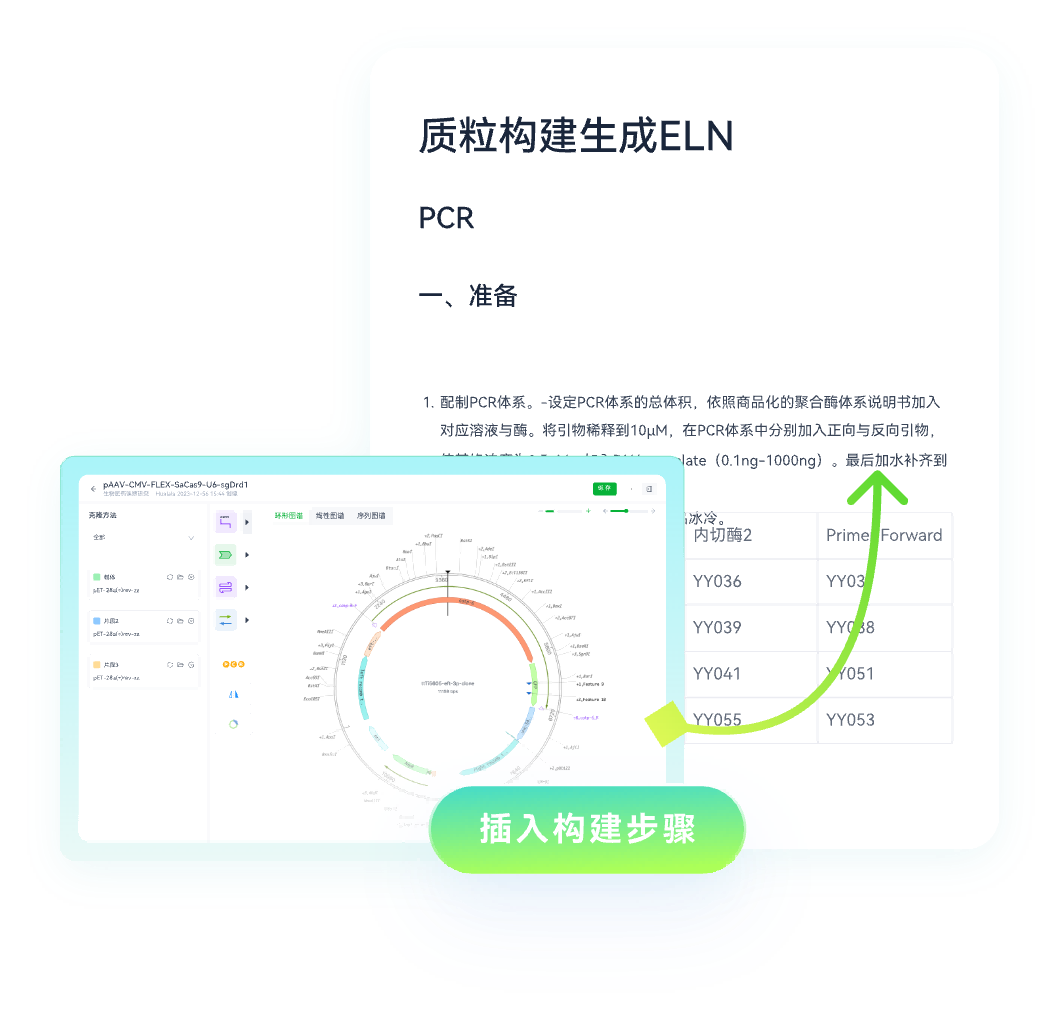
ZettaLab combines electronic lab notebook functionality with molecular biology tools and collaborative documentation in a cloud-based research environment. Its capabilities include sequence visualization and editing, plasmid construction, primer design, sequence alignment, experiment documentation, shared file collaboration, and permission-aware workflows.
That makes ZettaLab highly relevant to the laboratory digital records conversation. In life science research, records are often inseparable from sequence assets, construct design, experiment files, and team coordination. A fragmented software stack weakens that connection. ZettaLab helps keep those elements together, making records more complete and more useful in everyday research.
For molecular biology and biotech teams, this kind of connected platform can significantly improve how digital records support real scientific work.
How to Evaluate a Laboratory Digital Records Platform
If your lab is comparing options, the right question is not just whether the system is digital. The real question is whether it improves the quality and usability of the record.
A useful evaluation should consider:
- Can scientists document work naturally and consistently?
- Can records be searched and understood later?
- Can files, notes, and project context stay linked?
- Does the system support secure collaboration?
- Will it scale with more users, more data, and more projects?
- Does it fit scientific workflows instead of generic office workflows?
The best platform is the one that helps the lab create records that remain useful long after the experiment is done.
Final Thoughts
The rise of laboratory digital records reflects a larger change in science. Labs no longer need documentation systems that simply capture information. They need systems that preserve context, support collaboration, and strengthen the long-term value of research.
Paper notebooks helped define the history of science, but modern research demands something more connected and more usable. Digital records are becoming foundational infrastructure for labs that want better continuity, stronger reproducibility, and more efficient teamwork.
For life science teams in particular, platforms like ZettaLab point toward the next stage of this shift: research environments where documentation, scientific tools, and collaboration are no longer separate layers, but part of one connected system.
Related Articles