Digital Experiment Record Formats: What Research Labs Should Capture
A digital experiment record format for research labs is a structured set of fields that captures the data context, reagent lineage, instrument settings, and decisions behind each experiment so the work can be reviewed and reproduced. Unlike an industrial batch record, a research lab record has to accommodate exploratory work, evolving hypotheses, and contributors with different training levels while still remaining traceable.
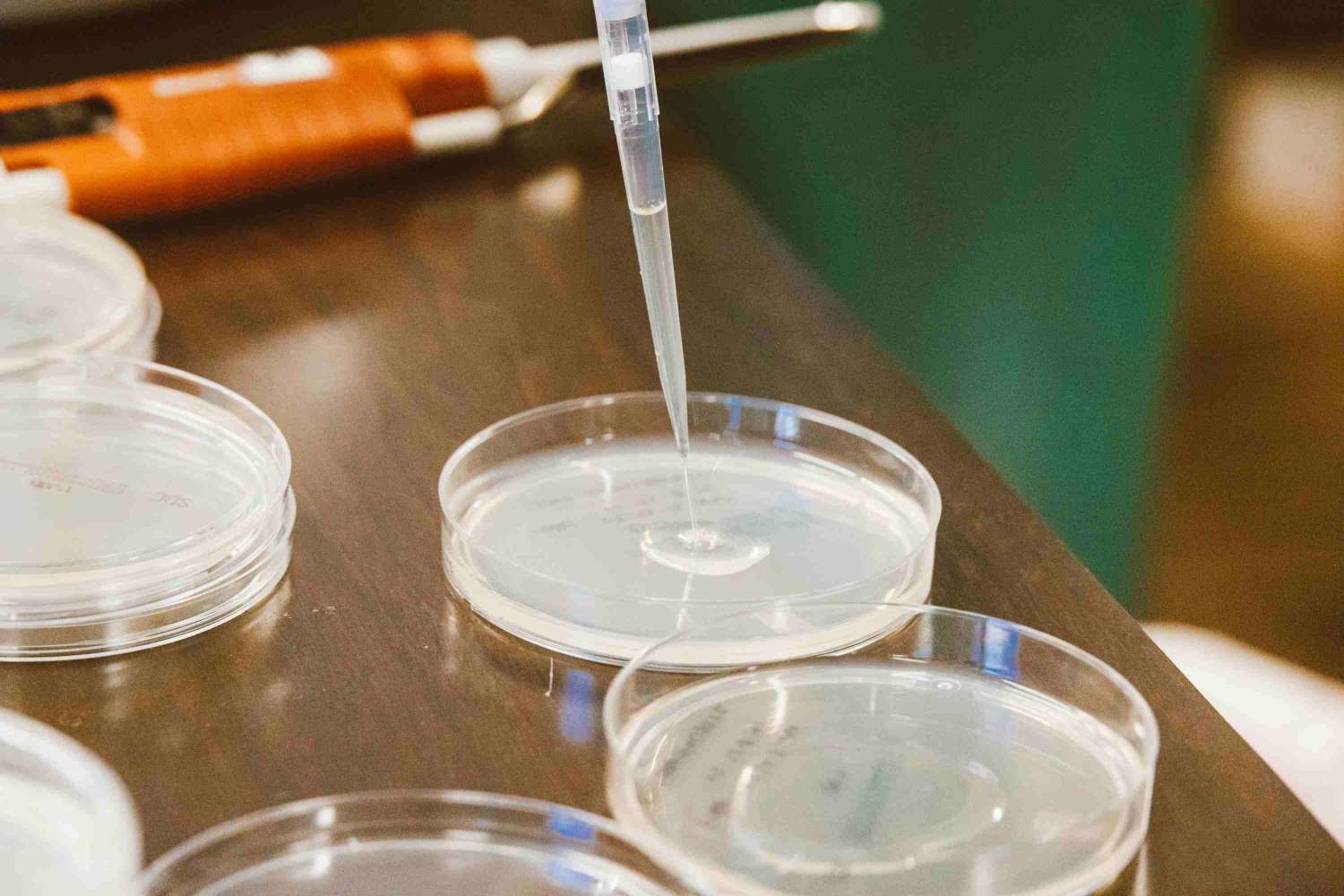
For academic and early-stage research teams running molecular biology workflows, the value of the format is not in matching a regulatory template but in preserving the links between a sequence file, the primers used, the cloning result, and the researcher's reasoning. This guide covers what research labs should capture, which fields are most often missing, and how to choose a format that survives personnel turnover.
Why research labs need a different record format than industry
Industrial records optimize for consistency and audit. Research records optimize for context and continuity. A PhD student may run a cloning experiment once, move to another project, and leave the lab months later; the next person who opens that notebook must reconstruct what was tried, why, and whether it can be trusted. A format built only for "did the protocol run correctly" loses exactly the information a research successor needs.
The core difference is that research labs generate hypotheses and dead ends, not just confirmed results. A useful format must make negative results and abandoned conditions as findable as the successful run, because that is what prevents the next person from repeating a known failure.
The data context that disappears first
When a researcher writes "transformed with plasmid pXX," the information that decays fastest is rarely the plasmid name. It is the sequence version, the source construct, the primer pair, the restriction sites used, and the host strain. Without those, the name is a pointer to nothing. Research labs lose reproducibility most often not because the protocol was wrong but because the pointer could no longer be resolved.
The fields a research lab record format should capture
A defensible research lab format treats each experiment as a node connected to other data objects rather than a standalone text entry. The minimum fields below are derived from common reproducibility failures in molecular biology teams.
| Field | What to capture | Why research labs need it |
|---|---|---|
| Objective and hypothesis | The question being asked, not just the action taken | Distinguishes a test from routine work; helps a successor judge relevance |
| Linked sequence objects | Plasmid, insert, and primer identifiers with version or hash | Resolves the pointer when files are renamed or moved |
| Reagent lineage | Source, lot, preparation date, and storage location | Surfaces batch effects when a result fails to replicate |
| Instrument settings | Program, cycling parameters, and calibration reference | Catches silent drift between machines or runs |
| Result and raw data link | Observation plus a stable link to gel image, trace, or file | Keeps the interpretation separable from the evidence |
| Decision and next step | What was concluded and what happens next | Prevents orphan experiments that no one acts on |
| Negative and abandoned results | Conditions that did not work and why they were dropped | Stops the team from retrying known dead ends |
Make linked objects resolvable, not just named
A field that stores only a free-text plasmid name is a common failure mode in research labs. A more robust format links the name to the actual sequence record and records the version that was used at the time of the experiment. When the sequence is later corrected, the historical record still points to the version that produced the original result, which is what reproducibility actually requires.
Fields research labs most often leave out
Most research notebooks capture the protocol and the result. The fields that most often go missing are the ones that make the record reusable by someone other than the original author.
- The reasoning behind a parameter change. A researcher raises an annealing temperature but never notes why; the next person cannot tell whether it was deliberate or a typo.
- The reference used. A protocol adapted from a paper or a colleague is written down without the source, so the team cannot check whether the adaptation was correct.
- The failure mode. A cloning attempt that produced no colonies is marked "failed" with no diagnosis, hiding a recurring ligation or competency problem.
- The data location. A gel photo is described but stored on a personal drive that is later wiped, severing the record from its evidence.
Free text is not a format
A research lab that relies on each person's preferred prose will produce records that are readable only by the author and only for a few months. Structured fields do not remove the need for narrative notes, but they ensure the critical, reusable facts survive regardless of how the narrative is written. The narrative explains the experiment; the structured fields guarantee it can be found and reconstructed.
Choosing a format that survives personnel turnover
Research labs rotate students, postdocs, and technicians on timelines that do not align with project completion. A format that depends on one person's memory or filing convention is a format that will fail when that person leaves. The selection criteria below focus on continuity rather than compliance.
| Selection criterion | What to look for | What it prevents |
|---|---|---|
| Shared, not personal | One format enforced across the team, not per-author free text | Records that only the original author can interpret |
| Linked, not copied | Sequence and file references stored as links with versions | Divergent copies and broken pointers after a rename |
| Searchable across people | Full-text and field search across the whole lab, not one notebook | Lost knowledge when a contributor departs |
| Editable with history | Corrections tracked with author and timestamp | Silent edits that erase what was originally observed |
| Captures negative results | A clear way to mark and find abandoned conditions | Repeated attempts at approaches already disproven |
Platforms that connect sequence tools with experiment records, such as the Zettalab molecular biology workspace, are relevant here because ZettaNote keeps the experiment narrative linked to the sequence and file objects rather than treating the notebook as an isolated text store. That linkage is what lets a successor resolve a plasmid reference months later instead of chasing a name.
A research lab adoption sequence
- Agree on the minimum fields first. Pick the seven fields above as a floor; let teams extend but not shrink them.
- Link before you narrate. Require a sequence or file link with version before the protocol text; free text alone is rejected at review.
- Make negative results a first-class entry. Add an explicit field for abandoned conditions and the suspected cause.
- Review for resolvability, not only completeness. A reviewer checks whether a new team member could reproduce the entry, not whether every box is filled.
- Index the whole lab. Ensure search spans every contributor so knowledge is not trapped in one notebook.
FAQ
What should a digital experiment record format capture for a research lab?
It should capture the objective, linked sequence and reagent objects with versions, instrument settings, the result with a link to raw data, the decision and next step, and negative or abandoned results. The goal is not to match an industrial batch record but to preserve the data context and reasoning so a successor can reproduce or safely continue the work after the original author leaves.
Why do research lab experiment records become hard to reproduce?
Reproducibility usually fails because linked objects can no longer be resolved, not because the protocol was wrong. A plasmid name without a sequence version, a reagent without a lot or source, or a gel image stored on a personal drive all break the link between the record and the evidence. Structured fields that store links and versions, rather than free-text names, are what keep the record usable over time.
How is a research lab record format different from an industrial one?
An industrial record optimizes for consistency and audit across repeated runs. A research record optimizes for context and continuity across exploratory work, changing hypotheses, and rotating personnel. Research formats must therefore capture reasoning, negative results, and linked data objects that an industrial template, focused on whether a fixed protocol ran correctly, would typically omit.
Should a research lab use structured fields or free-text notes?
Both, but for different jobs. Structured fields guarantee that the reusable facts, such as sequence versions, reagent sources, and result links, survive regardless of writing style. Free-text notes explain the reasoning and context behind those facts. A format that relies on free text alone produces records readable only by the author and only briefly, because the critical facts are not guaranteed to be captured.
How do research labs keep records usable after a contributor leaves?
By enforcing one shared format across the team, linking sequence and file objects with versions instead of copying names, indexing every contributor's records in one searchable store, and tracking edits with author and timestamp. These practices ensure that knowledge lives in the lab's records rather than in one person's memory, so departure does not erase what was learned.
Conclusion
A digital experiment record format for research labs succeeds when a new team member can reconstruct, reproduce, or safely continue a past experiment without the original author. Capture linked sequence and reagent objects with versions, preserve negative results, and review for resolvability rather than box-checking. Research teams evaluating a connected documentation workflow can review ZettaNote and the Zettalab sequence tools to see how experiment records stay linked to the data that shaped them.
Related Articles