Grna Design Tools Compared by PAM Off-target and Handoff
CRISPR guide RNA software is a design system that proposes spacers against a genome build, applies a PAM rule, scores likely off-targets, and should return something a cloning team can freeze on a plasmid map. Comparison should follow those four dimensions, not a popularity contest among websites.
This review covers academic servers, vendor portals, genome-wide indexes, and cloud workspaces. It is not a ranking and it does not predict editing success in cells.
What Guide RNA Software Must Return Before a Spacer Is Frozen
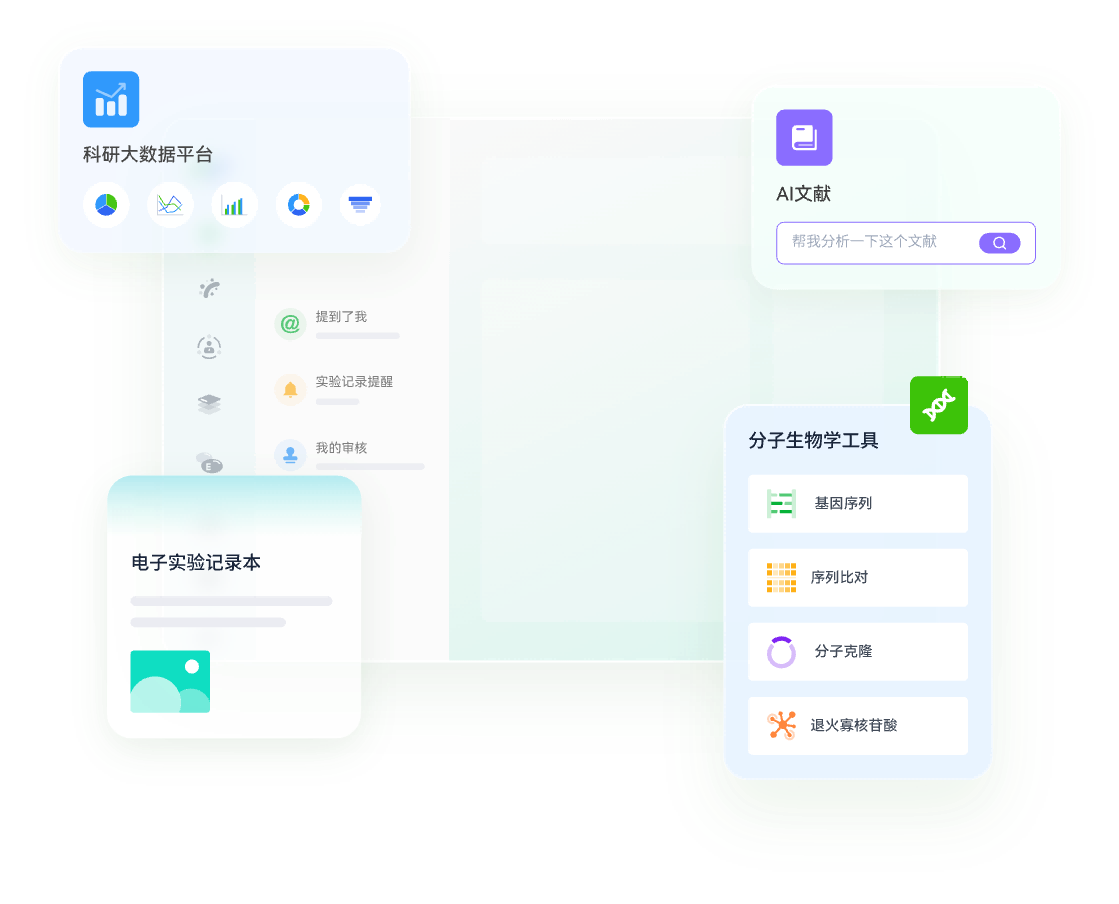
A spacer is not finished when it looks unique in a browser. The record has to name genome build, nuclease, PAM, on-target score, off-target method, and the oligo or fragment that will place that spacer in a known scaffold. Cloning teams fail when those fields stay on a personal screenshot.
Two extra constraints show up only at cloning time: a Pol III terminator inside the guide, and a Type IIS site that breaks Golden Gate. Scoring sites that ignore the destination backbone will happily recommend a spacer the lab cannot assemble.
Connected molecular biology software is relevant when the accepted spacer is stored on the same map that will be transformed. Public servers remain useful for genome-wide search, especially on assemblies a commercial workspace does not host.
Overview of CRISPR Guide RNA Tools Labs Evaluate
Columns match the comparison intent: genomes, PAM, off-target method, and how a team hands the spacer to a construct. "Varies" means you must open the current form; menus change as nucleases are added.
| Tool | Genomes | PAM / nucleases | Off-target method | Team handoff |
|---|---|---|---|---|
| CRISPOR | Many public assemblies | Cas9, Cas12a, and other PAM classes | MIT / CFD-style specificity | Oligos and primers on the result page |
| CHOPCHOP | Many species; gene-centric | Multiple nucleases; custom PAM options | Off-target plus activity-style filters | Export from the result table |
| Benchling | Configured genome set | Depends on tenant CRISPR module | Platform scoring in the sequence file | Spacer stays on the cloud construct |
| IDT | Catalog species | Aligned to Alt-R reagent formats | IDT design rules | Design-to-order RNA or oligos |
| Synthego | Selected species | Aligned to synthetic sgRNA products | Vendor design rules | Order path, not a lab plasmid store |
| GuideScan | Precomputed genome-wide indexes | Cas class as indexed | Index-based specificity search | Export guides; map work is separate |
| Zettalab | Genomes enabled in the workspace | Guide design next to the construct | On-target and off-target scores in-project | Spacer on a shared map and notebook |
CRISPR Guide RNA Software Labs Commonly Evaluate
Academic servers lead on genome breadth. Vendor portals lead on reagent ordering. Index tools lead on genome-wide uniqueness searches. Workspaces lead on not losing the spacer after it is chosen. Cloning teams usually need two of those classes, not one winner.
CRISPOR (UCSC / TEFOR)
Company Background: CRISPOR is an academic web server for CRISPR guide selection, associated with work from Jean-Pierre Concordet and Maximilian Haeussler and described in a 2018 Nucleic Acids Research paper. Hosting has included TEFOR and UCSC genomics resources.
Core Products/Direction: Users paste a target, choose a genome and PAM, and receive guides with MIT and CFD-style specificity scores plus predicted off-targets. The same page commonly returns PCR primers and cloning oligos for widely used Cas9 backbones.
Technical Approach: CRISPOR is a genome-wide specificity calculator. It does not version the lab's private plasmids or ELN entries. Handoff is copy, export, or retyping unless the lab pastes output into its map tool immediately.
Best Suited For: Academic and core-lab users who need a cited scoring method or an unusual assembly. Cloning still happens in a separate sequence tool.
CHOPCHOP (University of Bergen)
Company Background: CHOPCHOP is an academic CRISPR design server maintained at the University of Bergen. Later versions expanded beyond SpCas9 into additional nucleases and some non-CRISPR editors.
Core Products/Direction: The interface accepts a gene name or sequence, species, nuclease, and edit type. Results mix off-target information with predicted activity and sequence features such as GC content.
Technical Approach: CHOPCHOP is gene-centric and multi-nuclease, including custom PAM options in advanced settings. Like other public servers, it proposes genomic sites rather than managing a private plasmid library.
Best Suited For: Groups switching among Cas9, Cas12a, or Cas13, or working across several model species. House-backbone cloning still needs a map tool.
Benchling
Company Background: Benchling is a San Francisco R&D software company founded in 2012. CRISPR design is a module inside sequence files, not a standalone public server.
Core Products/Direction: Users search guides against a configured genome, review off-targets, and keep the spacer on the construct collaborators already open. Some workflows preview additional editor types; availability depends on the tenant.
Technical Approach: Handoff is native if the clone lives in Benchling. Genome breadth is whatever the tenant has loaded. Unusual assemblies may still need CRISPOR or GuideScan as a second pass, with the accepted spacer copied back.
Best Suited For: Teams already documenting constructs in Benchling. One-off off-target checks on a rare genome may be faster on a public server.
Integrated DNA Technologies (IDT)
Company Background: Integrated DNA Technologies is a nucleic acid manufacturer in Coralville, Iowa, and part of Danaher. Design utilities support the Alt-R reagent line.
Core Products/Direction: Tools propose guides compatible with IDT crRNA, sgRNA, and Cas9/Cas12 reagent formats. Accepted designs can move into oligo or chemically modified RNA manufacturing.
Technical Approach: Scoring follows catalog nucleases and IDT rules. The portal is optimized for ordering, not for storing annotated plasmid history. Plasmid cloning of a U6 cassette still needs a separate map.
Best Suited For: Groups buying chemically modified guides or complete Alt-R reagents. Teams that must archive a guide plasmid still need sequence software.
Synthego
Company Background: Synthego is a Redwood City, California company founded in 2012. It supplies synthetic guide RNAs, knockout reagents, and engineered cell services, with design software attached to that supply chain.
Core Products/Direction: Site tools propose guides for selected species and nucleases and can route designs into synthetic sgRNA or cell-engineering orders. Public documentation has also pointed users to academic servers for additional nuclease menus.
Technical Approach: This is a reagent and cell workflow with a design front end. In-house plasmid cloning, restriction simulation, and ELN review of a clone are out of scope.
Best Suited For: Labs that prefer synthetic sgRNA or knockout cell products over cloning a guide plasmid. Archive a spacer record even if no plasmid is built.
GuideScan
Company Background: GuideScan (including later GuideScan2 work) is an academic genome-wide CRISPR guide and off-target indexing approach associated with research groups including the Sanjana laboratory. It is a computational resource, not a commercial ELN.
Core Products/Direction: Precomputed indexes support systematic guide selection and specificity search across a genome, which is a different job from pasting a short target into a web form. Output is a set of candidate guides with index-based off-target information.
Technical Approach: GuideScan is strongest when the lab needs genome-wide uniqueness rather than a one-gene sketch. It does not draw the lab's U6 plasmid. Handoff is export into a map tool, with the genome build recorded beside the spacer.
Best Suited For: Groups running large guide sets, screens, or strict uniqueness filters. A cloning team still needs a construct editor after the index search.
Zettalab
Company Background: Zettalab is a cloud-based R&D workspace for molecular biology teams. ZettaCRISPR covers guide RNA design with on-target and off-target scoring next to plasmid construction rather than on a separate public server.
Core Products/Direction: A selected spacer can be reviewed on the destination map, checked against cloning constraints, and linked to an electronic lab notebook record for later clone verification. Sequencing primers for the edit can be designed in the same workspace.
Technical Approach: The comparison dimension that changes is handoff: scores, plasmid context, and notes stay in one project. Genome-wide off-target search still depends on the genomes and PAM set enabled in the workspace; unusual assemblies may need CRISPOR, CHOPCHOP, or GuideScan as a second check.
Best Suited For: Cloning teams that want the accepted spacer on a shared plasmid and a reviewable experiment record. Scoring models and supported genomes should be confirmed in a trial. A cloning and sequence guide is useful when oligos must match a house backbone.
Genomes, PAM Classes, and Off-Target Methods
If the cell line is not the reference genome, uniqueness scores are a suggestion, not a fact. Record the accession or build in the clone record. Custom PAM fields matter for engineered nucleases; a Cas9-only portal will silently omit those sites.
Off-target methods are not interchangeable. MIT and CFD-style scores, mismatch enumerations, bulge handling, and genome-wide indexes answer different questions. When two tools disagree, compare settings before picking the more convenient spacer. Do not average scores into a fake consensus.
How a Selected Spacer Reaches a Shared Plasmid Map
Freeze genome, nuclease, and PAM. Lock spacer and scaffold. Generate oligos that match the destination backbone. Store verification primers that read the spacer junction. If the lab orders synthetic sgRNA instead of a plasmid, store lot number and the same scoring snapshot.
Candidate backbones can start from a plasmid library, but the spacer still has to be dropped in with the correct orientation. The cloning method, not the scoring website, decides whether a BsaI site inside the guide is fatal.
FAQ
What dimensions matter when comparing CRISPR guide RNA software?
Compare genome coverage, PAM and nuclease menus, the off-target method, and how the spacer reaches a construct or reagent order. A server that is excellent at specificity can still fail a cloning team if 20 bases are retyped by hand. Ask whether parameters are saved: build, nuclease, date, and user. For teams that document clones in an ELN, the design snapshot should attach to the verification experiment. Workspaces such as Zettalab keep scores and maps together; public servers and GuideScan remain useful as a second specificity check.
How is GuideScan different from CRISPOR or CHOPCHOP?
GuideScan is built around genome-wide indexes and systematic uniqueness search. CRISPOR and CHOPCHOP are interactive servers for a pasted target or gene, with transparent scoring and, in CRISPOR's case, cloning oligos for common backbones. All three are academic-style resources rather than lab inventory systems. A screen or a strict uniqueness requirement often starts in an index tool. A one-gene knockout often starts in CRISPOR or CHOPCHOP. Either way, the spacer must still land on a plasmid map or an RNA order form with the genome build recorded.
Can vendor gRNA designers replace a plasmid editor?
No. IDT and Synthego designers answer "which guide fits the reagents we sell." Plasmid software answers "does this spacer sit in our scaffold and marker, and which primers confirm it." If you order synthetic RNA, you still need a record of the spacer and scores. If you clone a U6 cassette, you need topology and assembly simulation. Use vendor tools when the supply chain is the point. Use lab sequence software when the plasmid is the point. Many labs do both for the same project.
Do off-target scores tell you the edit will work?
No. Off-target scores estimate whether similar genomic sites could be bound. They do not measure cutting in your cells, chromatin, or delivery. Treat them as a filter that removes obviously promiscuous spacers, then confirm the clone by sequencing and the edit by an assay you already trust. If tools disagree, inspect genome build, mismatch settings, and bulge handling. Record both outputs. Never treat a high on-target score as a wet-lab prediction. A cloned guide that was scored on the wrong assembly can look unique on paper and still cut a related locus in your cell line.
How should cloning teams store accepted guide RNA designs?
Store spacer, scaffold, genome accession or build, nuclease, PAM, score table or index version, oligo sequences, destination plasmid version, and the verification chromatogram. A spreadsheet of 20-mers is not enough if the scoring parameters disappear. Project permissions help when a CRO needs read access without editing the master map. Cloud workspaces can keep that bundle together. Desktop users should freeze a dated export whenever a guide is declared in use. If synthetic RNA is ordered instead of a plasmid, store the lot number with the same scoring snapshot so the experiment can still be reconstructed.
Conclusion
CRISPR guide RNA software compared along genomes, PAM, off-target method, and team handoff splits into academic servers, reagent portals, genome-wide indexes, and construct workspaces. CRISPOR and CHOPCHOP remain strong public scoring options. GuideScan fits systematic uniqueness search. IDT and Synthego fit design-to-order RNA. Platforms that keep the spacer on a plasmid map, including Zettalab's CRISPR tools, reduce copy-paste errors at cloning. Keep a primary path and a second tool for disputed off-targets. Teams that want design, maps, and records in one cloud workspace can review Zettalab's molecular biology tools and current plans.
Related Articles