What Is Computer-Aided Drug Discovery: From Target to Lead
Computer-aided drug discovery (CADD) is the use of computational methods to identify, design, and optimize drug candidates before and alongside wet-lab experiments. In simple terms, it helps researchers screen and rank molecules and predict how they bind to targets.
CADD matters to any team developing a new therapeutic, from biotech startups to pharma research groups, because computational screens prioritize which molecules deserve synthesis and testing. It does not replace the lab; it decides what enters it.
This guide explains the stages of computer-aided drug discovery, the key methods, and how computational findings move into wet-lab validation.
The Stages of Computer-Aided Drug Discovery
Drug discovery is a long pipeline, and computational methods contribute at every stage. The value of CADD comes from moving decisions earlier: problems that used to surface in animal studies are now flagged before a molecule is synthesized.
Target Identification and Validation
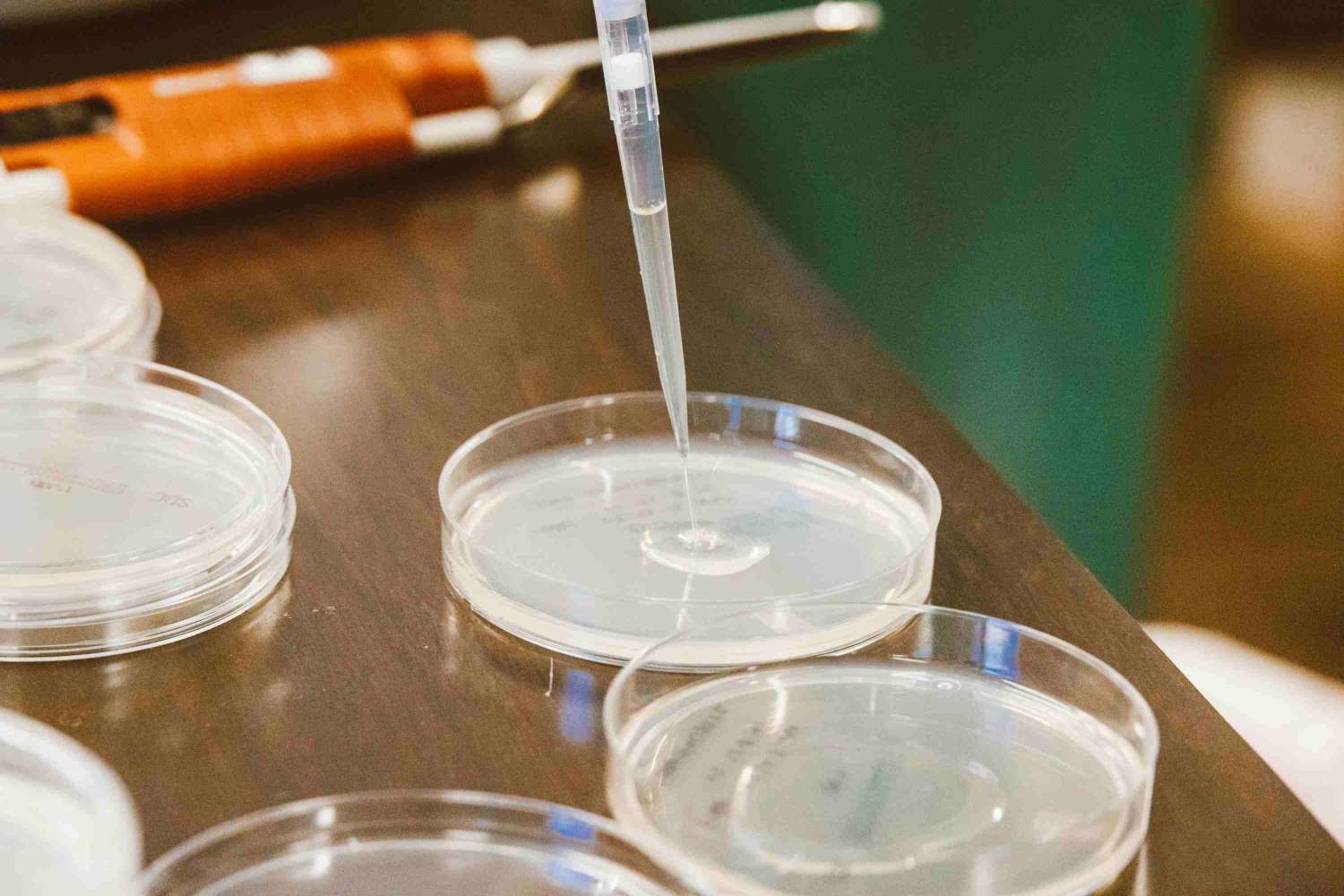
The pipeline starts with a biological target, usually a protein whose activity is linked to a disease. Computational methods help here through genomics analysis, structural prediction, and literature and database mining that connect a protein to a disease pathway. What computation cannot do is validate the target biologically, so the computational link is a hypothesis that must still be confirmed with genetic or pharmacological evidence in cells or animals.
Hit Discovery and Virtual Screening
Once a target is defined, the next question is which small molecules might bind it. Virtual screening takes a library of candidate compounds and scores them computationally against the target's structure or known ligands, ranking the most promising for physical testing. The screen does not prove activity; it narrows a huge chemical space into a manageable set of hits, which is where the practical time savings come from.
Lead Optimization
Promising hits become leads, and leads are iteratively refined for potency, selectivity, and drug-like properties. Computational models predict how chemical modifications change binding and properties, so chemists can focus synthesis on the most promising analogs. Each optimization cycle generates new data, which feeds back into the models, making the process a loop between computation and the bench.
Preclinical Support
Before a candidate reaches clinical trials, computational methods predict absorption, distribution, metabolism, excretion, and toxicity properties, commonly called ADMET. Early prediction of these properties filters out candidates that would fail later, and flags risks that experimental teams should check. The output is not a verdict; it is a prioritized list of risks that guide assay design and study planning.
Key Computational Methods in Drug Discovery
A handful of methods carry most CADD work. Knowing what each predicts, and where each can mislead, is what separates useful computational support from black-box output.
Molecular Docking
Docking predicts how a small molecule binds within a target's binding site, producing a predicted binding pose and a score that estimates binding affinity. It is fast enough to apply to thousands of compounds, which makes it the backbone of structure-based screening. Scores are approximations, however, and docking success depends heavily on the quality of the target structure and the scoring function, so ranked hits still require experimental confirmation.
Virtual Screening
Virtual screening is the systematic search for active compounds across a compound library. Structure-based screening relies on docking against a known target structure, while ligand-based screening uses known active molecules as templates to find similar candidates. The method is a filter, not a guarantee: it reduces the number of compounds entering assays, but the selection depends on library quality, target suitability, and the scoring approach used.
Machine Learning and Quantitative Models
Machine learning models learn from existing bioactivity and property data to predict how new molecules will behave, covering everything from solubility to off-target risks. Generative models go further by proposing novel chemical structures designed around desired properties. These models are only as good as their training data, and predictions outside the learned chemical space degrade quickly, which is why results are treated as hypotheses for experimental verification.
How Computational Findings Move Into the Lab
Every computational prediction eventually meets the bench. Selected compounds are synthesized, tested in biochemical and cellular assays, and the results either confirm or contradict the model. This handoff is where drug discovery programs succeed or stall: if computational outputs, compound identities, assay results, and experiment records are scattered across spreadsheets and personal drives, the loop between prediction and validation breaks.
Teams that manage this handoff well keep prediction records and wet-lab results in the same traceable context. ELN-style experiment records hold assay runs and compound notes, and sequence analysis tools handle target and construct work, so the computational-to-wet-lab transition keeps its history. That continuity, not the number of tools, is the criterion by which data management support should be judged.
Limitations of Computer-Aided Drug Discovery
CADD reduces cost and time, but it does not remove risk. Scoring functions approximate real binding, models inherit biases in training data, and screens can return plausible-looking compounds that fail in cells. The limiting factors are usually data quality and target uncertainty, not the sophistication of the algorithm, so programs should invest in clean, well-annotated data as much as in models.
There is also a people and process dimension. Computational predictions change experiments only when the teams understand them, so review cycles, documentation, and shared vocabulary between computational and wet-lab scientists determine how much CADD actually contributes. Teams that adopt CADD should plan for these workflow and integration considerations from the start rather than treating the software as an add-on.
FAQ
What is the difference between computer-aided drug design and traditional drug discovery?
Traditional drug discovery relied on screening large chemical libraries experimentally and optimizing candidates mostly through synthesis and testing, with computation playing a minor role. Computer-aided drug design moves a large share of that work in silico, using docking, screening, and models to rank candidates before synthesis. The difference is not that computation replaces experiments; it changes the order of work, so fewer compounds enter the lab and more information is gathered before testing. Modern programs blend both, since every computational lead still requires wet-lab validation.
What is virtual screening?
Virtual screening is a computational method that searches compound libraries for molecules likely to act on a drug target, ranking candidates before they are tested experimentally. Structure-based screening docks compounds against a known target structure, while ligand-based screening matches compounds against known active molecules. The output is a prioritized hit list, not a proof of activity. Screening value depends on library quality, the target structure, and the scoring method, and every hit still needs to be confirmed in biochemical and cellular assays.
What is molecular docking?
Molecular docking predicts how a small molecule fits into a target's binding site, estimating both the binding pose and a score related to binding affinity. It is used to rank compound libraries, to predict whether a designed molecule will bind, and to explore how mutations in a target might affect binding. Docking is fast enough for large libraries, but scoring functions are approximations, and results depend on the quality of the target structure. Docking therefore guides prioritization; experimental binding measurements remain the source of truth.
How is AI used in drug discovery?
AI, particularly machine learning, is used to predict molecular properties, model structure-activity relationships, and generate novel chemical structures designed around specific criteria. Models learn from historical assay and property data, which lets teams estimate solubility, toxicity flags, and selectivity before synthesis. Generative models propose candidate molecules that can then be screened and tested. The constraint is data: models inherit the biases and gaps of the datasets they train on, so AI outputs are treated as prioritized hypotheses that require experimental confirmation.
Do computational predictions still need wet-lab validation?
Yes. Every computational prediction, from docking scores to machine learning property estimates, is a hypothesis until confirmed experimentally. Scoring functions approximate real binding, models can be biased by training data, and compounds that score well in silico often fail in cells for reasons the models did not capture. Wet-lab validation closes the loop: assays confirm activity, selectivity, and toxicity, and the results feed back to improve the models. Teams that skip this step risk building a drug discovery program on unverified predictions.
What are the limitations of computer-aided drug discovery?
The main limitations are model accuracy, data quality, and the gap between prediction and biology. Scoring functions and machine learning models approximate reality, so ranked candidates can fail experimentally. Training data biases and incomplete target information limit what any model can predict, and computational methods cannot capture every biological effect of a drug in a whole organism. CADD also depends on skilled teams and clean data infrastructure. Used with these limits in mind, it narrows chemical space and prioritizes experiments; used without validation, it produces confident but unreliable leads.
Conclusion
Computer-aided drug discovery moves drug hunting from the lab bench toward the screen, from target identification through hit discovery and lead optimization, without removing the need for wet-lab validation. Its value is prioritization: fewer compounds tested, more information before testing, and risks flagged earlier. Programs that keep computational outputs connected to assay records and experiment documentation get the most from the method. To see how a connected R&D workspace supports the computational-to-wet-lab handoff, explore Zettalab's cloud-based R&D lab platform.
Related Articles