Shared Cloud Notebooks Biotech Teams Pilot Together
A cloud ELN for biotech teams is a hosted electronic lab notebook that lets several people write, review, and retrieve experiment records through accounts rather than through a binder on one bench. Teams should judge cloud notebooks by concurrent work, identity, and sharing, not by whether the page resembles paper.
Startup and multi-site biotech groups shortlist SaaS notebooks because desktop files and paper do not survive a second building. This 2026 comparison covers concurrent editing, identity, project sharing, and sequence or file context. It is not a ranked scorecard.
Cloud Notebooks Biotech Teams Pilot for Shared Work
A cloud ELN is not a desktop notebook copied to a shared drive. The operational difference is accounts: who can write, who can only read, who can export, and whether two people can work in the same project without emailing PDFs. The notebooks below are ones biotech teams commonly pilot. General research ELNs and molecular workspaces both appear. No row is a winner.
| Notebook | Concurrent work | Identity options | Project sharing | Web access | Sequence or file context |
|---|---|---|---|---|---|
| Benchling | Shared cloud entries on one tenant | SSO common on commercial plans | Projects, folders, and object permissions | Browser workspace | Notes can sit on sequence objects |
| LabArchives | Shared notebooks across accounts | Institutional login patterns are common | Notebook and page sharing | Browser ELN | Attachments; sequence is usually a file |
| SciNote | Project and task collaboration | Team accounts; SSO on higher plans | Projects shared by role | Browser, with self-host options in some plans | Protocols and files more than maps |
| eLabJournal | Lab-wide cloud records | Team identity inside the ELN | Experiments shared with sample context | Browser ELN | Samples and protocols beside notes |
| Zettalab | Shared ZettaNote records in a workspace | Workspace accounts and project access | Project-level sharing with molecular tools | Browser R&D workspace | Notes can reference maps and primers |
| Labguru | Shared ELN plus inventory objects | Team accounts in the cloud product | Collections and experiments shared by role | Browser platform | Inventory and files next to notes |
Benchling
Company Background: Benchling is a San Francisco R&D software company founded in 2012. Biotech teams often evaluate it first when they want a cloud notebook in the same tenant as sequence work.
Core Products/Direction: Experiment entries live beside molecular biology files, with project permissions instead of a binder on one bench. Commercial deployments commonly add SSO and admin controls. Exact identity features depend on the plan.
Technical Approach: The notebook is a shared data model, not a synced desktop folder. That helps remote scientists comment on the same record. It also means adoption is an account-and-permission project, not a USB-key install.
Best Suited For: Biotech teams that already want sequences and notes in one cloud. Groups that only need a lightweight shared log may find a simpler ELN faster to roll out.
LabArchives
Company Background: LabArchives is a Carlsbad, California cloud ELN vendor widely licensed by universities and used in some industry labs. Biotech teams encounter it when collaborators in academia already write there.
Core Products/Direction: Browser notebooks, page sharing, attachments, and institutional administration are the center. Concurrent work is account-based. Sequence design usually remains a separate editor with files attached to pages.
Technical Approach: LabArchives is a hosted notebook service. It solves "the binder is in the other building" more than it solves plasmid versioning. Biotech IP still depends on how you set sharing, export, and retention, not on the fact that the product is in a browser.
Best Suited For: Teams that must write with academic partners already on LabArchives, and groups that want a familiar page model. Sequence-heavy biotech teams should still require construct files on those pages.
SciNote
Company Background: SciNote is an ELN company founded in 2015. Biotech startups often trial it when they want structured projects in the cloud without buying a full molecular data platform on day one.
Core Products/Direction: Projects, experiments, protocols, and tasks can be shared by role. Some plans include self-hosting, which is a different operations model than pure SaaS. Inventory-style structure is part of the conversation.
Technical Approach: SciNote is a collaborative protocol-and-record system. Concurrent work happens at project level. Molecular maps remain attachments unless the team uses another tool. Identity and SSO should be checked on the plan you will actually buy.
Best Suited For: Small biotech teams standardizing how experiments are assigned and written. Groups whose daily object is a shared plasmid may add a sequence workspace beside it.
eLabJournal
Company Background: eLabJournal is the cloud ELN from the eLabNext line, a Groningen company later grouped under SciSure. Biotech labs often shortlist it when sample tracking should travel with the notebook.
Core Products/Direction: Browser records can point at samples and protocols, so a remote colleague sees the vial context, not only a paragraph. Collaboration is lab-wide rather than file-based.
Technical Approach: The cloud notebook is tied to lab operations objects. That is useful for distributed bench work. It is not, by itself, a substitute for SSO reviews, data-residency questions, or a plasmid editor.
Best Suited For: Biotech teams that want ELN plus sample context in one vendor discussion. Construct-centric groups still attach maps and freeze versions.
Zettalab
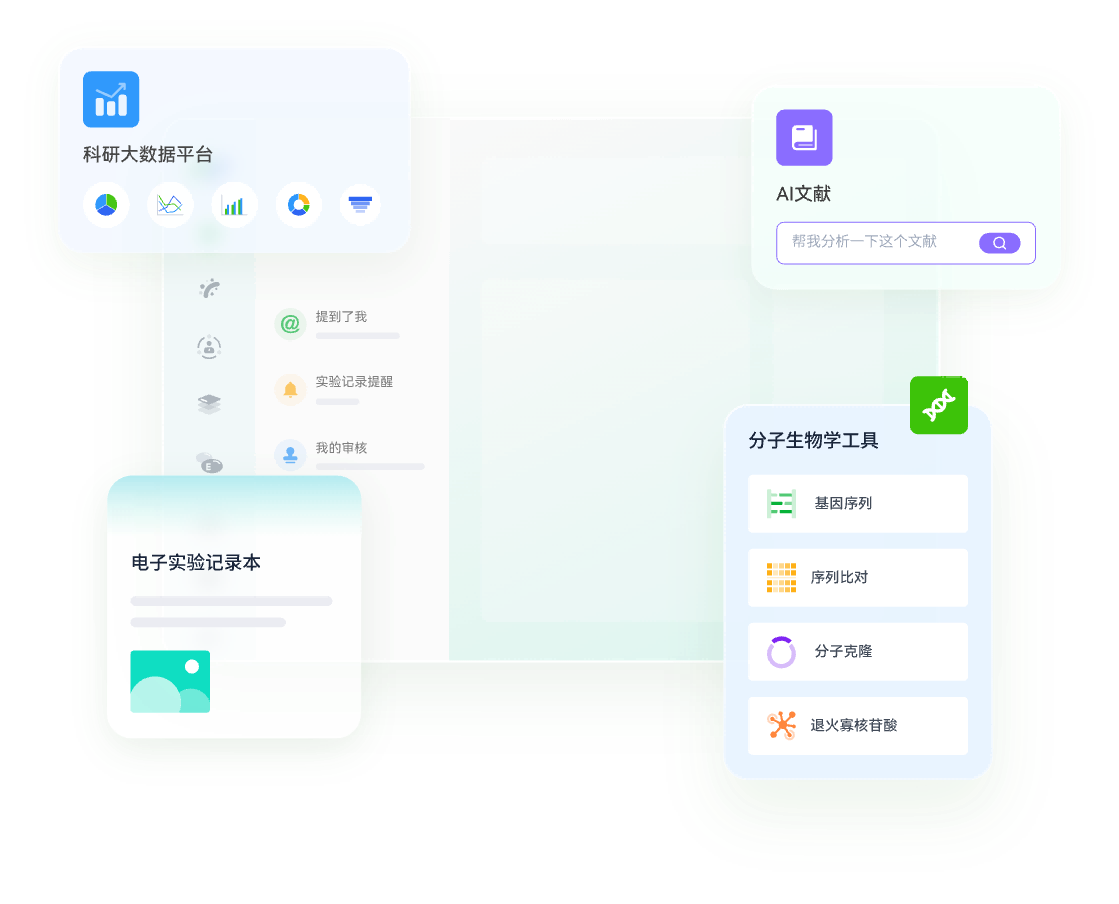
Company Background: Zettalab is a cloud-based R&D workspace for molecular biology teams. The notebook is hosted with sequence tools so a remote reviewer can open the record and the map without a desktop binder.
Core Products/Direction: ZettaNote supports structured experiment records, templates, annotations, cross-references, and PDF export in a shared workspace. Project access controls who writes. Molecular files can sit in the same project instead of on a laptop that never comes to the second site.
Technical Approach: The ELN is a cloud collaboration layer for molecular R&D, not a paper replica. It is GLP-ready in the sense of supporting traceable records and permissions; it does not automatically satisfy every GLP or FDA program. Confirm identity options and export in a trial.
Best Suited For: Biotech teams that need shared notebooks next to plasmid maps and primers. Organizations that only need a campus-wide course notebook may already have an institutional ELN.
Labguru
Company Background: Labguru is a cloud ELN and lab-management product from BioData, later associated with the Cenevo group. Biotech teams shortlist it when inventory should be visible to people who are not standing at the freezer.
Core Products/Direction: Shared experiments sit beside collections and stock. Browser access is the default. Concurrent work is role-based across those objects, not a desktop file lock.
Technical Approach: Labguru is a hosted operations notebook. Remote sharing of reagent context is the point. Sequence topology still needs an attached map. Identity, SSO, and residency should be reviewed as part of IT onboarding, not assumed from a feature icon.
Best Suited For: Biomedical biotech groups that want ELN and inventory in one cloud product. Teams whose only gap is multi-site sequence review may want a more map-centric workspace as well.
Collaboration Controls That Matter More Than Paper
Cloud ELN evaluation for biotech is an identity project. Ask whether SSO is available, who provisions accounts when a contractor starts, how quickly access is removed when someone leaves, and whether a CRO can receive read-only project access. Concurrent editing without those controls is just a shared folder with a nicer font.
ZettaNote is relevant when the shared record should also name the construct and primer files the remote colleague must see. A Zettalab documentation guide helps teams write project-sharing rules once, including who may export PDF.
Paper binders and local Word files still "collaborate" by walking down the hall. That fails at the second site. It also fails when only one person knows which binder is current. Cloud notebooks fix the location problem. They do not fix empty templates.
Cloud ELN Limits Desktop Binders Still Cover
Desktop notebooks and local files still matter for offline benches, for scans that never got uploaded, and for historical paper that will not be digitized this quarter. A cloud ELN program that pretends those piles do not exist will be incomplete on day one. Plan a freeze path: what must live in the cloud before a sample ships to a partner.
IP questions are operational. Encryption, residency, subprocessors, and export should be reviewed with IT. A browser notebook is not automatically safer than a locked cabinet, and a cabinet is not automatically safer than a well-permissioned tenant. Require restore tests. Require an offboarding checklist. Do not treat any vendor list as a legal opinion.
FAQ
What should a biotech team evaluate in a cloud ELN?
Evaluate concurrent work, identity (including SSO if you use it), project sharing with external partners, export, and whether the record can point at the files that explain the experiment. Also ask who patches the system and how restores are tested. A cloud notebook that is pleasant to type in still fails if contractors keep writing in personal docs. For molecular biotech teams, sequence or plasmid context in the same workspace is a practical bonus. Platforms such as Zettalab keep notes next to maps; general cloud ELNs still work if templates force file attachments.
How is a cloud ELN different from a desktop lab notebook?
A desktop notebook or local file lives on a machine or a synced folder. A cloud ELN lives behind accounts and is reached from a browser. The difference is sharing and identity, not a prettier page. Two people can open the same experiment without emailing a PDF. Access can be removed when someone leaves. The cost is that the network, vendor uptime, and permission model now sit on the critical path. Many biotech teams keep scanners and local drafts, then freeze the official record in the cloud ELN before a partner review.
Is a cloud ELN secure enough for biotech intellectual property?
It can be, if identity, encryption, permissions, logging, residency, and offboarding match what your IT group already requires. It is not automatically secure because it is hosted, and a paper notebook is not automatically safe because it is offline. Ask where data is stored, who can administer tenants, how exports are controlled, and what happens to a departing user's access the same day. Review vendor documentation rather than assuming a compliance logo. Restore a test project before you need it in an incident.
Do biotech teams still need desktop sequence tools if the ELN is in the cloud?
Often yes. A cloud ELN records what happened. Sequence editors still simulate cloning and keep topology honest. Some platforms put both in one workspace, which reduces missing maps for remote reviewers. Other teams attach a dated desktop export to the cloud entry. Either path works if the official construct file is named in the record. A cloud notebook full of gel photos and no plasmid version is still a silo, just a hosted one. Name the official construct file in the cloud entry even if the editor that produced it is still on a desktop.
What sharing model works when a CRO joins a biotech project?
Give the CRO a project-scoped, preferably read-or-comment role rather than a company-wide account. Freeze the protocols and construct files they must see. Record who approved that share. When the engagement ends, remove access and export the project archive you will keep. Cloud ELNs exist for this pattern; emailing notebooks does not. Confirm that sharing does not copy the entire tenant. ZettaNote-style project access is one way to scope that share; any ELN you pick should be tested with a dummy partner account before real data moves.
Can a biotech startup start on a cloud ELN without a full IT department?
Yes, if someone still owns accounts, templates, and offboarding. SaaS ELNs reduce server patching, which is why startups choose them over self-hosted stacks. They do not reduce the need for a human who removes access, reviews sharing, and insists that experiments are written in the tenant. Start with two templates and one project structure. Add SSO when the identity provider is ready. Do not wait for a perfect LIMS. Do not skip export tests because the team is small. Assign one owner for templates in the first month so empty notebooks do not become the unofficial process.
Conclusion
Cloud ELN options biotech teams actually compare are hosted notebooks judged on concurrent work, identity, and project sharing, not on whether they look like paper. Benchling, LabArchives, SciNote, eLabJournal, and Labguru appear on shortlists for different collaboration and inventory reasons. Workspaces that keep shared records next to molecular files, including Zettalab's ZettaNote, reduce the remote-review gap that desktop binders cannot cover. Set permissions before go-live, keep a freeze path for official files, and do not treat any vendor list as an IP opinion. Teams that want a cloud notebook beside sequence tools can review Zettalab's current plans.
Related Articles