Experiment Records for Molecular Biology Labs: Best Practices and Software Guide
Experiment records are the backbone of every molecular biology research workflow. They document what was planned, what was done, what was observed, and what the results suggest — forming the basis for reproducibility, peer review, intellectual property protection, and regulatory accountability. Yet in many labs, experiment records remain fragmented across paper notebooks, local files, spreadsheets, and informal messages, creating gaps that undermine research quality and team efficiency.
This guide examines how molecular biology and biotech teams can approach experiment records management in practice. It covers what experiment records should include, why they matter beyond compliance, common documentation challenges in molecular biology workflows, evaluation criteria for experiment records software, and how connected platforms like Zettalab bring experiment documentation closer to the sequence tools, project files, and collaboration that shape real research.
What Experiment Records Are and What They Should Contain
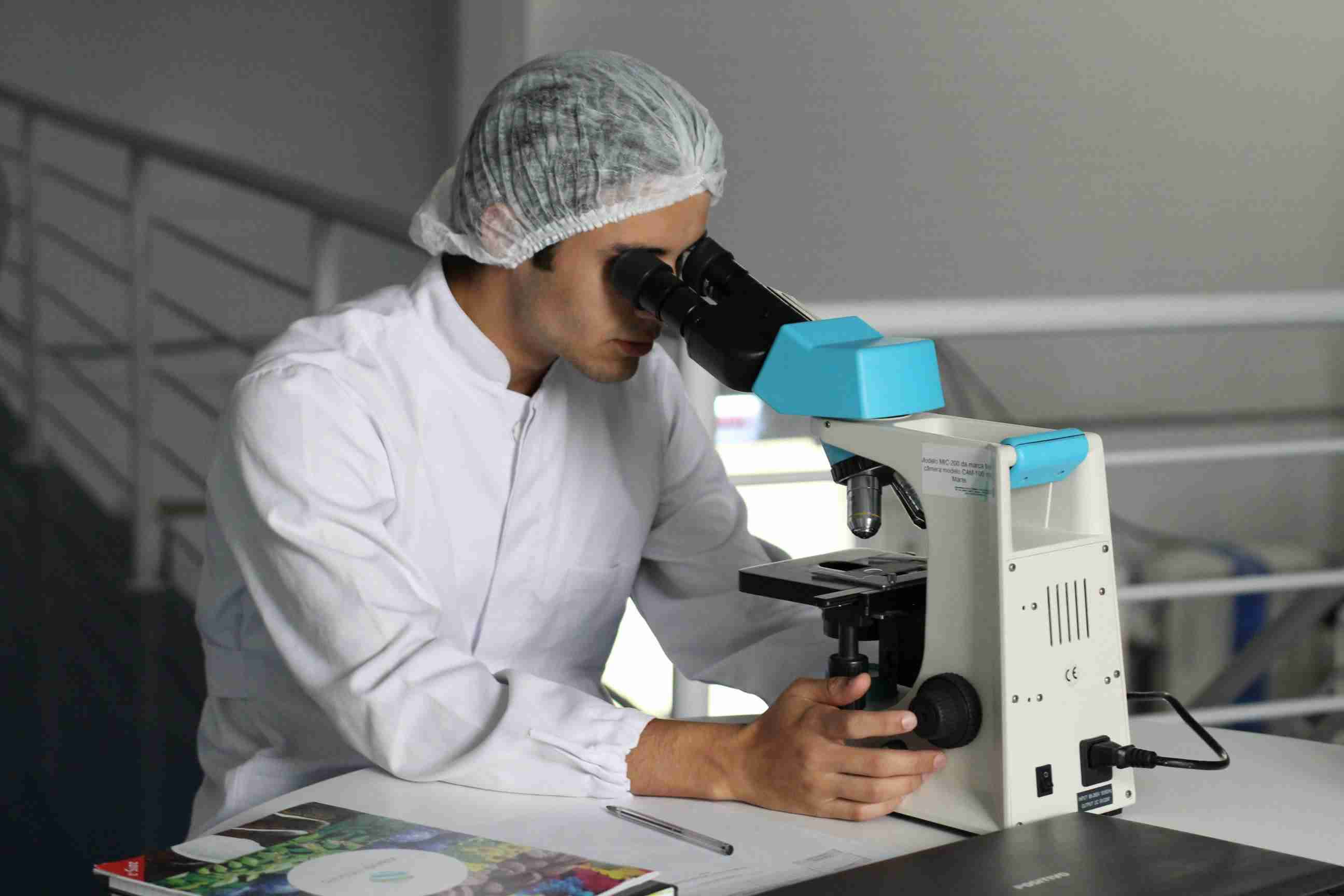
Experiment records are structured or semi-structured documents that capture the full context of a research experiment. In molecular biology, a complete experiment record typically includes the experiment objective, biological materials and reagents used, protocols followed, instrument settings, raw observations, sequence data references, analysis results, conclusions, and timestamps that establish when each step occurred.
A well-maintained experiment record should allow another researcher — or the same researcher returning months later — to understand what happened, reproduce the experiment, and trace how conclusions were reached. This goes beyond simply writing down steps. It means capturing enough context that the record functions as a reliable scientific narrative.
For molecular biology teams, experiment records often need to reference elements that generic documentation tools do not handle well: plasmid maps, primer sequences, CRISPR guide RNA designs, sequence alignment outputs, cloning strategies, and gel images. When these references exist only as local files or unstructured attachments, the experiment record loses its connective value.
Why Experiment Records Matter Beyond the Bench
The importance of experiment records extends across several dimensions of research operations, and different team members rely on them for different reasons.
Reproducibility and research continuity. Molecular biology experiments frequently involve multi-step workflows — cloning, transformation, screening, validation — that span days or weeks. Without clear records, the reasoning behind design choices (why a particular primer was selected, why a specific vector backbone was used) can be lost, making it difficult to troubleshoot failed experiments or build on earlier results.
Team collaboration and knowledge transfer. In most labs, experiments are not isolated individual efforts. Results from one researcher inform the next experiment by a colleague. When experiment records are clear, complete, and accessible, handoffs become smoother and less dependent on informal conversations.
Intellectual property and patent documentation. For biotech startups and academic labs pursuing commercialization, experiment records serve as dated evidence of invention. Patent disputes often hinge on whether a lab can demonstrate when a specific construct was designed, tested, and validated. Fragmented or undated records weaken IP positions.
Regulatory and audit readiness. Teams working toward GLP (Good Laboratory Practice) standards or preparing for regulatory submissions need experiment records that are traceable, timestamped, and tamper-evident. While no software alone guarantees regulatory compliance, structured digital records are a foundational element of audit-ready documentation.
Data management and long-term retrieval. Research data accumulates over years. Labs that rely on paper notebooks, scattered Word documents, or personal file systems often struggle to locate specific experiment records when a project is revisited, a publication is prepared, or a team member departs.
Common Challenges Molecular Biology Teams Face with Experiment Records
Despite the clear importance of experiment records, many labs encounter predictable documentation problems. These challenges often compound over time and are rarely solved by simply telling researchers to "document better."
Fragmented documentation across tools and formats
Molecular biology workflows move between sequence editors, plasmid construction tools, primer design applications, gel documentation systems, and analysis software. Each tool may generate its own output files, but these outputs are rarely connected to a central experiment record automatically. Researchers end up manually copying information between tools, saving screenshots into documents, or maintaining parallel records that drift out of sync.
Disconnected sequence data and experiment context
A plasmid map, a primer sequence, or a CRISPR guide RNA design is most meaningful when linked to the experiment it was part of. In many labs, these sequence-level details live in separate tools or local files, while the experiment record lives in a notebook or document. Over time, the connection between "which construct was used in which experiment" becomes difficult to reconstruct.
Inconsistent documentation standards across team members
Without templates or shared conventions, different researchers document experiments differently. Some write detailed protocols; others summarize. Some attach raw data; others reference it verbally. This inconsistency makes it harder to compare results across experiments, onboard new team members, or conduct internal reviews.
Limited visibility for PIs and lab managers
Principal investigators and lab managers often need to review experiment progress, check documentation quality, or locate specific records. When experiment records exist only in individual notebooks or personal folders, this visibility requires asking each researcher directly — a process that is slow, incomplete, and unsustainable as teams grow.
Difficulty maintaining records during collaboration
Collaborative projects — whether between academic labs, between wet-lab and bioinformatics teams, or between R&D and regulatory groups — require experiment records to be shared, annotated, and discussed. Email attachments, shared drives, and messaging tools create version confusion and make it difficult to maintain a single source of truth.
Experiment Records Best Practices for Molecular Biology Labs
Addressing experiment records challenges requires a combination of documentation discipline, team conventions, and appropriate tooling. The following practices apply broadly across academic, biotech, and biopharma research settings.
Define what a complete experiment record includes
Teams benefit from agreeing on a minimum documentation standard. This does not mean rigid templates for every experiment, but rather a shared understanding of what should be captured. A practical baseline for molecular biology experiment records includes: experiment objective and hypothesis, date and researcher, materials and reagents (with lot numbers where relevant), protocol reference or modifications, sequence construct references (plasmid IDs, primer sequences, gRNA designs), raw observations and instrument outputs, analysis approach and results, conclusions and next steps.
Link records to the sequence and design context
Rather than describing constructs in text alone, experiment records should reference the actual sequence files, plasmid maps, or design outputs that were used. When a cloning experiment references a specific plasmid, the record should link to or embed the plasmid map rather than requiring the reader to search for it separately. This practice reduces ambiguity and makes records more useful for future experiments.
Use templates for recurring experiment types
Many molecular biology experiments follow recognizable patterns: PCR amplification, restriction digestion and ligation, transformation and colony screening, Sanger sequencing verification, CRISPR editing and validation. Creating reusable templates for common experiment types helps maintain consistency, reduces documentation time, and ensures that critical fields are not overlooked.
Maintain version control and change traceability
Experiment records should be treated as living documents during the active phase of research, but they also need to be "finalized" once an experiment concludes. Digital records should support versioning or at minimum provide timestamps and modification history, so that changes can be tracked and the record's integrity can be verified.
Make records accessible to the right people at the right time
Access control matters. Active experiment records may be visible only to the researcher and their direct collaborators, but completed records should be retrievable by PIs, lab managers, and downstream team members without requiring manual forwarding. Permission-aware sharing — rather than open access or email distribution — balances collaboration with data sensitivity.
Paper Notebooks, Standalone ELNs, and Connected R&D Workspaces
Molecular biology teams generally face three broad options for managing experiment records, each with distinct trade-offs.
Paper lab notebooks have been the default for decades. They are familiar, flexible, and do not require training. However, they are difficult to search, impossible to back up automatically, not suitable for remote collaboration, and cannot natively link to digital sequence data or analysis outputs. Paper records also degrade over time and are vulnerable to loss.
Standalone electronic lab notebooks (ELNs) move experiment records into a digital format with search, templates, timestamps, and access controls. A standalone ELN improves documentation quality and team visibility compared to paper. However, many ELNs are designed as generic documentation tools and do not integrate with molecular biology-specific workflows. Researchers may still need to manually import sequence data, plasmid maps, or design outputs, creating the same fragmentation problem in digital form.
Connected R&D workspaces extend the ELN concept by bringing sequence tools, experiment records, file storage, and collaboration into the same platform. For molecular biology teams, this means that a plasmid designed in a sequence editor can be referenced directly in an experiment record, while the associated raw data files and analysis outputs remain linked within the same project context. The value of this approach lies not in replacing any single tool, but in reducing the friction of moving between design, documentation, and collaboration.
| Dimension | Paper Notebook | Standalone ELN | Connected R&D Workspace |
|---|---|---|---|
| Searchability | Limited | Yes | Yes |
| Templates | Manual | Yes | Yes |
| Timestamps and version history | Manual | Yes | Yes |
| Sequence data linking | Not supported | Manual import or attachment | Native references from sequence tools |
| Team collaboration | In person or scan-and-share | Permission-based access | Permission-based access with shared project context |
| File and attachment handling | Physical or separate storage | Upload and attach | Integrated file storage within project |
| Cross-referencing experiments | Manual | Search-based | Search-based with linked data context |
| Setup and training effort | Minimal | Moderate | Moderate, offset by reduced tool switching |
| Regulatory traceability | Weak | Supports audit readiness | Supports audit readiness with connected data trail |
This comparison is not a ranking. The right approach depends on team size, workflow complexity, regulatory context, and how much the team's work involves molecular biology-specific data that generic documentation tools do not handle well.
What to Evaluate When Choosing Experiment Records Software
Selecting experiment records software for a molecular biology or biotech team involves more than comparing feature lists. The following evaluation dimensions reflect how documentation tools perform in real research workflows.
Workflow fit. Does the software accommodate the types of experiments your team runs? A molecular biology lab that routinely works with plasmids, primers, and sequence data has different documentation needs than a chemistry lab or a clinical research team. Software that understands biological constructs, sequence references, and molecular cloning workflows reduces manual workarounds.
Integration with existing tools. Experiment records software should connect with the tools your team already uses — or at minimum, make it straightforward to import and reference outputs from those tools. If your team uses specific sequence editors, alignment tools, or CRISPR design applications, evaluate how easily their outputs flow into experiment records.
Collaboration and permissions. Consider who needs to see what. PIs may need read access to all project records. Collaborators may need to annotate or comment. Lab managers may need to manage templates. The software should support granular permissions rather than all-or-nothing sharing.
Traceability and audit readiness. For teams working in regulated environments or preparing for IP documentation, look for features like timestamps, modification history, electronic signatures, and export capabilities. No software guarantees compliance on its own, but the right tool should make traceability a natural byproduct of everyday documentation rather than an additional burden.
Data portability and export. Experiment records should not be locked into a single platform indefinitely. Evaluate whether the software supports standard export formats (PDF, structured data exports) and whether records remain readable and complete after export.
Adoption and usability. The best documentation tool is one that researchers actually use. Evaluate the learning curve, the interface clarity, and whether the software reduces documentation effort compared to current practices. If a tool adds complexity without clear value, adoption will be inconsistent.
Scalability. Consider whether the software can grow with your team. A tool that works for a five-person academic lab may not support a twenty-person biotech team with multiple projects, regulatory requirements, and cross-site collaboration.
How Zettalab Connects Experiment Records with Molecular Biology Workflows
Zettalab is a cloud-based R&D platform designed for molecular biology and biotech teams that want to bring experiment records, sequence tools, lab files, and collaboration into a connected workspace. Rather than treating experiment documentation as a standalone activity, Zettalab positions experiment records within the broader context of the research workflow they describe.
ZettaNote is Zettalab's electronic lab notebook, built for teams that need structured experiment records with templates, annotations, cross-references, timestamps, and permission-aware collaboration. ZettaNote supports experiment documentation that goes beyond plain text — researchers can embed files, reference sequence constructs, link to project data, and maintain records that retain their scientific context over time. For teams that need GLP-ready or audit-ready documentation practices, ZettaNote provides the structural foundation: versioned records, modification history, and organized project-level access.
ZettaGene is Zettalab's molecular biology toolset for sequence visualization, plasmid construction, primer design, sequence alignment, and translation. When experiment records reference constructs designed in ZettaGene, the connection between design and documentation becomes native rather than manual. A researcher documenting a cloning experiment can reference the plasmid map directly, and the record retains that link for future retrieval and review.
ZettaFile provides team file storage with permission management, batch upload, and project-level organization. Experiment records often depend on supporting files — gel images, sequencing chromatograms, analysis outputs, protocols — and ZettaFile keeps these files organized within the same project context as the records themselves, rather than scattered across personal drives or messaging tools.
Together, these tools address a common problem: when experiment records exist in isolation from the data and tools that shaped them, their value diminishes over time. Zettalab's connected workspace does not replace the researcher's judgment about what to document or how to interpret results. It reduces the friction of connecting design, documentation, files, and collaboration so that experiment records remain useful long after the experiment is complete.
Workflow example: Documenting a CRISPR gene editing experiment
Consider a common scenario in molecular biology: a researcher is performing a CRISPR-Cas9 knockout experiment. The workflow typically involves designing guide RNAs, selecting a vector backbone, preparing the construct, transfecting cells, and validating the edit through sequencing.
In a fragmented setup, the gRNA design lives in a web tool, the plasmid map lives in a desktop sequence editor, the transfection protocol lives in a shared document, the sequencing results arrive as separate files, and the experiment record — if it exists — is a summary written after the fact. Reconstructing the full experimental context later requires gathering information from four or five different sources.
In a connected Zettalab workspace, the gRNA design from ZettaCRISPR is part of the project. The plasmid map built in ZettaGene is referenced in the same project. The experiment record in ZettaNote captures the protocol, observations, and results, with links to the design files and sequencing outputs stored in ZettaFile. When a PI reviews the experiment or a colleague needs to replicate it, the full context — from design rationale to validation results — is available in one place.
This is not about automation replacing documentation. It is about reducing the manual effort of connecting pieces that already belong together.
Implementation and Adoption Considerations
Moving from informal or fragmented experiment records to a structured digital system involves practical challenges that go beyond software features.
Start with conventions, not mandates. Teams adopt documentation tools more consistently when they agree on shared conventions — what to document, how to name records, which templates to use — rather than when adoption is imposed top-down without input from the people doing the bench work.
Use templates to lower the barrier. Pre-built templates for common experiment types (PCR, cloning, sequencing verification, cell culture passages) reduce the cognitive load of documentation. Researchers are more likely to maintain consistent records when the starting point is a structured template rather than a blank page.
Plan for data migration. If your team has existing experiment records in paper notebooks, Word documents, or other ELN platforms, consider how those records will coexist with new digital records during a transition period. Not all legacy records need to be migrated, but critical ongoing projects should have a clear handoff plan.
Define access and permission boundaries early. Before rolling out a new system, clarify who can view, edit, and manage records at the project level. Permission structures that are too open create data security concerns; structures that are too restrictive reduce collaboration value.
Evaluate adoption over time. The value of connected experiment records depends on consistent use. Teams should periodically review documentation completeness, record quality, and whether the system is reducing or adding to documentation burden. Metrics like record completion rates, file attachment frequency, and cross-referencing usage can indicate whether the system is working as intended.
4. FAQ
What are experiment records in a research lab?
Experiment records are structured or semi-structured documents that capture the full context of a research experiment — including the objective, materials, protocols, observations, data, analysis, and conclusions. In molecular biology, experiment records often reference sequence data, plasmid maps, primer designs, and instrument outputs. Well-maintained experiment records support reproducibility, team collaboration, intellectual property documentation, and regulatory traceability. They serve as the primary evidence trail for what was done and why, making them essential for any lab that values research continuity.
How is an electronic lab notebook different from a generic document tool for experiment records?
An electronic lab notebook (ELN) designed for research provides features that generic document tools typically lack: structured templates for experiment types, timestamps and modification history, permission-aware sharing, cross-referencing between records and data files, and project-level organization. For molecular biology teams, an ELN that connects with sequence tools and lab file management also reduces the manual effort of linking experiment records to the designs and data they reference.
What should a molecular biology experiment record include?
A practical baseline includes the experiment objective, date and researcher, biological materials and reagents, protocol details or modifications, sequence construct references (plasmid IDs, primer sequences, gRNA designs), raw observations, analysis results, and conclusions with next steps. The specific requirements depend on the experiment type, team conventions, and whether the records need to meet regulatory or IP documentation standards. For gene editing experiments, additional details such as target locus, donor template information, and screening strategy should also be captured.
Why do experiment records matter for intellectual property?
Experiment records serve as dated evidence of research activities, which can be critical during patent filings or IP disputes. Records that clearly document when a construct was designed, when an experiment was performed, and what results were observed help establish priority of invention. Digital records with timestamps and modification history provide stronger evidence than informal or undated notes. For biotech startups and academic labs pursuing commercialization, maintaining thorough experiment records from the earliest stages of a project is one of the most practical steps toward protecting downstream IP.
How can a lab improve experiment records consistency across team members?
Consistency improves when teams agree on shared documentation conventions, use templates for recurring experiment types, and work within a platform that makes documentation straightforward rather than burdensome. Regular review of documentation quality — not as a compliance exercise but as a team practice — also helps identify gaps and reinforce good habits. Tools like ZettaNote support this by providing structured templates and permission-aware collaboration within a shared project context.
Can experiment records software support regulatory compliance?
Experiment records software can support audit-ready and GLP-ready documentation practices by providing timestamps, version history, access controls, and structured record formats. However, no software alone guarantees regulatory compliance. Compliance depends on how consistently teams use the tool, the quality of the records they create, and whether the overall documentation process meets the specific requirements of the regulatory framework in question.
What is the difference between standalone ELN software and a connected R&D workspace?
A standalone ELN focuses on experiment documentation — records, templates, timestamps, and access controls — as a discrete activity. A connected R&D workspace extends this by integrating experiment records with sequence tools, file storage, and collaboration within the same platform. For molecular biology teams, the connected approach reduces the friction of linking experiment records to the plasmid designs, primer sequences, analysis outputs, and project files that form the actual research context.
How should a lab evaluate experiment records software before adopting it?
Key evaluation dimensions include workflow fit (does it accommodate your experiment types?), integration with existing tools (can it connect with your sequence editors or analysis software?), collaboration and permission controls, traceability features, data export capabilities, usability and learning curve, and scalability for future team growth. The most important question is whether the software reduces documentation friction compared to current practices, because adoption depends on whether researchers find it genuinely easier to maintain good records.
5. Conclusion
Experiment records are not an administrative afterthought — they are an integral part of the research process that affects reproducibility, collaboration, IP protection, and regulatory readiness. For molecular biology and biotech teams, the challenge is not simply that documentation requires effort, but that experiment records often become disconnected from the sequence data, design tools, and project files that give them meaning.
The shift from paper notebooks or generic document tools to a connected R&D workspace is not about replacing researcher judgment with software. It is about reducing the structural friction that makes good documentation harder than it needs to be. When experiment records are linked to the plasmid maps, primer designs, CRISPR targets, and analysis outputs they reference, they become more than a compliance artifact — they become a reusable scientific resource.
Zettalab brings experiment records, molecular biology tools, file storage, and team collaboration into one cloud-based workspace. For teams evaluating how to improve their experiment documentation practices, ZettaNote provides structured ELN capabilities, while ZettaGene and ZettaFile ensure that the data and designs behind each experiment stay connected to the records that describe them.
If your team is looking for a more connected approach to experiment records, exploring the Zettalab platform or starting a free trial can be a practical next step.
Related Articles