Secure lab notebook software is most valuable when it protects research data through encryption, granular access controls, and complete audit trails while remaining accessible to authorized team members. For molecular biology and biotech teams, data security is not merely an IT concern—it is fundamental to research integrity, intellectual property protection, and regulatory readiness. This guide covers what secure lab notebook software is, why security matters for research teams, and what to evaluate when selecting a platform that prioritizes data protection.
What Is Secure Lab Notebook Software?
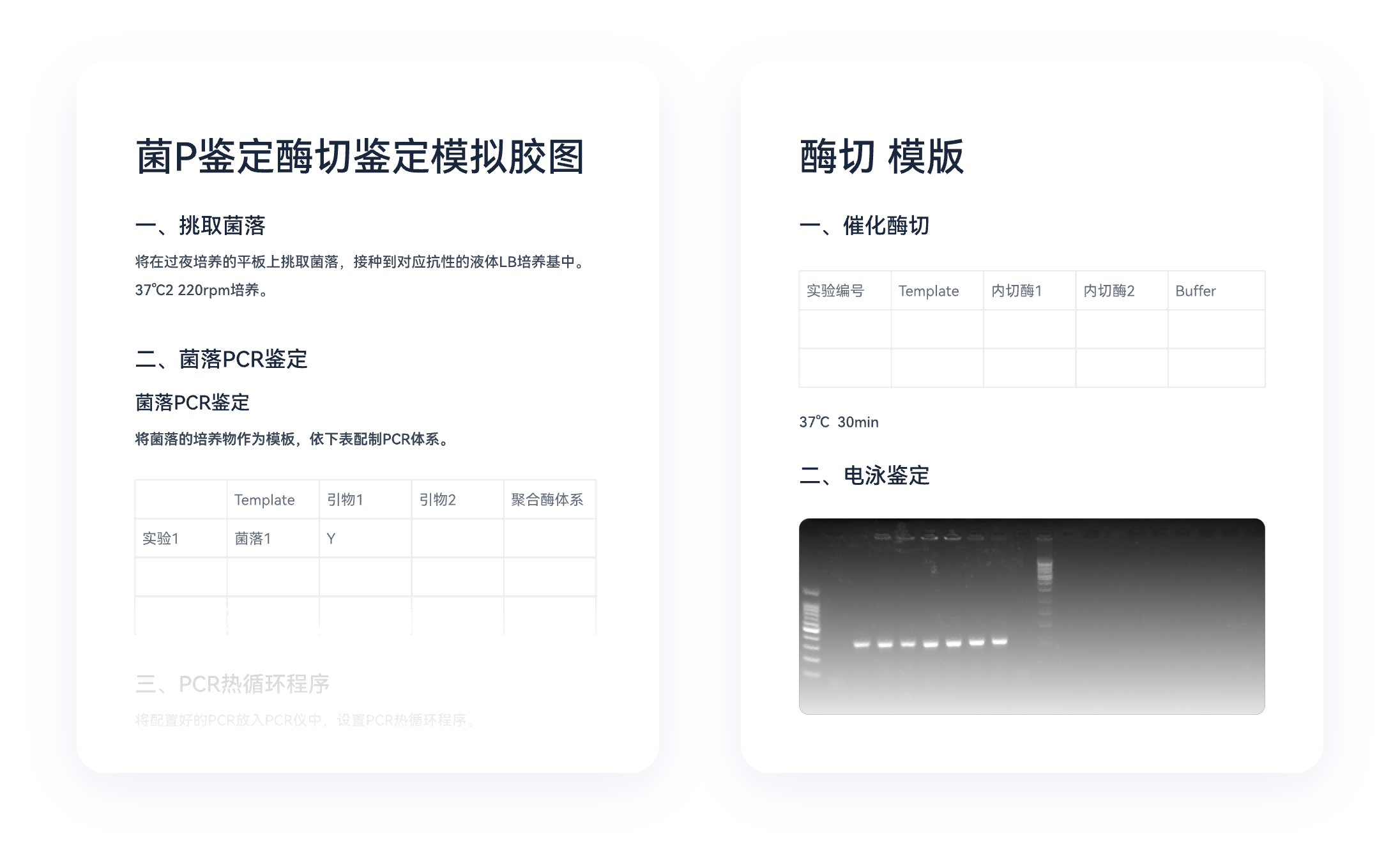
Secure lab notebook software is a digital platform for documenting experiments that incorporates multiple layers of data protection: encryption for data at rest and in transit, role-based access controls, complete audit trails, and compliance-oriented features that support regulatory requirements. Unlike basic note-taking tools or generic cloud storage, secure lab notebook software is purpose-built for research environments where data confidentiality, integrity, and availability are critical.
Security in lab notebook software goes beyond passwords. It encompasses how data is stored, who can access it, what changes are tracked, and how records can be verified over time. Secure lab notebook software ensures that experiment records cannot be altered without leaving a trace, that only authorized personnel can view sensitive data, and that research outputs can withstand scrutiny from collaborators, reviewers, and regulators.
The core purpose of secure lab notebook software is to provide researchers with a trusted environment for documenting their work—one that protects against data loss, unauthorized access, and undetected modifications while supporting the collaboration and efficiency that digital documentation enables.
Why Security Matters in Lab Notebook Software
Research data is among the most valuable assets a laboratory or organization possesses. It represents years of investment, intellectual property with commercial potential, and the foundation for publications, patents, and regulatory submissions. A breach or loss of this data can have devastating consequences.
Intellectual Property Protection. For biotech startups and pharmaceutical companies, experiment records often contain proprietary information about drug candidates, gene editing strategies, or novel assays. A security lapse could expose this information to competitors or result in loss of trade secret protection. Secure lab notebook software provides the technical safeguards needed to protect these assets.
Research Integrity. Data integrity is the cornerstone of scientific credibility. If experiment records can be altered without detection, the reliability of research findings comes into question. Secure lab notebook software with audit trails provides assurance that records are complete and unmodified, supporting the trustworthiness of published results.
Regulatory Compliance. Teams preparing submissions for regulatory agencies must demonstrate that their electronic records meet standards for data integrity and security. Regulations such as FDA 21 CFR Part 11 establish requirements for electronic records and electronic signatures in regulated industries. Secure lab notebook software that supports these requirements reduces the burden of compliance.
Collaboration Without Compromise. Security is sometimes seen as a barrier to collaboration, but the right software balances protection with accessibility. Researchers need to share data with colleagues, external partners, and CROs. Secure lab notebook software enables this sharing through granular permissions rather than insecure workarounds like email or unsecured file transfers.
Key Security Features to Evaluate in Lab Notebook Software
Selecting secure lab notebook software requires assessing multiple security dimensions. Not all platforms offer the same level of protection, and features that matter for one type of research may be critical for another.
Encryption. Data should be encrypted both at rest (when stored on servers) and in transit (when transmitted between devices). This ensures that even if servers are compromised or network traffic is intercepted, the data remains unreadable without proper authorization. Look for platforms that use industry-standard encryption protocols.
Role-Based Access Control. Not every team member needs access to every experiment record. Secure lab notebook software should support granular permissions that control who can view, edit, or comment on specific experiments, projects, or sections. Principal investigators may need full access, while individual researchers should have appropriate access to their own work and shared resources.
Audit Trails. Every change to an experiment record should be tracked with a timestamp and user identification. A complete audit trail provides accountability, supports reproducibility, and is essential for regulatory review. Researchers should be able to view who made changes, when they were made, and what was altered.
Version History. Beyond tracking changes, secure lab notebook software should maintain complete version history, allowing researchers to view previous versions of records. This supports troubleshooting and provides a complete picture of how experiments evolved over time.
Secure Authentication. The platform should support strong authentication methods, including multi-factor authentication (MFA), to prevent unauthorized access even if passwords are compromised.
Data Backup and Disaster Recovery. Research data must be protected against loss from hardware failure, cyberattacks, or natural disasters. Secure lab notebook software should include automated backups and disaster recovery procedures to ensure data can be restored.
Data Portability and Export. Researchers need to export data for publications, regulatory submissions, or migration to other systems. The platform should support standard export formats while maintaining security during the export process.
Compliance Considerations for Secure Lab Notebook Software
For teams operating in regulated environments, security features must align with specific compliance requirements. Understanding these requirements helps in evaluating lab notebook software.
FDA 21 CFR Part 11. This regulation establishes criteria for electronic records and electronic signatures to be considered trustworthy, reliable, and equivalent to paper records. Key requirements include: validation of systems, audit trails that record all changes, limited system access, and electronic signatures that are uniquely linked to individuals. Secure lab notebook software should support these requirements through its architecture and features.
GLP and GxP Standards. Good Laboratory Practice (GLP) and other GxP standards emphasize data integrity, authenticity, and confidentiality. Secure lab notebook software used in GLP environments should provide assurance that records are maintained accurately and reproducibly.
Data Privacy Regulations. Depending on the jurisdiction, research data may be subject to privacy regulations such as GDPR or HIPAA. Secure lab notebook software should support compliance with these regulations through data protection features and appropriate data handling practices.
It is important to note that compliance is not solely a function of the software. Secure lab notebook software provides the technical foundation, but organizations must also implement appropriate policies, training, and procedures to achieve and maintain compliance.
Common Security Risks in Research Documentation
Understanding the risks that secure lab notebook software addresses helps contextualize its value.
Unauthorized Access. Without proper access controls, sensitive research data can be viewed or modified by individuals who should not have access. This risk increases when team members share passwords or when permissions are not regularly reviewed. Secure lab notebook software mitigates this through role-based permissions and strong authentication.
Data Loss. Experiment records stored on local devices or unsecured cloud services are vulnerable to loss from hardware failure, accidental deletion, or cyberattacks. Secure lab notebook software with automated backups reduces this risk significantly.
Undetected Modifications. When changes to experiment records are not tracked, it becomes impossible to verify data integrity. This can undermine research credibility and complicate regulatory review. Audit trails in secure lab notebook software provide the necessary visibility.
Insider Threats. Not all security risks come from external actors. Team members with excessive permissions or who leave the organization can pose risks to data confidentiality and integrity. Secure lab notebook software with granular permissions and audit trails helps manage these risks.
Compliance Gaps. Teams that do not use secure lab notebook software may struggle to demonstrate compliance with regulatory requirements, leading to delays in submissions or regulatory findings.
Standalone Documentation vs. Secure Lab Notebook Software
| Aspect | Standalone Documentation | Secure Lab Notebook Software |
|---|---|---|
| Encryption | Depends on storage method | Built-in, data at rest and in transit |
| Access Control | File-level or none | Granular, role-based permissions |
| Audit Trail | Manual or none | Automatic, time-stamped, user-identified |
| Version History | Manual file naming | Automatic, complete history |
| Authentication | Basic password | MFA and strong authentication options |
| Backup | User-managed | Automated with disaster recovery |
| Regulatory Support | Manual effort | Built-in compliance features |
| Data Portability | Manual export | Structured export formats |
The comparison above highlights a fundamental difference in how security is managed. Standalone documentation places the burden of security on individual researchers, while secure lab notebook software embeds security into the platform itself.
How Zettalab Supports Secure Lab Notebook Workflows
Zettalab is designed as a cloud-based R&D workspace that prioritizes data security alongside experiment documentation, sequence tools, and team collaboration. For teams evaluating secure lab notebook software, Zettalab offers several relevant capabilities.
ZettaNote provides a structured electronic lab notebook with enterprise-level security, encryption, and audit-ready documentation. Team members can document experiments in a consistent format with complete audit trails that track who made changes and when. The platform supports role-based permissions, ensuring that sensitive research data is accessible only to authorized personnel.
ZettaFile provides team-friendly file storage with fine-grained permission management. Researchers can attach sequencing traces, gel images, protocols, and other files to experiment records, with access controls that reflect team roles and project requirements.
ZettaGene supports DNA sequence visualization, editing, plasmid construction, primer design, and sequence alignment. By keeping sequence design tools in the same secure workspace as experiment records, ZettaGene enables researchers to work with sensitive sequence data without compromising security.
Together, these components support a workflow where data security is not an afterthought but an integrated part of the research process. Teams can design sequences, document experiments, store project files, and collaborate within a secure environment that supports both productivity and protection.
Implementation Considerations for Secure Lab Notebook Adoption
Adopting secure lab notebook software requires attention to both technical and organizational factors.
Define Security Policies. Before implementing lab notebook software, establish clear policies for data access, permissions, and documentation standards. Define who should have access to what data and under what circumstances permissions should be changed.
Configure Permissions Thoughtfully. Role-based permissions should reflect the team's actual structure and data sensitivity. Principal investigators may need access to all project data, while individual researchers should have appropriate access to their own work and shared resources. Regularly review permissions as team members join, leave, or change roles.
Train Team Members on Security Practices. Even the most secure platform is vulnerable if users do not follow security practices. Provide training on strong authentication, appropriate data handling, and the importance of documenting experiments completely and accurately.
Regularly Review Audit Trails. Audit trails are valuable not only for compliance but also for identifying potential issues. Regularly review audit logs to ensure that access and modifications are appropriate.
Plan for Data Retention and Disposal. Research data may need to be retained for years or decades. Establish clear policies for how long data should be kept and how it should be securely disposed of when no longer needed.
FAQ
What is secure lab notebook software?Secure lab notebook software is a digital platform for documenting experiments that incorporates encryption, role-based access controls, complete audit trails, and compliance-oriented features. It protects research data from unauthorized access, loss, and undetected modification while supporting collaboration and efficiency.
Why is security important in lab notebook software?Security is important because research data represents intellectual property, the foundation for publications and patents, and the basis for regulatory submissions. Secure lab notebook software protects against data loss, unauthorized access, and compliance gaps that could jeopardize research outcomes.
What security features should I look for in lab notebook software?Key security features include encryption for data at rest and in transit, role-based access controls, complete audit trails, version history, secure authentication (including MFA), automated backups, and data export capabilities. These features collectively protect research data throughout its lifecycle.
How does secure lab notebook software support regulatory compliance?Secure lab notebook software supports compliance with regulations such as FDA 21 CFR Part 11 through audit trails, access controls, and electronic signature capabilities. It provides the technical foundation for demonstrating data integrity and security in regulated environments.
What is an audit trail in lab notebook software?An audit trail is a secure, time-stamped log that records who made changes to an experiment record, when the changes were made, and what was altered. It provides accountability, supports reproducibility, and is essential for regulatory review and troubleshooting.
How does Zettalab ensure lab notebook security?Zettalab's ZettaNote provides enterprise-level security with encryption, audit-ready documentation, and role-based permissions. ZettaFile adds fine-grained permission management for attached files, and the entire platform is designed for secure, cloud-based research documentation.
Can secure lab notebook software still support collaboration?Yes. Secure lab notebook software balances protection with accessibility through granular permissions. Researchers can share data with colleagues and external partners while maintaining control over who can view or edit specific records.
Is secure lab notebook software necessary for academic labs?Yes. Academic labs handle sensitive data, intellectual property, and research that may be subject to funder or institutional requirements. Secure lab notebook software protects against data loss and supports research integrity, which is essential for academic credibility and funding.
Conclusion
Secure lab notebook software is essential for research teams that value data integrity, intellectual property protection, and regulatory readiness. The right platform should provide encryption, role-based access controls, complete audit trails, and compliance-oriented features while supporting the collaboration and efficiency that digital documentation enables.
Zettalab offers a secure cloud-based R&D workspace with ZettaNote for structured ELN documentation, ZettaFile for secure file storage with permissions, and ZettaGene for sequence design and analysis—all within an enterprise-level security framework. Teams interested in exploring how secure lab notebook software can protect their research while supporting productivity can start with a free trial or request a demo to see the platform in action.