Sanger vs NGS Sequencing: Which Fits Your Lab Workflow
Sanger sequencing and next-generation sequencing (NGS) are complementary DNA sequencing technologies that differ fundamentally in throughput, read length, turnaround time, per-sample cost, and analytical complexity. For molecular biology laboratories, choosing between Sanger and NGS is not a matter of finding an absolute winner, but of matching the sequencing methodology to specific experimental objectives and sample scales.
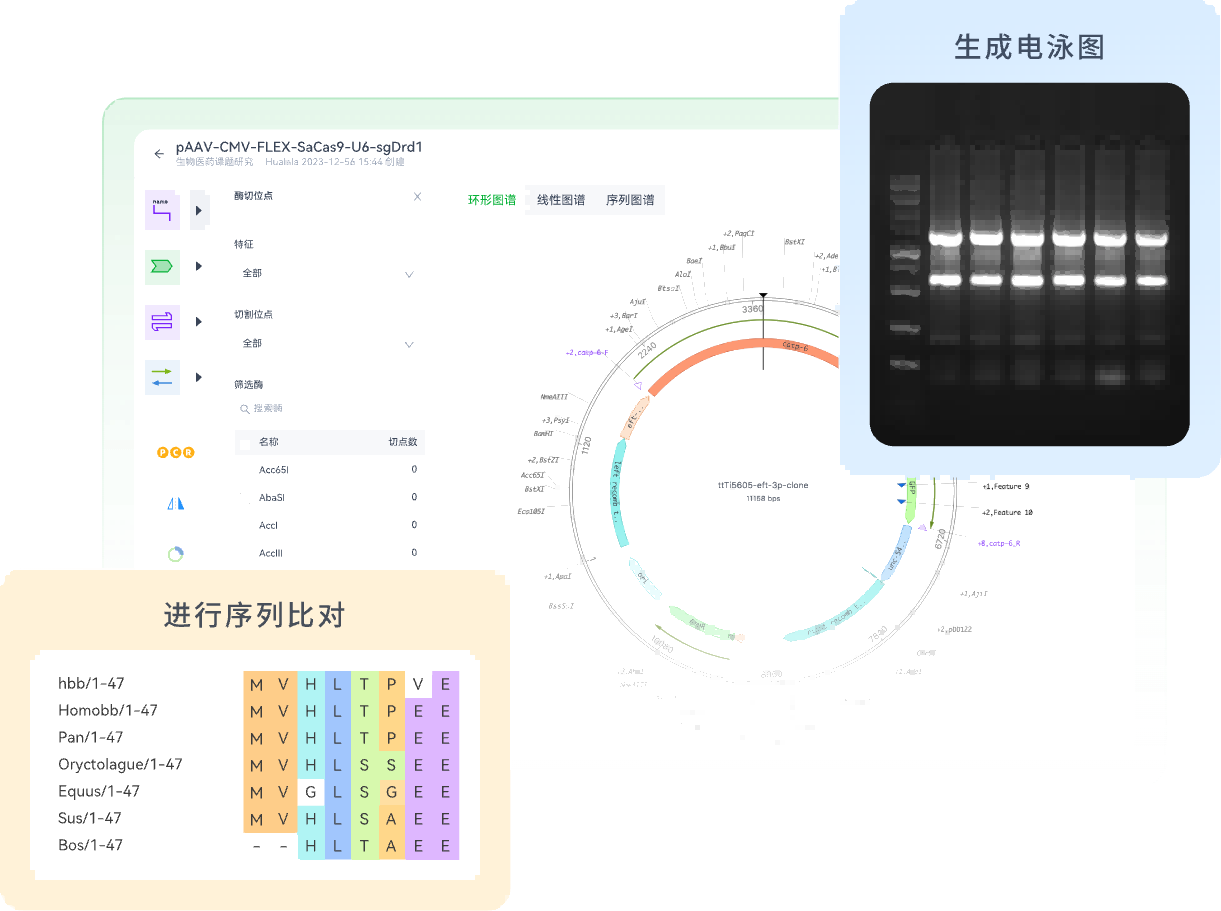
Routine molecular cloning, single-colony plasmid validation, and targeted PCR verification often benefit from the rapid turnaround and low per-run cost of capillary Sanger sequencing. Conversely, deep variant discovery, complex library screening, metagenomics, and whole-plasmid batch sequencing demand the high throughput and multiplexing power of NGS. This guide analyzes both methodologies to help research teams establish cost-effective sequencing workflows.
Core Technical Principles: Sanger vs Next-Generation Sequencing
Understanding the fundamental mechanisms of each technology clarifies their operational trade-offs:
Sanger Sequencing (Chain Termination): Developed by Frederick Sanger, this method utilizes chain-terminating dideoxynucleosidetriphosphates (ddNTPs) labeled with fluorescent dyes. During capillary electrophoresis, fragments are separated by size, generating a continuous electropherogram trace. It produces long, contiguous single reads (typically 600–1,000 base pairs) with exceptionally high raw base-calling accuracy (over 99.99%).
Next-Generation Sequencing (Massively Parallel Sequencing): NGS platforms (such as Illumina sequencing by synthesis or long-read technologies from Oxford Nanopore and PacBio) sequence millions to billions of DNA fragments simultaneously. While individual short reads range from 150 to 300 base pairs, high read depth (coverage) enables quantitative variant calling, whole-genome de novo assembly, and comprehensive transcriptome profiling.
Head-to-Head Comparison: Sanger vs NGS
The table below summarizes the key operational and technical parameters distinguishing Sanger sequencing from NGS:
| Comparison Dimension | Sanger Sequencing | Next-Generation Sequencing (NGS) | Decision Rule for Molecular Labs |
|---|---|---|---|
| Throughput per Run | 1 to 96 samples (low to moderate) | Millions to billions of reads (massive) | Choose Sanger for individual clones; choose NGS for batch or deep screening |
| Read Length | 600 to 1,000 bp contiguous read | Short-read: 150–300 bp; Long-read: 10–50+ kb | Choose Sanger for target insert checks; choose long-read NGS for full plasmid confirmation |
| Turnaround Time | Same-day to 24 hours (local core/vendor) | 2 to 7+ days (library prep, batching, demultiplexing) | Choose Sanger when daily cloning decisions depend on immediate results |
| Per-Sample Cost (Low N) | $3 to $8 per reaction | High initial library cost ($50–$200+ unless multiplexed at scale) | Sanger is substantially cheaper for 1–10 individual PCR or plasmid samples |
| Per-Base Cost (High N) | High per megabase ($100–$500/Mb) | Extremely low per gigabase (<$0.01/Gb) | NGS is vastly more economical for high-throughput omics and large pools |
| Data Analysis & Storage | Simple trace file (.ab1) alignment | Complex FASTQ/BAM pipelines, high storage requirements | Sanger requires minimal bioinformatics; NGS requires dedicated data infrastructure |
When to Choose Sanger Sequencing
Capillary Sanger sequencing remains the gold standard for daily molecular biology quality control in several specific scenarios:
1. Routine Molecular Cloning Verification: When screening 2–6 bacterial colonies following restriction ligation or Gibson assembly, sequencing the junction regions with standard vector primers provides definitive confirmation within hours at minimal expense.
2. Point Mutation and CRISPR Screening: Confirming targeted point mutations, single base edits, or short indels in PCR amplicons is straightforward with Sanger trace inspection and deconvolution algorithms.
3. Low-Throughput PCR Product Validation: Validating the identity of a single PCR band or diagnostic fragment does not justify the time and expense of NGS library preparation.
When to Choose Next-Generation Sequencing
Next-generation sequencing is the mandatory choice when experiments exceed the throughput, sensitivity, or breadth of single-capillary analysis:
1. Whole-Plasmid Verification (Complete Vector Profiling): Modern synthetic biology increasingly utilizes whole-plasmid NGS (via short-read multiplexing or Nanopore long reads) to verify the entire plasmid backbone, identifying unintended tandem repeats, promoter mutations, or backbone deletions missed by local Sanger primers.
2. Mutant and Directed Evolution Libraries: Profiling variant distributions across thousands of mutated protein variants requires millions of reads to quantify frequency and diversity.
3. RNA-Seq and Transcriptomic Studies: Quantifying differential gene expression across full transcriptomes requires high-depth counting capabilities unique to NGS.
Connecting Sequencing Data to Experiment Records
A frequent operational failure in molecular biology is the detachment of sequencing results from original construct designs and laboratory notebooks. Whether handling ABI trace files from Sanger sequencing or FASTQ alignment summaries from NGS, researchers must correlate variant calls directly with plasmid construction records.
Using Zettalab, molecular biologists can align incoming Sanger .ab1 files or NGS consensus assemblies directly against reference plasmid maps generated in ZettaGene. The alignment results, chromatograms, and passing QC determinations embed seamlessly into ZettaNote experiment records, ensuring complete data traceability across project teams.
FAQ
Is Sanger sequencing obsolete compared to NGS?
No, Sanger sequencing is not obsolete. It remains the fastest, most reliable, and most cost-effective method for low-throughput DNA verification, such as confirming cloned inserts, validating PCR products, and checking single-gene constructs. NGS has expanded sequencing possibilities for high-throughput and genome-scale studies, but both technologies serve complementary roles in modern biotechnology.
What is the minimum sample threshold where NGS becomes cheaper than Sanger?
The cost crossover depends on the sequencing scope. For whole-plasmid verification, commercial high-throughput multiplexed NGS services become cost-competitive when screening batches of 10–20 or more constructs simultaneously. However, for a single PCR amplicon requiring 1–2 sequencing reads, Sanger sequencing remains vastly more economical than initiating an individual NGS library preparation.
How does raw accuracy compare between Sanger sequencing and NGS?
Sanger sequencing provides exceptionally high raw single-read accuracy, typically exceeding 99.99% (Q40+) across the clean 100–800 bp window of the electropherogram. While individual raw NGS reads have slightly lower base-call accuracy (Q30, or 99.9%), high consensus read depth (often 30x to 1,000x coverage) yields final consensus accuracy exceeding 99.999%.
How should laboratories organize and store sequencing trace files?
Laboratories should avoid storing ABI trace files and NGS alignment data in isolated desktop folders. Best practice involves uploading raw trace files and consensus sequences directly into a centralized electronic laboratory notebook linked to the specific experiment, sample ID, and reference plasmid map to maintain audit-ready documentation.
Conclusion
Choosing between Sanger sequencing and NGS depends on sample volume, target region size, turnaround urgency, and budget constraints. Molecular biology teams maximize efficiency by leveraging Sanger for targeted, day-to-day clone validation while employing NGS for high-throughput library analysis and full-vector profiling. Learn how Zettalab unites sequence alignment tools and digital experiment documentation to streamline your laboratory's sequencing workflows.
Related Articles