Plasmid Map Metadata: What a Handoff-Ready Map Carries
Plasmid map metadata is the annotation layer that makes a map interpretable without its designer: the features, their provenance, and the verification status that tell the next team what the plasmid is, where it came from, and whether it has been checked. For handoffs, this metadata is the difference between a plasmid the next team can use and one they must re-investigate.
The failure mode is the map that only its designer can read: features labeled with cryptic abbreviations, no source history, no indication of what was verified. The next team inherits the picture without the knowledge, and their first task becomes reverse-engineering what the map should have told them. This guide covers the metadata a handoff-ready plasmid map must carry.
The Metadata Fields in One Overview
| Field group | What it tells the next team |
|---|---|
| Feature annotations | What each element is and does |
| Provenance | Where the plasmid came from and how it was made |
| Verification status | What has been checked and confirmed |
| Usage context | What the plasmid is used for and any caveats |
Feature Annotations: The Map's Vocabulary
The map's features, promoters, origins, markers, genes, and junctions, are its vocabulary, and the annotations must be readable by someone who did not design them. Cryptic labels and unlabeled regions force the next team to guess or sequence to discover what the map should state. A handoff-ready map labels every functional element with its standard name and role.
Standardization matters here because the labels are the map's communication layer: a promoter labeled "CMV" or "T7" carries its meaning to anyone who reads it, while a promoter labeled by an internal nickname communicates nothing outside the originating lab. The annotation discipline is to use names the field recognizes, and to explain anything non-standard.
Provenance: Where the Plasmid Came From
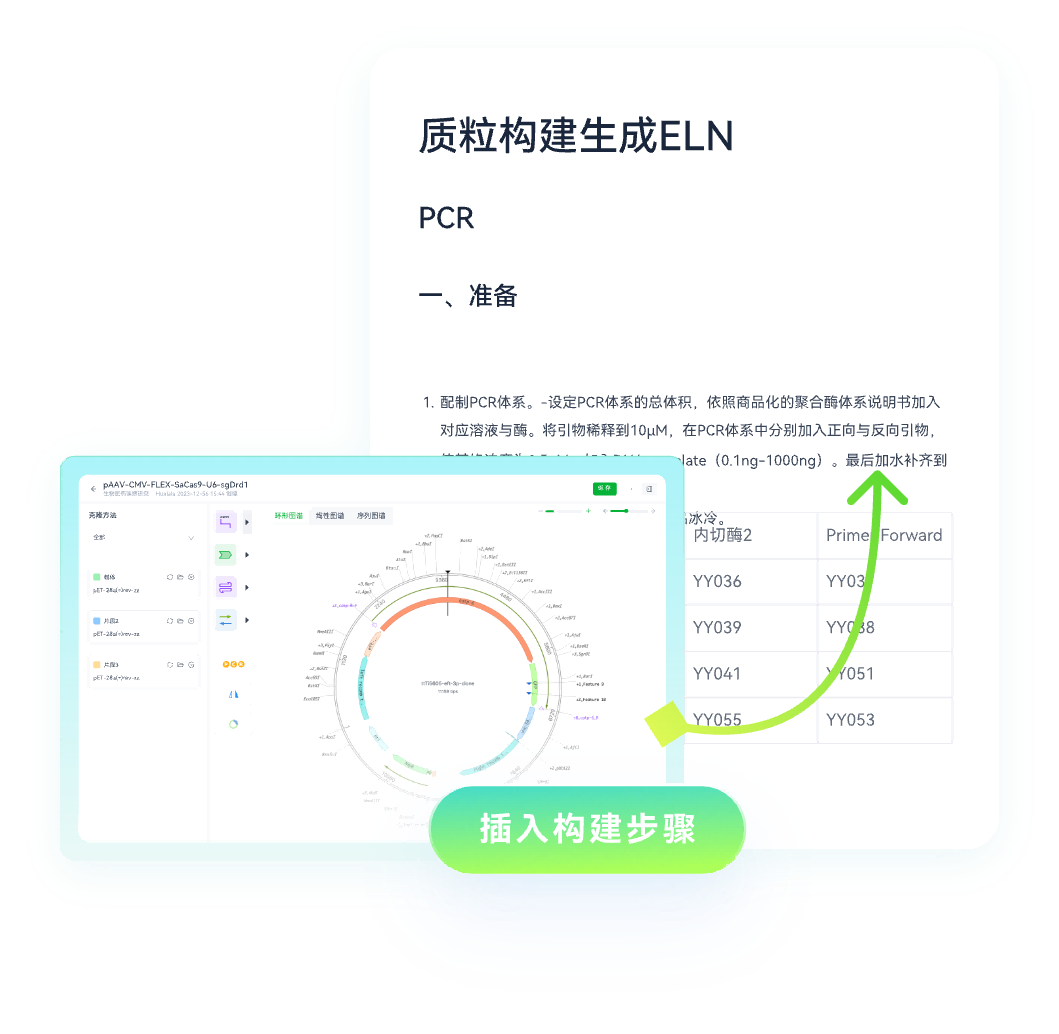
The provenance metadata records the plasmid's origin and construction: the source backbone, how the insert was made, and any relevant history such as mutagenesis steps or library origin. This is the plasmid's identity document, and it matters because the next team's decisions, about propagation, about licensing, about trust in the sequence, depend on where the plasmid came from.
Provenance also covers the practical details: the antibiotic resistance and selection conditions, the host strain used for propagation, and any known stability issues. These are the fields the next team needs before their first transformation, and their absence turns a simple handoff into a troubleshooting session.
Verification Status: What Has Been Checked
A handoff-ready map states what has been verified: the full sequence confirmed, the key regions checked, the expression or function tested. The distinction matters because the next team's trust should be calibrated to the evidence. A map whose verification status is silent forces the next team to assume either too much or too little, and both assumptions cost.
The verification metadata should point to the evidence: the sequencing results, the digestion checks, the functional tests, linked from the map so the next team can inspect the proof rather than take a status word on faith. The linkage turns the metadata from a claim into a reference.
Usage Context and Caveats
Beyond the technical fields, the map should carry the usage context: what the plasmid is used for, how it behaves in practice, and any caveats the designer learned, the promoter that leaks, the insert that recombines, the strain that struggles. This experiential knowledge is invisible in the sequence and invaluable to the next team, and it is exactly what is lost when a handoff carries only the map.
For teams that want plasmid maps with metadata and records connected, ZettaGene within the Zettalab workspace supports sequence annotation and map review, and the broader platform links the map's metadata to the construct records and experiments that produced it, so the handoff carries the plasmid's full story by default.
FAQ
What metadata should a plasmid map carry for a handoff?
A handoff-ready map carries feature annotations with standard names, provenance including backbone source and construction history, verification status with links to the evidence, and usage context with any caveats the designer learned. These fields let the next team understand, trust, and use the plasmid without its original designer present.
Why does plasmid provenance matter in a handoff?
Provenance answers the questions the next team's decisions depend on: where the backbone came from, how the insert was made, what selection conditions apply, and any licensing or stability considerations. Without it, the next team either assumes too much or re-investigates what the originating lab already knew. It is the plasmid's identity document.
How should verification status be recorded on a plasmid map?
State what has been verified, full sequence, key regions, functional tests, and link to the evidence: the sequencing results, digestion checks, or functional data. The linkage lets the next team inspect the proof rather than take a status word on faith, and it calibrates their trust to the actual evidence behind the plasmid.
What counts as usage context in plasmid metadata?
Usage context is the experiential knowledge the designer learned: what the plasmid is used for, how it behaves, and the caveats, a leaky promoter, a recombining insert, a strain that struggles. This knowledge is invisible in the sequence and is exactly what is lost when a handoff carries only the map. Recording it preserves the plasmid's practical history.
Conclusion
Plasmid map metadata makes a handoff self-sufficient: standard feature annotations, provenance, verification status with evidence, and usage context let the next team use the plasmid without its designer. These fields turn a map from a picture only its author can read into shared infrastructure. To connect plasmid maps with metadata and records, explore Zettalab's cloud-based R&D lab platform.
Related Articles