How to Evaluate Molecular Cloning Planning Software for Your Lab
Molecular cloning planning software is a category of research software that simulates a cloning strategy in silico before wet-lab work, covering construct design, primer generation, enzyme and assembly checks, and expected product prediction. Choosing it well is a selection question about the design-to-verification cycle, not a feature comparison.
For molecular biologists, cloning teams, and lab managers, most failed constructs trace back to decisions made before the bench. This guide covers the capabilities planning software should provide, the evaluation dimensions for comparing tools, and how planning connects to execution and documentation.
Why Cloning Planning Needs Purpose-Built Software
Most cloning projects are decided in the planning phase, not at the bench. Researchers often plan constructs across spreadsheets, hand-drawn maps, and separate primer tools, tracking junctions, enzyme sites, and fragment sizes manually. The consequences surface later: an incompatible junction that fails to ligate, a restriction site that was not unique, or an assembly that produces an unexpected fragment pattern. Each error costs bench time and reagents, and multi-fragment builds multiply the risk because one wrong pair among several junctions is hard to trace.
Purpose-built planning software encodes these constraints. It simulates the proposed strategy in silico, flags design errors before synthesis, and produces a predicted product the lab can verify against. The evaluation question is therefore not whether a tool can draw a plasmid map, but how completely it carries the planning phase from construct design to a bench-ready, verifiable plan.
What Cloning Planning Software Must Cover Before the Bench
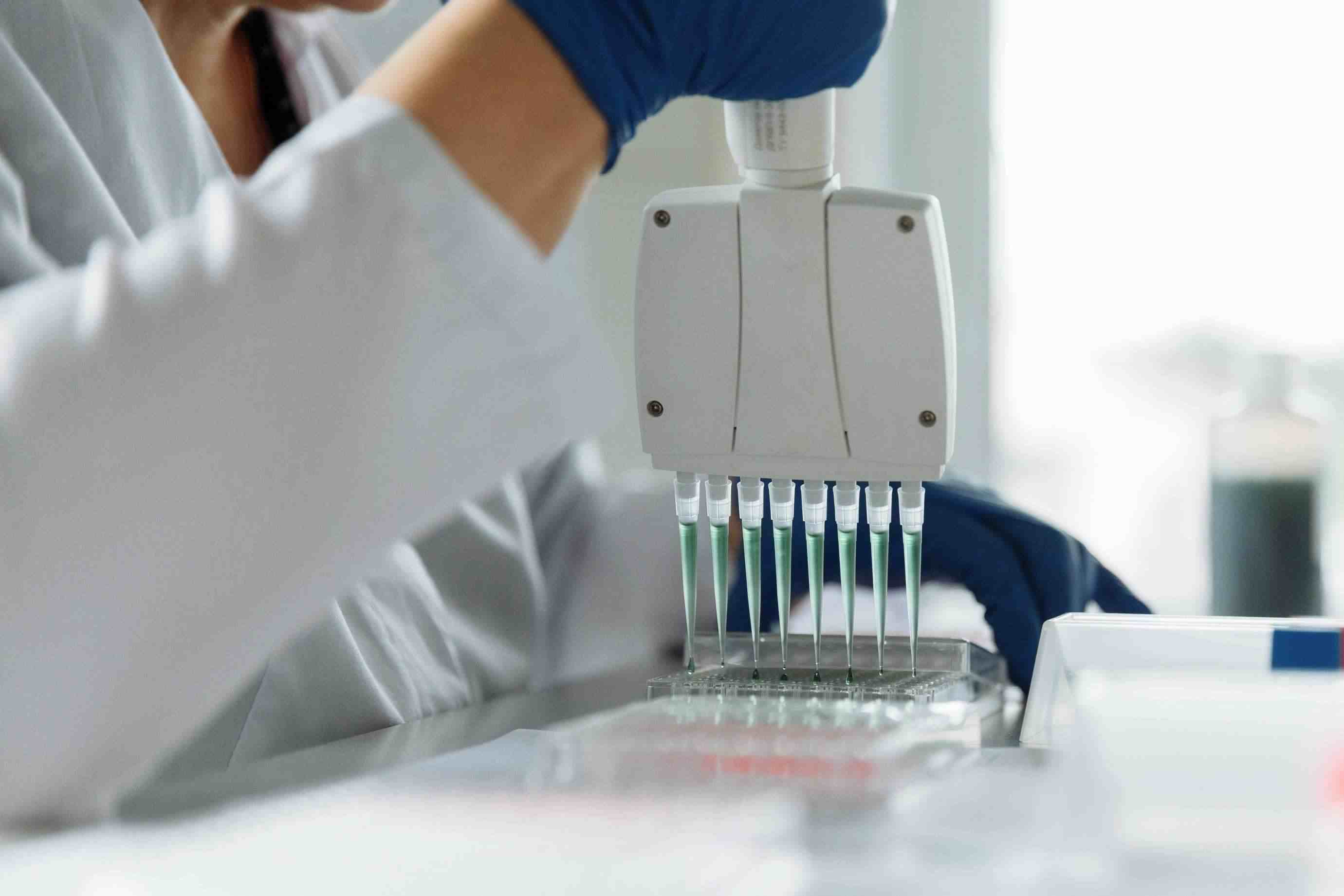
Four capability groups determine whether a tool can carry the pre-bench phase without forcing the researcher back into manual tracking. Each maps to a planning failure that is cheap to catch in silico and expensive to discover at the bench.
Cloning Strategy Simulation
The tool should let the researcher choose the assembly method, whether Gibson, Golden Gate, or restriction-based ligation, and simulate each junction in the context of the full construct. For multi-fragment assemblies this means checking overlap regions or overhang compatibility step by step and predicting the assembled product before synthesis. A simulator that only draws the expected result, without validating the junctions that produce it, leaves the most error-prone part of planning to the researcher.
Primer Design and Validation
Fragments that need amplification require primers with correct Tm, GC content, and binding specificity against the actual template. The tool should generate the primer pair for each fragment, check the overhangs added for the chosen assembly method, and flag secondary structures or mispriming before anything is ordered. Sequencing primers for later verification belong in the same design, so the verification step does not require a separate tool and a separate file.
Enzyme, Assembly, and Fragment Checks
For restriction-based strategies the tool should map every site for the enzymes in use, distinguish unique sites from repeated ones, and simulate single- and multi-enzyme digests to predict fragment sizes and ends. For assembly strategies it should verify that every junction is valid in the context of the construct. These checks are the difference between a plan that works on paper and one that works at the bench, because the failures they catch are cheap in silico and expensive in the lab.
Expected Product Prediction and Verification Prep
Planning is not complete until the final clone is defined and the verification step is decided. The tool should predict the assembled sequence, then support the check that confirms it: an expected restriction digest pattern, a sequencing primer set, or an alignment of reads against the predicted product. Teams that define this before starting execution know what a successful result looks like, which turns a simulation into a testable experiment.
Evaluation Dimensions for Cloning Planning Software
Six dimensions separate cloning planning software that fits a real cloning workflow from software that only displays sequences. Each maps to a planning failure the lab would otherwise discover at the bench, and the table doubles as a selection checklist for comparing candidates.
| Dimension | What to confirm | Failure if skipped |
|---|---|---|
| Simulation fidelity | Strategies and digests match real enzyme and assembly behavior | Construct fails at the bench |
| Sequence tool coverage | Viewing, editing, alignment, and FASTA/GenBank import | Sequences stuck in separate tools |
| Import and export | Plans and constructs travel as standard sequence files | Designs locked inside one tool |
| Record integration | Plans link to experiment records and project context | Design intent lost after execution |
| Team collaboration | Shared components, permissions, and version control | Duplicate redesign across members |
| Adoption and training | Learning burden fits the team's skill mix | Tool abandoned after the pilot |
Walk these dimensions against a real multi-fragment project with the team that will use the tool. Comparing feature lists on paper is less reliable than running an actual design through each candidate, because workflow fit shows up in the handoffs between planning, execution, and documentation.
From Pre-Experiment Checklist to Execution and Records
The value of planning software is only realized when the plan survives the handoff to the bench. If primers, digestion expectations, and assembly order live only in one person's notes, the execution team re-derives them from memory, and the context that produced the design is gone by the time the record is written. A pre-experiment checklist converts the in silico plan into a bench-ready brief that everyone on the project can follow.
- Confirm every junction and overhang against the actual template sequence; a junction verified in silico but built from memory is where silent design errors enter.
- Recheck primer Tm, GC content, and binding specificity, because a primer that fails to anneal stops the project before the assembly starts.
- Verify enzyme site uniqueness and expected fragment sizes for every digest, so the gel or purification step matches the prediction.
- Define the predicted final construct and the digest or sequencing check that confirms it, which gives the lab an explicit success criterion.
- Attach the design files and primer list to the plan, so the experiment record later contains the context that produced the result.
Once the plan is bench-ready, the record should inherit it. When the experiment is documented, the same files, primer tables, and annotations that defined the design become the context of the record. ZettaNote supports this by structuring experiment records so sequence files and project context stay attached to the bench results, and the Zettalab platform keeps design files and records in the same project workspace. Teams that document after the fact, from memory, produce records that cannot be reconstructed later, which is exactly the traceability gap that shows up during review or handoffs.
Common Blind Spots in Cloning Planning Software
Even capable planning tools have blind spots. These four are the ones labs most often discover after adoption, and each has a check that catches it early.
Simulation That Ignores Enzyme Behavior
A digestion simulation is only as good as its enzyme database. If the tool misses rare-cutters, does not model star activity or methylation sensitivity, or handles multi-enzyme digests poorly, the predicted fragments will not match the actual gel. Evaluate the depth of the enzyme model, and test a digestion the lab performs routinely to compare the prediction against a known result.
Designs That Never Reach the Record
When the plan lives in planning software and the record lives in a different system, the design intent is lost after execution. Reviewers see results without the design context, and audit questions become hard to answer. Evaluate whether the plan can be linked to the experiment record directly, rather than exported as a one-time file that will drift from the actual outcome.
Single-User Plans
If validated designs exist only on one researcher's machine, the rest of the team re-derives or revalidates them, duplicating work and creating divergent versions of the same construct. Evaluate whether shared component libraries, permissions, and version history let the team reuse a verified design instead of rebuilding it. For labs where several members touch the same constructs, this determines whether the tool reduces or simply redistributes effort.
Sequence Files That Do Not Travel
A planning tool that cannot import the formats the lab receives, or export the files downstream tools need, becomes a bottleneck. Standard formats such as FASTA and GenBank keep constructs portable across collaborators and analysis tools. Evaluate the import and export paths with real files from the lab's actual sources before adoption.
Matching Cloning Planning Software to Your Workflow
The right choice depends on how much of the planning-to-record cycle the tool covers and where the lab's needs actually sit. A solo researcher doing occasional single-fragment work may be well served by a focused sequence tool. Teams that plan repeatedly, share constructs across members, and need their designs to survive into documentation benefit from a connected workspace, where planning, records, and files share one project context. ZettaGene fits the planning side: sequence visualization and editing, plasmid construction, primer design, alignment, and in silico checks in one workspace, with shared biological component libraries for designs the team reuses.
The connection to records is where planning value compounds. ZettaNote keeps experiment documentation structured and traceable, so the validated plan becomes the context of the bench record rather than a separate artifact. Zettalab brings these together in a cloud-based R&D workspace designed for molecular biology teams. When evaluating candidates, ask which parts of the planning-to-record chain the tool holds together, because the handoffs are where errors and lost context accumulate.
FAQ
What should a lab evaluate in software for planning molecular cloning experiments?
Evaluate the tool across the full pre-bench cycle: strategy simulation for the assembly methods the lab uses, whether Gibson, Golden Gate, or restriction-based; primer design with Tm, GC content, and overhang checks; enzyme site mapping with uniqueness and fragment prediction; and the ability to predict and verify the final construct. Then check workflow fit: whether plans import and export as standard sequence files, whether validated designs are shareable across the team, and whether the plan can be linked to experiment records. A tool that handles one step well but breaks the chain to execution simply reintroduces the manual handoffs it was meant to remove.
How does cloning planning software simulate a cloning strategy before the bench?
Planning software builds an in silico model of the proposed construct and runs the planned steps against that model. For a restriction-based strategy it maps enzyme sites across the vector and insert, simulates the digest in silico, and reports expected fragment sizes and ends. For Gibson or Golden Gate assembly it checks junction overlaps and validates the assembled junction sequence before synthesis. Primer design in the same workspace predicts amplification products and flags Tm or specificity problems early. The output is a predicted final clone plus the verification plan, such as an expected digest pattern or a sequencing primer set, that the lab can carry straight into execution.
How is cloning planning software different from a sequence editor or plasmid map viewer?
Sequence editors and map viewers are built to display and annotate sequences; they show a construct as it is, not as it could be. Cloning planning software adds the decision layer: it simulates the steps that create a new construct, checks whether those steps are internally consistent, and predicts the product before anyone touches the bench. A viewer can display a restriction site; planning software evaluates whether that site is unique in the context of the planned digest, whether the ends are compatible, and whether the assembled product matches the design intent. Labs doing occasional single-fragment work can manage with a viewer, but teams doing repeated or multi-fragment cloning need the simulation layer.
Do I need separate primer design tools if I have cloning planning software?
It depends on how integrated the planning tool's primer features are. Planning software that generates primers for the fragments in the construct, checks Tm and overhang design against the actual template, and exports the primer list for ordering can replace a separate primer tool for the cloning workflow. A separate primer tool remains useful for specialized cases: sequencing primers for verification, degenerate primers, or PCR design outside the cloning context. The risk of splitting the two is that primers and the constructs they belong to drift apart across tools, so evaluate whether the workspace keeps primer design, the predicted product, and the verification step in one context.
How accurate are cloning simulations compared with real digestion and assembly results?
In silico predictions are reliable for sequence-level decisions: fragment sizes, junction sequences, and expected digest patterns, assuming the enzyme and assembly model matches the reagents actually used. Discrepancies usually come from factors a simulation cannot fully model, such as star activity, methylation sensitivity, template impurities, or incomplete digestion. Teams should treat the simulation as the expected outcome and design verification accordingly, for example a diagnostic digest or sequencing read that confirms the predicted product. The practical test is whether the tool's predictions consistently match gel or sequencing results in the lab's own hands; that consistency, more than any feature claim, determines how far the simulation can be trusted.
How do I keep a validated cloning plan connected to experiment records?
The plan is only as useful as its link to what actually happened at the bench. Record the final construct file, the primer list, and the verification plan in the same place where the experiment will be documented, so anyone reviewing the record later can reconstruct the design intent. An ELN such as ZettaNote helps here: structured experiment records carry the sequence files, primer tables, and annotations alongside the bench results, keeping the design-to-execution chain intact. Teams that leave the plan in a separate tool must re-attach context manually, which is where the connection between design and outcome is lost.
What should a lab manager look for when choosing cloning planning software for a team?
For a team, evaluate adoption risk alongside capability. Confirm the tool matches the assembly methods the lab actually uses, then check whether validated designs can be stored as shared components that others reuse, whether permissions and version history prevent conflicting edits, and whether templates standardize how plans are formatted across members. Training burden matters: a tool that requires each researcher to rebuild process knowledge adds cost regardless of features. Connected workspaces address this by keeping design, records, and files in one project context, which is why platforms such as Zettalab position planning and documentation together; whatever you choose, test it on a real multi-fragment project with the team that will use it.
Conclusion
Software for planning molecular cloning experiments should be judged on how completely it carries the pre-bench phase: strategy simulation, primer design, enzyme and assembly checks, expected product prediction, and the handoff into execution and records. Teams that test candidates against a real multi-fragment project, with the people who will use the tool, get a more reliable answer than any feature list provides. For teams that want planning and documentation in one context, Zettalab connects molecular biology tools with ELN-style records in a single workspace. To see how cloning planning software behaves inside a connected molecular biology workspace, explore Zettalab's cloud-based R&D lab platform.
Related Articles