Experiment Record Template Software: How to Evaluate a Tool for Lab Documentation
Experiment record template software is a digital tool that lets research teams define, reuse, and govern structured templates for documenting experiments, so that every record captures the same fields, attachments, and review steps instead of depending on each scientist's personal note-taking style. For molecular biology and biotech teams, the value is not the template itself but the workflow it enforces: consistent fields, connected files, traceable changes, and a review path that makes records reproducible and audit-ready.
Choosing this software is rarely about the number of prebuilt templates a vendor ships. Labs should weigh template governance, integration with sequence tools and lab files, permission control, review workflow fit, and how well templates support reproducibility. This article covers what to evaluate when selecting experiment record template software for molecular biology workflows.
Why Template Software Matters Beyond the Template
A common mistake is to compare experiment record tools by counting templates. A vendor can ship hundreds of generic templates and still leave a molecular biology team without fields for primer sequences, plasmid maps, cloning strategies, or gel images. When the template does not match the experiment, researchers either skip fields or maintain a parallel spreadsheet, which defeats the purpose of structured documentation.
The more useful question is how a tool lets a lab build, version, and enforce its own templates. Teams that document cloning, CRISPR design, or sequence validation need templates that carry their field definitions, link to project files, and update as protocols evolve. If every change to a template silently breaks older records, the software creates documentation debt rather than reducing it.
What to Evaluate in Experiment Record Template Software
Six dimensions tend to separate a usable tool from a generic notebook. Each one answers a real workflow problem that molecular biology and biotech teams hit as they scale documentation.
Reusable, Structured Template Fields
The tool should let a lab define typed fields, not just free text. A cloning experiment record benefits from fields for insert and vector names, restriction sites, primer sequences, annealing temperatures, and expected versus observed band sizes. Typed fields make records searchable and comparable, whereas free-text boxes produce records that no one can aggregate or query later.
Integration With Sequence Tools and Lab Files
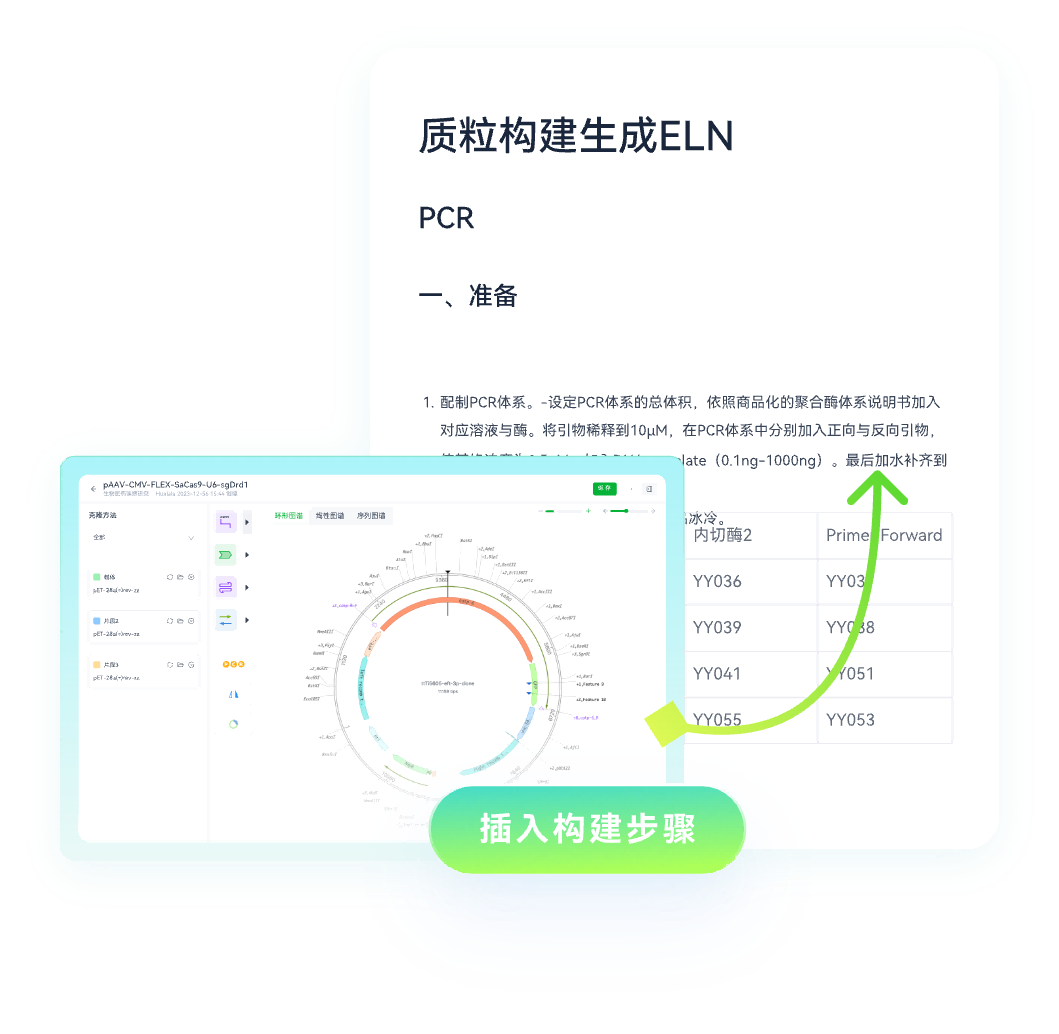
Templates are most valuable when they connect to the assets that shape an experiment. If a primer field cannot reference a sequence file, or a plasmid map cannot be embedded next to the cloning notes, researchers end up describing data instead of linking it. Tools that connect molecular biology editors with experiment records reduce this context loss.
Permission Control and Template Governance
Not every team member should edit the master template. Labs need role-based permissions so that a senior scientist can lock an approved template while trainees still create records from it. Without governance, templates drift as each user tweaks fields, and the consistency that made them useful disappears.
Review Workflow and Version History
Reproducible research depends on knowing who reviewed a record and what changed. Software that captures review status, reviewer comments, and a versioned history lets a PI or lab manager trace why a protocol shifted. This is especially relevant for teams moving toward GLP-ready documentation, where an audit trail is part of the requirement, not an optional feature.
Ease of Template Creation and Adoption
A tool that requires a developer to build templates will not be adopted. Labs should test how quickly a bench scientist can clone an existing template, add a field, and roll it out to a project. High training burden is one of the most common reasons teams abandon an ELN after a pilot.
Export, Retention, and Portability
Templates and records should be exportable in open formats so the lab is not locked in. PDF export, structured data export, and clear retention policies matter when a team changes tools, shares records with collaborators, or faces a data retention review.
Standalone Notebooks vs Connected R&D Workspaces
Experiment record template software generally falls into two categories, and the choice changes how templates behave over time.
| Dimension | Standalone notebook | Connected R&D workspace |
|---|---|---|
| Template source | Static, often generic | Configurable to project and workflow |
| Sequence and file links | Manual uploads, file silos | Direct links to sequence and plasmid assets |
| Permissions | Basic read or write | Role-based, template-level governance |
| Review and traceability | Limited version history | Review status, comments, audit trail |
| Best fit | Individual note-taking | Team documentation with reproducibility goals |
Standalone notebooks can work for an individual researcher who only needs a digital replacement for a paper notebook. Teams that need consistency across members, traceability across experiments, and connections between design and documentation usually outgrow them quickly.
How Zettalab Fits Experiment Record Template Workflows
For teams that want sequence design and experiment documentation in the same R&D workspace, Zettalab connects molecular biology tools with ELN-style records and collaboration features. ZettaNote supports structured experiment documentation, reusable templates, annotations, and cross-references, while the broader workspace helps teams keep sequence tools, plasmid maps, and lab files closer to the records that describe them.
This connected approach is most relevant when the evaluation criteria above, governance, sequence integration, and review workflow, are the deciding factors rather than template count. Labs evaluating experiment record template software can use those same dimensions to judge any tool, including Zettalab, against their actual documentation workflow.
FAQ
What is experiment record template software?
Experiment record template software is a digital tool that lets research teams define and reuse structured templates for documenting experiments, so every record captures consistent fields, files, and review steps. Unlike a free-form notebook, it enforces structure that makes records searchable, comparable, and reproducible. For molecular biology teams, the template usually needs to carry typed fields for sequences, primers, plasmids, and results rather than only text boxes.
What should a lab evaluate when choosing experiment record template software?
Labs should evaluate template governance, integration with sequence tools and lab files, permission control, review workflow, ease of creation, and export portability. The goal is to judge whether the tool supports the team's actual documentation workflow, not how many prebuilt templates it ships. A tool that cannot link a primer field to a sequence file, or that lets any user silently edit a locked template, will create documentation debt as the team grows.
How does template software support reproducible research?
Template software supports reproducibility by enforcing consistent fields, capturing version history, and recording who reviewed each record and what changed. When a cloning protocol shifts, a versioned template lets the team trace exactly when and why. Reproducibility depends less on the template's layout and more on whether the software preserves the data context and review trail behind each experiment.
Is cloud-based experiment record software secure enough for sensitive research?
Cloud-based tools can be secure enough when they offer role-based permissions, access control, audit trails, and clear data retention policies. Labs should ask how permissions are managed, whether template edits are logged, and how data is retained and exported. Security fit depends more on these controls and on the team's data residency requirements than on whether the software is cloud or on-premises.
How long does it take to roll out experiment record templates to a team?
Rollout time depends on how easily the tool lets a lab build and govern templates, and on how much training the interface requires. A pilot that lets one project define a template, create records, and run a review cycle is usually the fastest way to estimate adoption. Tools that require developer support for every template change tend to slow rollout and reduce adoption, even when their feature list looks strong.
Conclusion
Selecting experiment record template software comes down to whether the tool enforces the structure, governance, and traceability a team actually needs, not how many templates it advertises. Labs that document molecular biology workflows should prioritize typed fields, sequence and file integration, permission control, review history, and export portability. A connected R&D workspace that links experiment records with sequence tools and lab files, such as Zettalab, tends to fit teams whose reproducibility and collaboration goals have outgrown a standalone notebook. To see how these evaluation dimensions map to a real documentation workflow, explore Zettalab's cloud-based R&D lab platform.
Related Articles