Compare CRISPR Guide Design Tools: 2026 Features and Scoring
CRISPR guide design software is a specialized bioinformatics tool that identifies target protospacer sequences, evaluates on-target cleavage efficiency, predicts off-target binding risks, and automates guide RNA (gRNA) selection across genomic targets. For molecular biology and gene editing teams preparing knockout or knock-in experiments, choosing the right guide design software directly affects downstream cutting accuracy, screening burden, and workflow reproducibility.
Modern gene editing laboratories evaluate guide design tools not merely on raw processing speed, but on algorithmic accuracy, support for diverse Cas enzyme variants, integrated sequencing primer design, and connectivity with electronic experiment records. This comparison evaluates the core capabilities of leading CRISPR design software options in 2026.
Key Evaluation Dimensions for CRISPR Guide Design Tools
Selecting an effective guide design platform requires balancing predictive algorithms with practical wet-lab utility. Research teams should examine four foundational criteria before standardizing on a software tool:
1. On-Target and Off-Target Scoring Models: Early design algorithms relied on simple GC content and basic mismatch penalties. Advanced platforms incorporate validated empirical models such as Rule Set 2 (Doench et al.) for on-target activity and CFD (Cutting Frequency Determination) or Hsu-Zhang matrices for genome-wide off-target prediction. Reliable tools provide transparent scoring breakdowns rather than arbitrary percentage scores.
2. PAM Flexibility and Enzyme Support: While canonical SpCas9 (NGG PAM) remains widespread, modern projects increasingly utilize high-fidelity variants, SaCas9 (NNGRRT), Cas12a/Cpf1 (TTTV), and engineered base editors. A capable design tool must allow custom PAM definitions and non-standard target requirements.
3. Downstream Validation Primer Automation: Designing a guide RNA is only the first step. Researchers must amplify the target locus to verify cleavage or editing efficiency via Sanger sequencing or NGS. Tools that simultaneously design forward and reverse PCR primers flanking the cut site save substantial bench planning time.
4. Workspace and Experiment Record Integration: Standalone web apps output plain sequence strings, forcing researchers to copy-paste coordinates into separate spreadsheets or plasmid maps. Connected platforms link guide candidates directly to vector construction tools and digital laboratory notebooks.
Comparison of Leading CRISPR Guide Design Platforms
To assist laboratory managers and molecular biologists in selecting the appropriate solution, the following overview compares common software categories and platforms in 2026:
| Tool Category / Platform | Core Strengths | Scoring Algorithms | Primer Integration | Ideal Lab Scenario |
|---|---|---|---|---|
| Academic Web Servers (e.g., CRISPOR, CHOPCHOP) | Free public access, broad genome database selection, extensive multi-algorithm scoring | Doench, Moreno-Mateos, Hsu-Zhang, CFD | Basic flanking primers available | Academic pilot studies and single-target candidate checks |
| Enterprise Standalone Suites (e.g., Geneious Prime, SnapGene) | Rich local sequence editing, plasmid annotation, desktop offline performance | Standard mismatch scoring, Doench algorithm plugins | Manual or plugin-assisted primer pairing | Individual researchers managing local vector files and Sanger traces |
| Connected Cloud Workspaces (e.g., Zettalab ZettaCRISPR) | Unified gRNA design, automatic sequencing primer generation, direct ELN and vector linkage | Integrated on-target efficiency and genome-wide specificity models | Automated flanking and sequencing primer pairs | Biotech teams, CROs, and multi-user labs requiring end-to-end design traceability |
Evaluating Tool Categories in Detail
1. Academic Web Tools (CRISPOR and CHOPCHOP)
Academic portals provide broad accessibility and allow researchers to benchmark multiple published algorithms simultaneously. They serve as excellent reference points for exploratory genome editing and educational use. However, these tools generally lack team permission controls, cannot store proprietary plasmid backbones securely, and require manual data transfer into experimental documentation systems.
2. Desktop Sequence Software
Desktop molecular biology programs excel at detailed visual plasmid mapping and local sequence manipulation. While they support basic guide annotation and restriction site checking, collaborative reviews remain cumbersome because vector files must be manually emailed or shared across local network drives, risking version fragmentation.
3. Connected Cloud Design Platforms
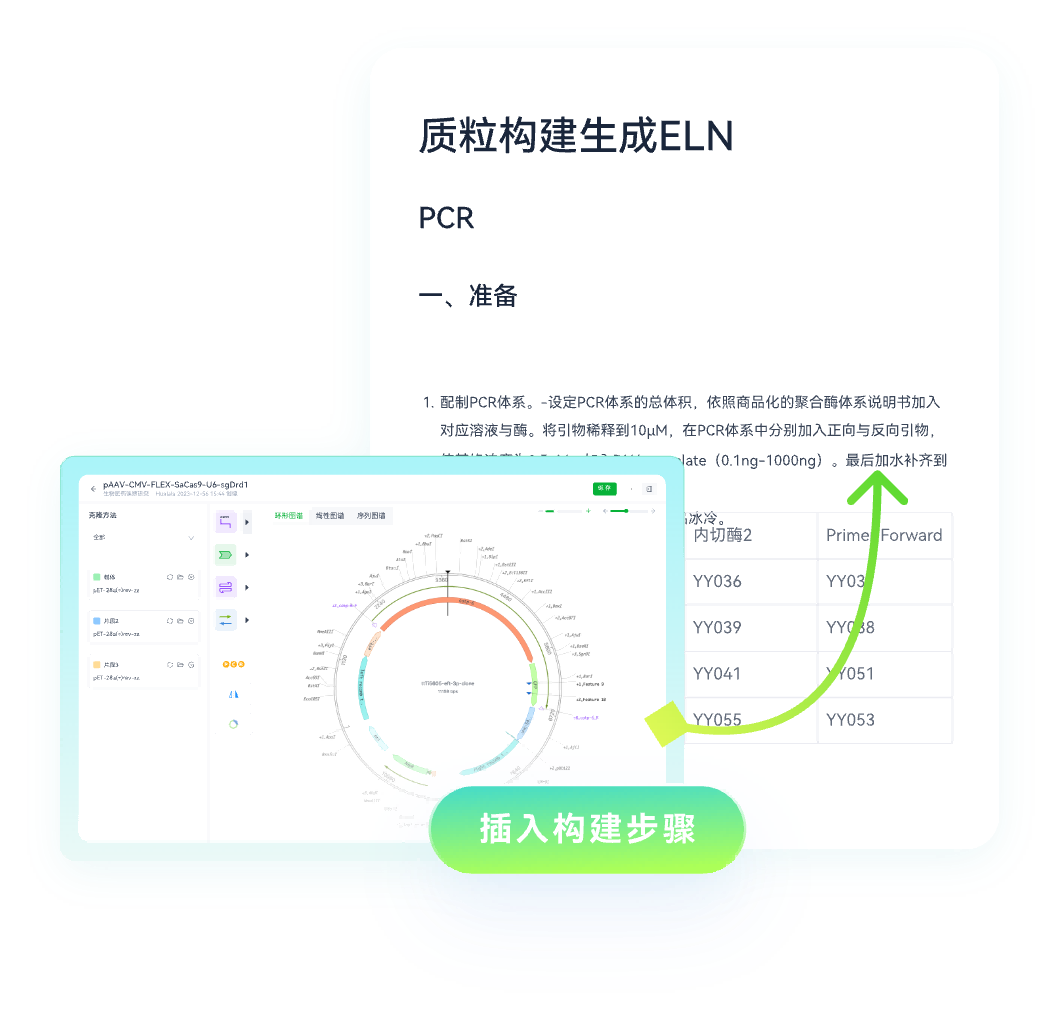
Cloud-native R&D platforms such as Zettalab bridge the gap between in silico design and wet-lab execution. Within ZettaCRISPR, molecular biologists can input target genomic loci, evaluate candidate guide RNAs with integrated specificity scoring, and automatically generate flanking sequencing primers in a single step. The resulting guide sequences and primer pairs seamlessly transfer into vector construction workflows and ZettaNote electronic lab notebook records, eliminating copy-paste errors and preserving audit-ready design provenance.
Workflow Integration: From Guide Selection to Clone Verification
A major bottleneck in gene editing workflows occurs during data handoff between design and bench validation. When researchers select a guide RNA from an isolated web tool, subsequent steps often introduce unrecorded variables:
First, transferring oligonucleotide overhangs for Golden Gate or restriction cloning into plasmid templates can result in frame-shift or orientation errors if done manually. Second, tracking lot numbers and reconstitution parameters of synthesized oligos in separate spreadsheets disconnects the physical reagent from the experimental protocol.
Adopting an integrated workflow ensures that the chosen protospacer sequence, its predicted cleavage coordinate, the designed verification primers, and the corresponding plasmid construction record remain permanently linked within a shared project repository.
Implementation and Security Considerations
When selecting CRISPR design software for commercial biotech or biopharma applications, data governance is paramount. Teams should assess whether sequence queries sent to external web servers expose proprietary therapeutic targets. Enterprise-grade cloud platforms provide dedicated tenant isolation, role-based access control, and complete audit logging to safeguard intellectual property.
FAQ
What is the difference between on-target efficiency and off-target specificity scores?
On-target efficiency scores predict how effectively a guide RNA-Cas complex will bind and cleave the intended target sequence based on sequence composition, nucleotide position preferences, and chromatin accessibility. In contrast, off-target specificity scores estimate the likelihood of unintended cleavage elsewhere in the genome by assessing sequence homology, mismatch counts, and mismatch positions relative to the PAM site. Robust experimental planning requires balancing high on-target activity with minimal off-target potential.
Can modern CRISPR design tools support custom PAM sequences?
Yes, leading CRISPR design software allows users to specify custom or non-canonical PAM motifs. While default settings cater to SpCas9 (NGG), researchers utilizing SaCas9, Cas12a/Cpf1 (TTTV), Cas13, or base-editing enzymes can configure specific 5' or 3' PAM parameters, spacer lengths, and orientation requirements to accurately locate target sites across unconventional genomic regions.
Why should guide RNA design tools include automated primer design?
Validating CRISPR editing outcomes requires amplifying the genomic region surrounding the expected double-strand break or edit site. Automated primer design ensures that forward and reverse PCR primers are placed at optimal distances (typically 200–500 base pairs from the cut site), adhere to strict melting temperature matching, and avoid secondary structures, significantly reducing manual assay preparation time.
How does integrated software prevent gene editing documentation errors?
Integrated software links the selected guide RNA sequence, cloning overhangs, predicted cut coordinates, and sequencing primers directly to digital experiment templates. By removing manual copy-pasting across disparate tools, research teams preserve data integrity, simplify peer review, and maintain traceable records necessary for regulatory filings and patent documentation.
Conclusion
Selecting the optimal CRISPR guide design tool involves evaluating algorithm accuracy, PAM versatility, primer generation, and laboratory workflow continuity. While standalone academic servers remain useful for single-query checks, modern biotechnology teams benefit significantly from connected platforms that unite in silico design with structured experiment records. Explore Zettalab to discover how connected molecular biology tools and electronic lab notebooks streamline gene editing workflows.
Related Articles