Collaborative Experiment Recording: What Research Teams Should Look for in an ELN
Collaborative experiment recording is most effective when research teams can document, share, and review experimental work in a shared digital workspace while maintaining clear ownership and audit trails. For molecular biology and biotech teams, the ability to record experiments collaboratively reduces data silos, improves reproducibility, and accelerates scientific decision-making. This guide covers what collaborative experiment recording means, why it matters for research teams, and what to evaluate when selecting an ELN that supports team-based documentation.
What Is Collaborative Experiment Recording?
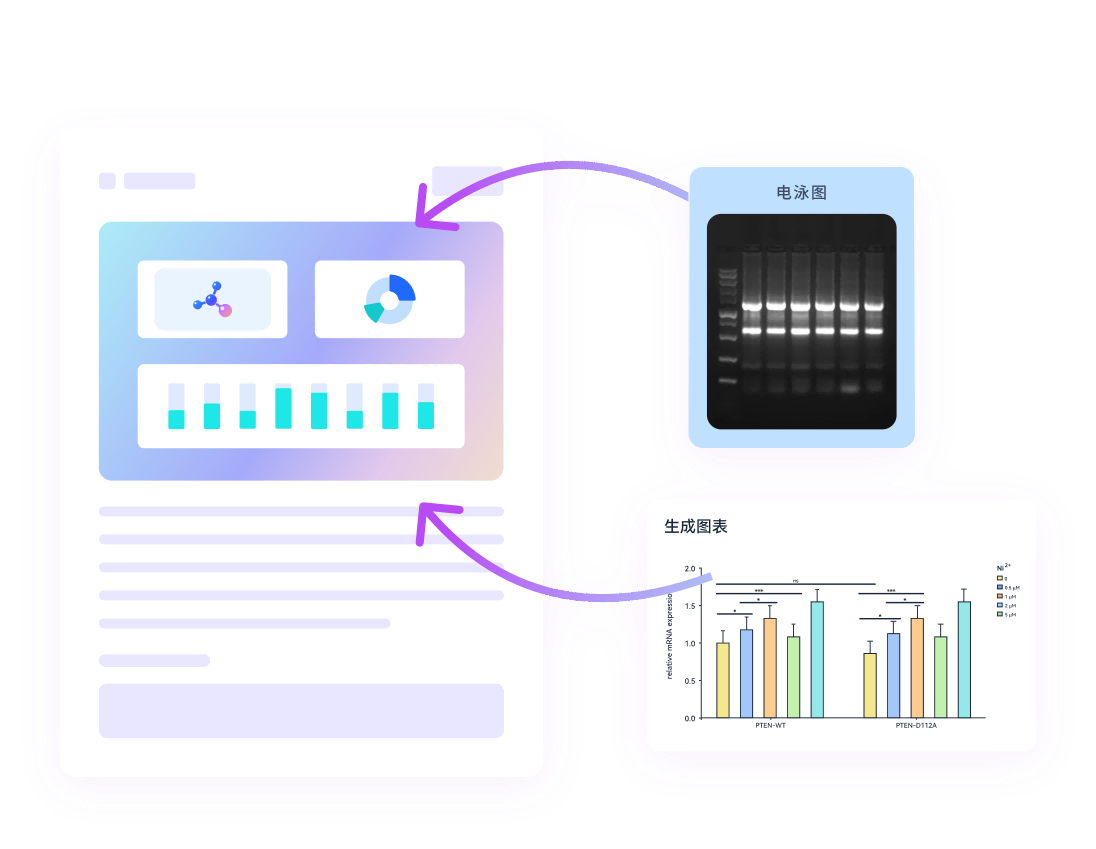
Collaborative experiment recording refers to the practice of documenting scientific experiments in a shared digital environment where multiple researchers can contribute, review, and reference each other‘s work. Unlike traditional paper notebooks or individual digital documents, collaborative experiment recording enables team members to work on the same experiment records, share observations in real time, and maintain a complete history of who contributed what and when.
At its core, collaborative experiment recording addresses a fundamental challenge in team-based research: ensuring that experimental knowledge is captured, organized, and accessible to everyone who needs it. When experiments are recorded collaboratively, the resulting documentation reflects input from multiple perspectives, reducing the risk of omissions or errors that can occur when a single person is responsible for all record-keeping.
The key enabler of collaborative experiment recording is the electronic lab notebook (ELN) designed for multi-user environments. A collaborative ELN provides structured templates for experiment documentation, real-time editing capabilities, permission controls, and audit trails that track every change. These features transform experiment recording from a solitary administrative task into an integral part of the research workflow.
Why Collaborative Experiment Recording Matters for Research Teams
Research in molecular biology and biotechnology is rarely a solo endeavor. Projects typically involve multiple researchers with complementary expertise: one team member designs primers, another performs cloning, a third handles sequencing and validation. Each stage generates data and observations that inform subsequent steps, and decisions made at one point must be documented for the rest of the team.
When experiment recording is not collaborative, several problems emerge. Knowledge silos develop when individual researchers maintain their own records that others cannot easily access or interpret. Context is lost when observations are recorded without reference to the sequence data, files, or project history that shaped them. Reproducibility suffers when the rationale behind experimental decisions is not captured in a way that others can understand and replicate.
For principal investigators and lab managers, these issues translate into tangible costs. Time is wasted answering questions about past experiments. Onboarding new team members becomes difficult when they cannot easily reconstruct project history. Research continuity is at risk when team members leave, taking undocumented knowledge with them.
Collaborative experiment recording addresses these challenges by making documentation a shared responsibility. When every team member contributes to experiment records, the resulting documentation is more complete, more accurate, and more useful for everyone. The platform becomes a central source of truth that supports decision-making, troubleshooting, and knowledge transfer across the team.
How Collaborative Experiment Recording Supports Research Reproducibility
Reproducibility is a cornerstone of scientific research, yet it remains a persistent challenge in molecular biology. One contributing factor is the gap between experimental execution and documentation. When a researcher performs an experiment and records the results later, details can be forgotten or misremembered. When multiple researchers are involved, the risk of incomplete or inconsistent documentation increases.
Collaborative experiment recording reduces this risk by enabling documentation to happen closer to the experiment itself. Team members can record observations, upload data, and share insights in real time, creating a more accurate and complete record. The structured nature of a collaborative ELN also encourages consistency: templates ensure that essential information is captured for every experiment, and shared protocols reduce variation in how experiments are documented.
For teams working in regulated environments or preparing for publication, collaborative experiment recording provides an auditable trail of who did what, when, and why. This traceability strengthens the credibility of research outputs and simplifies the process of responding to reviewer questions or regulatory inquiries.
Key Features to Evaluate in Collaborative Experiment Recording Software
Selecting software for collaborative experiment recording requires assessing multiple dimensions. Not all ELNs are designed for team-based workflows, and features that matter for individual use may be insufficient for collaborative research.
Real-Time Collaboration. The platform should support simultaneous editing and viewing of experiment records by multiple users. Team members should be able to see updates as they happen, comment on specific sections, and tag colleagues for input or review.
Permission Controls. Not all experiment records should be accessible to everyone. The platform should support role-based permissions that control who can view, edit, or comment on specific experiments or projects. This is particularly important for sensitive research, unpublished data, or work in progress.
Structured Templates. Consistency in experiment documentation improves searchability and reduces omissions. The platform should support customizable templates for common experiment types, ensuring that essential information is captured every time.
Audit Trails. Every change to an experiment record should be tracked with a timestamp and user identification. This provides accountability, supports reproducibility, and simplifies regulatory review.
Search and Retrieval. As experiment records accumulate, finding past work becomes critical. The platform should offer robust search across experiment titles, notes, file names, and even sequence content, enabling researchers to quickly locate relevant information.
Integration with Other Tools. Experiment records are most valuable when they are connected to the sequence data, files, and project context that informed them. The platform should support integration with sequence design tools, file storage, and project management features.
Version History. Researchers should be able to view previous versions of experiment records and understand what changed, when, and by whom. This supports troubleshooting and provides a complete picture of how experiments evolved.
Standalone Documentation vs. Collaborative Experiment Recording
| Aspect | Standalone Documentation | Collaborative Experiment Recording |
|---|---|---|
| Record Creation | Individual researcher | Multiple team members contribute |
| Real-Time Access | Limited to the record owner | Team-wide access with permissions |
| Review Process | Manual sharing via email or meetings | In-platform comments and @mentions |
| Audit Trail | Limited or none | Complete history of changes |
| Knowledge Transfer | Depends on individual handoff | Accessible to entire team |
| Consistency | Varies by individual | Templates enforce consistency |
| Searchability | Depends on file naming and organization | Structured search across all records |
The comparison above highlights a fundamental difference in how experiment knowledge is managed. Standalone documentation treats experiment records as individual artifacts, while collaborative experiment recording treats them as shared assets that benefit the entire team.
How Zettalab Supports Collaborative Experiment Recording
Zettalab is designed as a cloud-based R&D workspace that brings experiment documentation, sequence tools, file storage, and team collaboration into a unified platform. For teams evaluating collaborative experiment recording software, Zettalab offers several relevant capabilities.
ZettaNote provides structured electronic lab notebook functionality with templates, annotations, cross-references, and permission-aware collaboration. Team members can document experiments in a consistent format, add comments and tags, and reference related experiments or files. The platform supports real-time collaboration, enabling multiple researchers to contribute to the same experiment record while maintaining clear audit trails.
ZettaGene supports DNA sequence visualization, editing, plasmid construction, primer design, and sequence alignment. By keeping sequence design tools in the same workspace as experiment records, ZettaGene enables researchers to link experimental observations directly to the sequence data that informed them.
ZettaFile provides team-friendly file storage with permission management, online document editing, and batch upload and download. Researchers can attach sequencing traces, gel images, protocols, and other files to experiment records, keeping all relevant materials in one place.
Together, these components support a workflow where experiment recording is not a separate administrative task but an integrated part of the research process. Researchers can design sequences, document experiments, store project files, and collaborate with team members without leaving a single workspace.
Implementation Considerations for Collaborative Experiment Recording
Adopting collaborative experiment recording requires more than selecting software. Success depends on how the platform is introduced, configured, and adopted by the team.
Start with Clear Documentation Standards. A collaborative ELN is only as useful as the data entered into it. Establish clear expectations for how experiments should be documented, what information should be included, and how records should be organized. Consistency across team members improves searchability and reduces confusion.
Define Permission Structures Thoughtfully. Role-based permissions should reflect the team’s actual structure. Principal investigators may need access to all project data, while individual researchers should have appropriate access to their own work and shared resources. Regularly review permissions as team members join, leave, or change roles.
Invest in Training and Onboarding. Even intuitive platforms require some learning. Provide training sessions, documentation, and ongoing support to help team members transition. Address concerns about workflow changes and demonstrate how collaborative experiment recording reduces friction in daily tasks.
Encourage Consistent Use. Collaborative experiment recording delivers the most value when all team members participate. Encourage researchers to document experiments promptly, link relevant files and data, and use collaboration features like comments and @mentions. Recognize that adoption takes time and may require ongoing reinforcement.
Plan for Data Migration and Integration. Existing experiment records, sequence files, and project documents need to be transferred to the new platform. This process takes time and should be planned carefully to avoid data loss or disorganization. Consider how the platform will integrate with existing tools and workflows.
Common Pitfalls in Collaborative Experiment Recording Adoption
Even well-designed platforms can fail to deliver value if adoption is mishandled. Several pitfalls are worth anticipating.
Treating the ELN as a Passive Repository. Collaborative experiment recording is most valuable when researchers actively document experiments, link data, and collaborate within the system. If the platform is treated simply as a storage location, much of its value is lost.
Overcomplicating Templates and Workflows. Teams sometimes attempt to create templates for every possible experiment type before anyone starts using the platform. This delays adoption and can create unnecessary complexity. Start with a few essential templates and iterate based on real usage.
Neglecting Search and Retrieval. The long-term value of collaborative experiment recording depends on the ability to find past work. If records are incomplete, poorly titled, or inconsistently organized, search becomes difficult. Emphasize complete documentation from the start.
Underestimating Change Management. Researchers are accustomed to their existing documentation habits, even if those habits are inefficient. Transitioning to collaborative experiment recording requires clear communication about the benefits, patience during the learning curve, and recognition that adoption takes time.
FAQ
What is collaborative experiment recording?Collaborative experiment recording is the practice of documenting scientific experiments in a shared digital environment where multiple researchers can contribute, review, and reference each other‘s work. It enables teams to maintain complete, accessible, and auditable experiment records.
Why is collaborative experiment recording important for research teams?Collaborative experiment recording reduces knowledge silos, improves reproducibility, and accelerates decision-making by making experiment documentation accessible to the entire team. It also supports research continuity when team members join or leave.
How does collaborative experiment recording differ from a traditional paper notebook?A paper notebook is typically maintained by a single researcher and is not easily shared or searched. Collaborative experiment recording enables multiple researchers to contribute to the same records, provides real-time access, supports search, and maintains complete audit trails.
What features should I look for in collaborative experiment recording software?Key features include real-time collaboration, permission controls, structured templates, audit trails, robust search, integration with other research tools, and version history. The platform should support the specific needs of your research workflow.
Can collaborative experiment recording improve research reproducibility?Yes. By enabling real-time documentation and maintaining complete records of who did what and when, collaborative experiment recording creates a more accurate and complete account of experimental work. This supports reproducibility and simplifies troubleshooting.
How does Zettalab support collaborative experiment recording?Zettalab provides ZettaNote, a structured electronic lab notebook with templates, annotations, cross-references, and permission-aware collaboration. ZettaNote enables teams to document experiments collaboratively while maintaining clear audit trails and linking to sequence data and project files.
Is collaborative experiment recording suitable for all types of research?Collaborative experiment recording is particularly valuable for team-based research in molecular biology, biotechnology, and other life sciences. It is also relevant for academic labs, biotech startups, CROs, and biopharma teams that need consistent, accessible, and auditable experiment documentation.
What are the main challenges in adopting collaborative experiment recording?Common challenges include change management, defining documentation standards, configuring permissions, migrating existing data, and ensuring consistent adoption. Starting with a pilot project and investing in training can help address these challenges.
Conclusion
Collaborative experiment recording transforms how research teams document, share, and learn from experimental work. By moving from isolated paper notebooks or individual digital files to a shared, structured ELN environment, teams can reduce knowledge silos, improve reproducibility, and accelerate scientific progress. The right platform should support real-time collaboration, permission controls, structured templates, audit trails, and integration with other research tools.
Zettalab offers a cloud-based R&D workspace that brings collaborative experiment recording together with sequence design and file management. ZettaNote provides the structured ELN foundation for team-based documentation, while ZettaGene and ZettaFile keep sequence data and project files in the same workspace. Teams interested in exploring how collaborative experiment recording can support their research can start with a free trial or request a demo to see the platform in action.
Related Articles