How Bioinformatics Supports Molecular Biology: From Data to Insight
Bioinformatics supports molecular biology by turning raw sequencing and experimental data into interpretable results: aligned reads, verified clones, called variants, and quantified expression. For wet-lab teams, bioinformatics is not a separate discipline but the computational half of the same workflow, and the quality of that support depends on how well the two halves connect.
The support bioinformatics provides is only as good as the context it receives. A bioinformatician handed a folder of reads without sample metadata can produce output, but not meaning; the same reads with their sample relationships and experimental intent become answers. This guide covers what bioinformatics does for molecular biology workflows and how wet-lab teams can make the collaboration productive.
What Bioinformatics Does for Molecular Biology
| Wet-lab activity | Bioinformatics support |
|---|---|
| Clone verification | Alignment against reference, mismatch interpretation |
| CRISPR editing | Indel quantification, screen hit analysis |
| Primer and construct design | In silico checks, annotation, off-target screening |
| Expression studies | Transcript quantification, differential analysis |
Sequence Analysis as the Common Language
The most frequent point of contact is sequence analysis. Cloning produces Sanger reads that must be aligned to a reference to confirm the insert; CRISPR work produces amplicons whose indels must be quantified; expression experiments produce RNA-seq data that must be mapped and counted. In each case, bioinformatics translates raw sequence output into the answer the wet-lab question asked.
The translation is not mechanical. Alignment parameters, reference choice, and quality filtering all affect the result, which is why bioinformatics is interpretation as much as processing. A good computational collaborator does not just run the pipeline; they know what the wet-lab team is trying to prove and tune the analysis to that question. This is the difference between bioinformatics that supports and bioinformatics that merely processes.
Where the Handoff Usually Breaks
The weakness in most wet-lab and bioinformatics collaborations is the handoff. Sequencing data arrives without the metadata that gives it meaning: which sample is the control, what the replicates are, what the expected construct is, which condition each lane represents. The computational team either stalls waiting for answers or, worse, proceeds with assumptions and produces results that look definitive but rest on guesses.
This failure is preventable and structural, not technical. It happens because sample context lives in lab notebooks and conversations while the data lives in files, and the two are never joined. Teams that capture metadata alongside the data, sample identity, condition, replicate structure, and expected result, close the gap before analysis begins and spare the collaboration its most common source of wasted effort.
Making the Handoff Productive
A productive handoff delivers data with its meaning attached. The essentials are stable sample identifiers, the experimental design in a form a bioinformatician can use, and the specific question the analysis must answer. With these, the computational side can begin immediately and return results in the wet-lab team's terms: verified clones, called edits, or expression comparisons rather than raw alignments.
The reverse handoff matters equally: analysis results should return with enough provenance that the wet-lab team can act on them. A called variant should carry the evidence behind the call; a screen hit should link to the reads that support it. When both directions of the handoff preserve context, the collaboration becomes a single workflow instead of two teams passing files across a gap.
Connected Records Keep the Two Halves Together
The structural fix for handoff failures is to keep data and context in the same system. When the experiment record stores the sample identities, the conditions, the file references, and the analysis links together, the context that bioinformatics needs is already attached to the data it receives. No separate metadata spreadsheet, no reconstruction from emails, just the record the experiment generated.
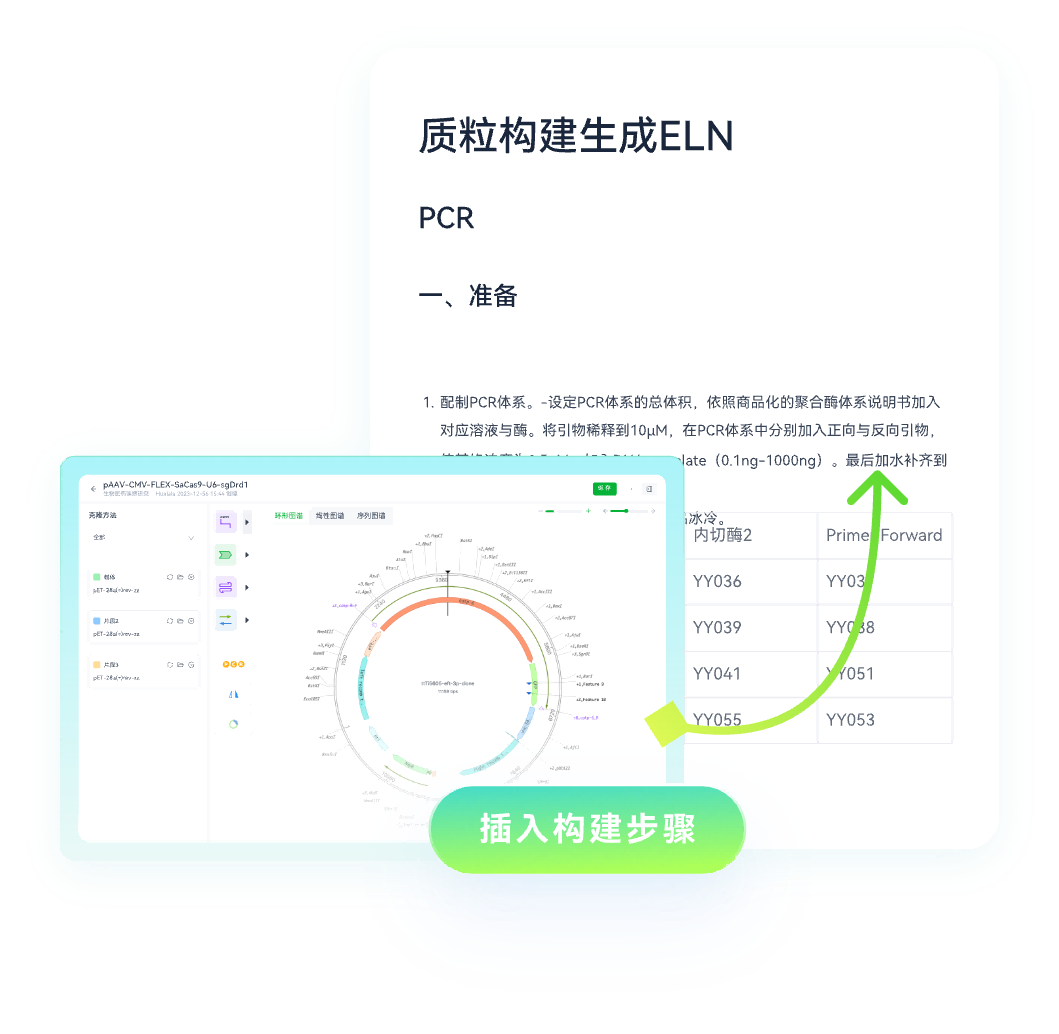
This is what connected lab platforms are for: wet-lab documentation, sequence context, and files living in one traceable workspace rather than in separate silos. For teams that want molecular biology tools and structured records connected, Zettalab brings sequence design, ELN-style documentation, and team file collaboration together, so the computational handoff carries the sample context it needs to be meaningful.
FAQ
What does bioinformatics do for wet-lab teams?
Bioinformatics translates raw sequencing and experimental data into interpretable results for the wet-lab workflow: it verifies clones by aligning reads to references, quantifies CRISPR indels and screen hits, checks construct designs in silico, and analyzes expression data. The value comes from interpretation matched to the biological question, not just running pipelines.
How should a wet-lab team hand data to a bioinformatician?
Hand the data with its context attached: stable sample identifiers, the experimental design including controls and replicates, and the specific question the analysis must answer. Without this, the computational side must guess at what each sample means, and the results become unreliable. Metadata captured at the bench is the single highest-value step in the handoff.
Why do bioinformatics handoffs fail in research labs?
Most handoffs fail because sample context and data travel separately. The sequencing files move to the computational team while the sample identity, conditions, and intended comparison stay in the wet-lab notebook. The analysis then stalls or proceeds on assumptions. The fix is structural: capture metadata alongside the data so the context arrives with the files.
Does a small molecular biology lab need bioinformatics?
Yes, as soon as the lab generates sequence data it cannot interpret by eye. Clone verification, CRISPR edit calls, and expression analysis all need alignment and quantification, even at small scale. The collaboration can be lightweight, a shared pipeline or a computational collaborator, but the data still needs the same context: sample identity, design, and the question being asked.
Conclusion
Bioinformatics supports molecular biology by turning raw data into the answers wet-lab workflows need, and its value depends on the context that travels with the data. Teams that keep sample metadata and analysis results connected to the experiment record make the collaboration a single workflow. To connect sequence work, documentation, and files in one workspace, explore Zettalab's cloud-based R&D lab platform.
Related Articles