AI translation for R&D documentation is most valuable when it enables research and development teams to translate scientific papers, lab protocols, experimental records, and regulatory submissions across languages while maintaining terminological precision, scientific accuracy, and audit-ready traceability. For biotech, pharmaceutical, and molecular biology teams operating in global research environments, AI translation is not a convenience—it is a strategic capability that directly impacts the speed of innovation, the quality of cross-border collaboration, and the integrity of regulatory submissions. This guide covers what AI translation means for R&D documentation, why it matters for research teams, the key document types involved, and what to evaluate when selecting an AI translation solution for R&D workflows.
What Is AI Translation for R&D Documentation?
AI translation for R&D documentation is the application of artificial intelligence—including Neural Machine Translation (NMT), Natural Language Processing (NLP), and domain-specific large language models—to translate research and development documents across multiple languages while maintaining terminological consistency, scientific accuracy, and regulatory compliance. Unlike general-purpose translation tools, AI translation for R&D is designed for the specific demands of scientific research: highly specialized terminology, complex document structures, and the need for precision in both internal collaboration and external regulatory submissions.
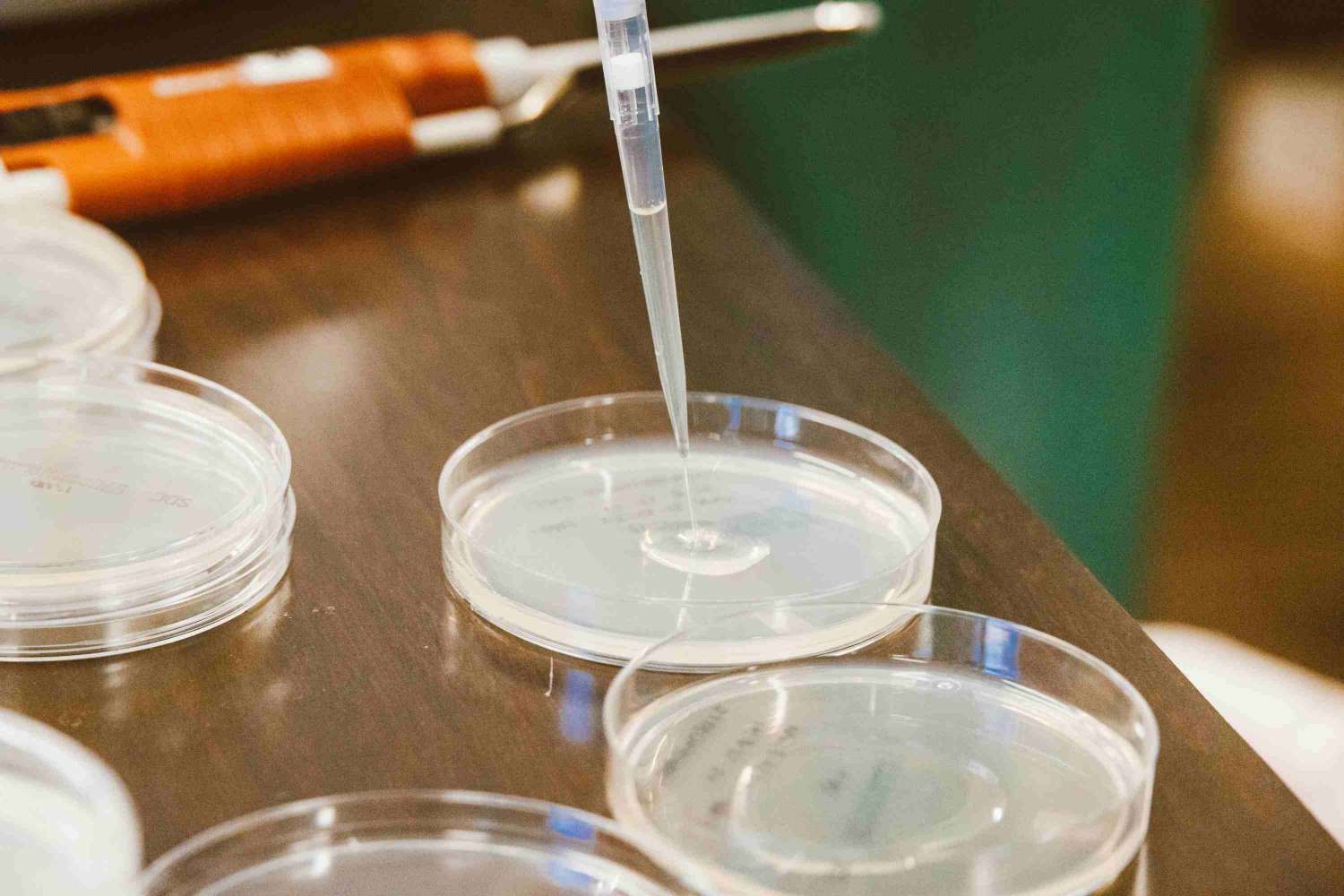
R&D documentation spans a broad spectrum of content types: research papers and scientific publications, laboratory protocols and standard operating procedures (SOPs), experimental records and electronic lab notebook (ELN) entries, clinical trial documentation, patent applications, and regulatory submissions. Each document type carries its own terminology, formatting requirements, and regulatory expectations.
Why AI Translation Matters for R&D Documentation
Accelerating Global Research Collaboration. Research and development is increasingly a global endeavor. Biotech and pharmaceutical companies operate across multiple countries, with R&D teams分布在 different continents collaborating on the same projects. Scientific literature is published in multiple languages. AI translation enables researchers to access and share knowledge across linguistic barriers, accelerating the pace of innovation.
Regulatory Submission Readiness. For R&D teams in regulated industries, the translation of research documentation is not optional—it is a requirement for regulatory submissions. IND, NDA, and BLA submissions often require translated versions of research documentation. Regulatory bodies such as the FDA, EMA, PMDA, and NMPA each impose unique linguistic and documentation standards. AI translation can accelerate the preparation of multilingual submissions while maintaining the precision that regulators demand.
Terminology Consistency Across the R&D Lifecycle. R&D documentation uses highly specialized scientific terminology that must be translated consistently across all documents. A single term's deviation—confusing an assay name, misidentifying a molecular target, or failing to distinguish between similar experimental conditions—can lead to confusion, data interpretation errors, and compromised scientific validity. AI translation with terminology management ensures that critical terms are translated consistently across all research documentation.
Protecting Intellectual Property. R&D documentation contains proprietary information about drug candidates, gene editing strategies, novel assays, and manufacturing processes. AI translation solutions for R&D must operate within secure, enterprise-grade environments with encryption, access controls, and audit trails that protect sensitive research data.
Scaling R&D Operations. As R&D organizations grow and expand into new markets, the volume of documentation requiring translation increases exponentially. Traditional human translation methods are slow, expensive, and difficult to scale. AI translation can handle high volumes across multiple language pairs simultaneously while maintaining quality through structured human review.
Key R&D Document Types Requiring AI Translation
Research Papers and Scientific Publications. Translating research papers enables broader dissemination of scientific findings and facilitates collaboration across language barriers. AI translation can provide rapid first-pass translations that researchers can then refine.
Laboratory Protocols and SOPs. Standard operating procedures and laboratory protocols must be accessible to all team members, regardless of their native language. Accurate translation ensures that procedures are followed consistently across sites, reducing variability and improving reproducibility.
Experimental Records and ELN Entries. Electronic lab notebook entries contain the detailed record of experiments—observations, results, and interpretations. Translating these records enables cross-site collaboration and ensures that research continuity is maintained when team members change.
Clinical Trial Documentation. Protocols, informed consent forms, investigator brochures, and clinical study reports require translation for multinational trials. AI translation can accelerate the preparation of these documents while maintaining the precision required for regulatory compliance.
Patent Applications. Patent documentation requires precise, legally sound translation to protect intellectual property across jurisdictions. AI translation with terminology management supports consistent translation of claims and specifications.
Regulatory Submissions. IND, NDA, BLA, and MAA submissions require translation for each target jurisdiction. AI translation can accelerate the preparation of multilingual submission dossiers while maintaining the structural integrity required by regulators.
Key Challenges in R&D Documentation Translation
Terminological Precision. R&D documentation uses highly specialized terminology that evolves rapidly with scientific advances. Translators must keep pace with new terms, new targets, and new methodologies. AI translation systems trained on up-to-date scientific corpora can help maintain terminological currency.
Document Structure and Formatting. R&D documents often have complex structures—tables, figures, numbered procedures, cross-references, and specialized formatting. Translation must preserve these structural elements to maintain document usability and regulatory compliance.
Regulatory Compliance. R&D documentation that feeds into regulatory submissions must meet the specific requirements of each target jurisdiction. Translation solutions must support audit trails, version control, and traceability.
Security and Confidentiality. R&D documentation contains commercially sensitive information. Translation workflows must operate within secure, audited environments that protect data from unauthorized access.
The AI+HUMAN Approach: Why Human Expertise Remains Essential
A key principle of AI translation for R&D documentation is the AI+HUMAN approach—integrating AI-powered translation with human oversight to maintain high precision and eliminate contextual errors. This hybrid model has emerged as the preferred approach in scientific and regulatory translation.
Domain-Trained AI Engines. Successful AI translation begins with engines trained on scientific and regulatory content. AI excels at highly structured R&D documentation—protocols, SOPs, clinical study reports—while maintaining the accuracy that researchers and regulators demand.
Expert Human Reviewers. Subject matter experts—scientists, clinicians, or regulatory professionals—review AI-generated translations for technical accuracy, scientific meaning, and regulatory compliance. Human reviewers ensure that translations preserve the scientific intent of the source documents.
Machine Translation Post-Editing (MTPE). In this model, AI generates an initial translation, which is then reviewed, edited, and validated by human subject matter experts. This collaboration increases throughput while maintaining the highest accuracy standards.
Cultural and Scientific Context. AI cannot fully understand the scientific context, research intent, or potential implications behind the text. Human reviewers ensure that translations are scientifically precise, culturally appropriate, and ethically sound.
Key Features to Evaluate in AI Translation for R&D Documentation
Selecting an AI translation solution for R&D documentation requires assessing specific capabilities that support scientific and regulatory workflows.
Domain-Specific AI Models. The translation system must be trained on scientific, clinical, and regulatory content—not general-purpose text. Generic translation tools lack the specialized understanding required for R&D documentation.
Terminology Management. The solution must support custom glossaries and translation memories that enforce terminology consistency across all documents and languages. Maintaining terminology alignment across the R&D lifecycle is essential for scientific validity and regulatory compliance.
Structural Preservation. R&D documents have complex formatting—tables, figures, numbered procedures, and cross-references—that must be preserved in translation.
Regulatory Compliance Features. The solution should support FDA, EMA, PMDA, and NMPA requirements, including audit trails, version control, and document traceability.
Enterprise-Grade Security. R&D organizations handle sensitive research and regulatory data. Translation solutions must operate within secure environments with encryption, access controls, and audit trails.
Human Review Integration. The solution should support structured MTPE workflows with subject matter experts who verify technical accuracy and regulatory compliance.
Integration with R&D Systems. The solution should integrate with ELN platforms, document management systems, and regulatory information management systems.
Standalone Translation vs. AI Translation for R&D Documentation
| Aspect | Standalone Translation | AI Translation for R&D |
|---|---|---|
| Training Data | General-purpose | Scientific, clinical, regulatory corpora |
| Terminology Control | Relies on individual translator | System-enforced via glossaries and TMs |
| Speed | Limited by translator capacity | AI accelerates turnaround significantly |
| Regulatory Compliance | Manual effort | Built-in compliance features |
| Audit Trail | Manual or none | Automatic, time-stamped, immutable |
| Security | Varies | Enterprise-grade with encryption |
| Scalability | Difficult to scale | Handles high-volume, multi-language |
| Human Review | Full manual translation | Structured MTPE with SMEs |
The comparison above highlights a fundamental difference. Standalone translation places the burden of quality on individual translators. AI translation for R&D embeds quality controls, terminology management, and regulatory compliance into the workflow itself.
How Zettalab Supports AI Translation for R&D Documentation
Zettalab is designed as a cloud-based R&D workspace that brings molecular biology tools, experiment documentation, and regulatory translation capabilities into a unified platform. For R&D teams evaluating AI translation solutions, Zettalab offers a dedicated capability.
AI Translation Agent is a domain-specific AI translation system built for pharmaceutical and life sciences regulatory and R&D workflows. It delivers high-accuracy document translation, terminology consistency, structural alignment, and enterprise-grade security for IND, NDA, and BLA submissions. The system is designed to support the specific needs of R&D teams, including:
-
Domain-specific AI translation powered by models trained on scientific, clinical, and regulatory content, with specialized understanding of research terminology, molecular biology vocabulary, and scientific language.
-
Terminology management through custom glossaries and translation memories that ensure key terms—gene names, assay descriptions, experimental conditions, regulatory phrases—are translated consistently across all R&D documentation.
-
Structural preservation that maintains document structure, headings, tables, figures, and cross-references, ensuring that translated documents remain usable for research and regulatory purposes.
-
Enterprise-grade security with encryption, access controls, and audit trails that protect sensitive research and regulatory data throughout the translation workflow.
-
Human review workflow integration that supports subject matter expert review and MTPE, keeping scientists and regulatory professionals in the loop while leveraging AI for speed and efficiency.
-
Integration with Zettalab's R&D ecosystem that connects AI translation with ZettaNote for ELN documentation, ZettaGene for molecular biology tools, and ZettaFile for team file storage and collaboration—keeping translated content in the same workspace as the research that generated it.
The AI Translation Agent is particularly relevant for R&D teams managing multinational research programs, preparing regulatory submissions, or collaborating across language barriers, where terminology consistency, scientific accuracy, and regulatory compliance across languages are critical to research success.
Implementation Considerations for AI Translation in R&D
Adopting AI translation for R&D documentation requires attention to both technical and organizational factors.
Define Translation Tiers by Document Risk. Not all R&D documents require the same level of scrutiny. Define tiers based on document type and intended use—full MTPE with subject matter expert review for regulatory submissions and patent applications, light review for internal research papers and protocols.
Establish Terminology Governance. Define who is responsible for term approval, how terms are reviewed, and how updates are communicated. This framework should include representation from research scientists, regulatory affairs, and translation management.
Integrate with R&D Systems. Ensure that the translation solution connects with ELN platforms, document management systems, and regulatory information management platforms.
Implement Human Review Protocols. Define clear protocols for human review of translated documents. Specify who is responsible for reviewing which document types, what constitutes acceptable quality, and how corrections should be documented.
Maintain Security Controls. Ensure that translation workflows operate within secure environments with appropriate access controls, encryption, and audit trails.
Train R&D Teams. Even the most advanced AI translation solution requires proper training. Ensure that research teams understand how to initiate translations, review documents, and maintain audit trails.
FAQ
What is AI translation for R&D documentation?AI translation for R&D documentation is the application of artificial intelligence—including NMT, NLP, and domain-specific language models—to translate research and development documents across languages while maintaining terminological consistency, scientific accuracy, and regulatory compliance.
Why is AI translation important for R&D teams?AI translation enables global research collaboration, accelerates regulatory submission preparation, ensures terminology consistency across the R&D lifecycle, protects intellectual property, and scales R&D operations across multiple languages and jurisdictions.
What R&D documents require AI translation?Key documents include research papers and publications, laboratory protocols and SOPs, experimental records and ELN entries, clinical trial documentation, patent applications, and regulatory submissions (IND, NDA, BLA, MAA).
What is the AI+HUMAN approach in R&D translation?The AI+HUMAN approach combines AI-powered translation with human oversight through Machine Translation Post-Editing (MTPE). AI generates initial translations, which are then reviewed, edited, and validated by subject matter experts—scientists, clinicians, or regulatory professionals.
Can AI translation fully replace human translators in R&D?No. AI amplifies human expertise; it doesn't replace it. Subject matter experts remain essential for scientific accuracy, contextual precision, regulatory compliance, and ethical oversight. A hybrid approach is the most effective strategy for R&D translation.
What is the market size for R&D translation?The global life sciences translation services market was estimated at USD 1.70 billion in 2025 and is projected to reach USD 3.27 billion by 2033, growing at a CAGR of 8.55%. R&D documentation represents a significant segment of this market.
How does terminology management support R&D translation?Terminology management ensures that key scientific and regulatory terms—gene names, assay descriptions, experimental conditions—are translated consistently across all R&D documentation. This prevents terminology errors that can lead to scientific confusion, data interpretation errors, or regulatory findings.
How does Zettalab support AI translation for R&D documentation?Zettalab's AI Translation Agent is a domain-specific AI translation system built for pharmaceutical and life sciences regulatory and R&D workflows. It delivers domain-specific AI translation, terminology management, structural preservation, enterprise-grade security, and MTPE workflow integration for R&D documentation and regulatory submissions, all within Zettalab's unified R&D workspace.
Conclusion
AI translation for R&D documentation is essential for research teams operating across global markets and regulatory jurisdictions. The right solution should combine domain-specific AI translation with systematic terminology management, structured human-in-the-loop review, regulatory compliance features, and enterprise-grade security. Terminology governance, scientific accuracy, and human oversight are equally important—AI translation success in R&D is achieved through the combination of platform capabilities and organizational practices.
Zettalab offers a cloud-based R&D workspace with the AI Translation Agent, a domain-specific AI translation system built for pharmaceutical and life sciences regulatory and R&D workflows. The solution delivers high-accuracy document translation, terminology consistency, structural alignment, and enterprise-grade security for R&D documentation and regulatory submissions. Teams interested in exploring how AI translation can support their R&D operations can start with a free trial or request a demo to see the platform in action.