Benchling for Small Biotech: Is It Worth the Investment?
What Is Benchling and Why Small Biotechs Consider It
Benchling is a cloud-based informatics platform built specifically for biotech R&D. It bundles an electronic lab notebook (ELN), molecular biology tools, sample registry, and workflow automation into a single interface. For small biotech teams juggling limited budgets and lean headcounts, consolidating these functions under one roof sounds appealing.
However, the platform's pricing model and enterprise-oriented feature set raise legitimate questions about whether it fits the realities of a 5-to-10-person startup. Before committing resources, it is worth examining what Benchling actually delivers for small teams — and where alternatives like ZettaLab may offer a more pragmatic path.
Core Features That Matter to Small Biotech Teams
Electronic Lab Notebook (ELN)
Benchling's ELN lets researchers capture experimental data with structured templates, automatic timestamps, and version history. Collaboration happens in real time, which eliminates the chaos of shared spreadsheets and scattered PDFs. Teams can standardize how protocols are recorded and ensure traceability across experiments.
Molecular Biology Suite
The suite offers sequence visualization, CRISPR guide design, primer optimization, cloning simulations, and alignment tools. All of these run in the browser rather than as desktop software, which simplifies deployment for distributed teams.
Registry and Inventory
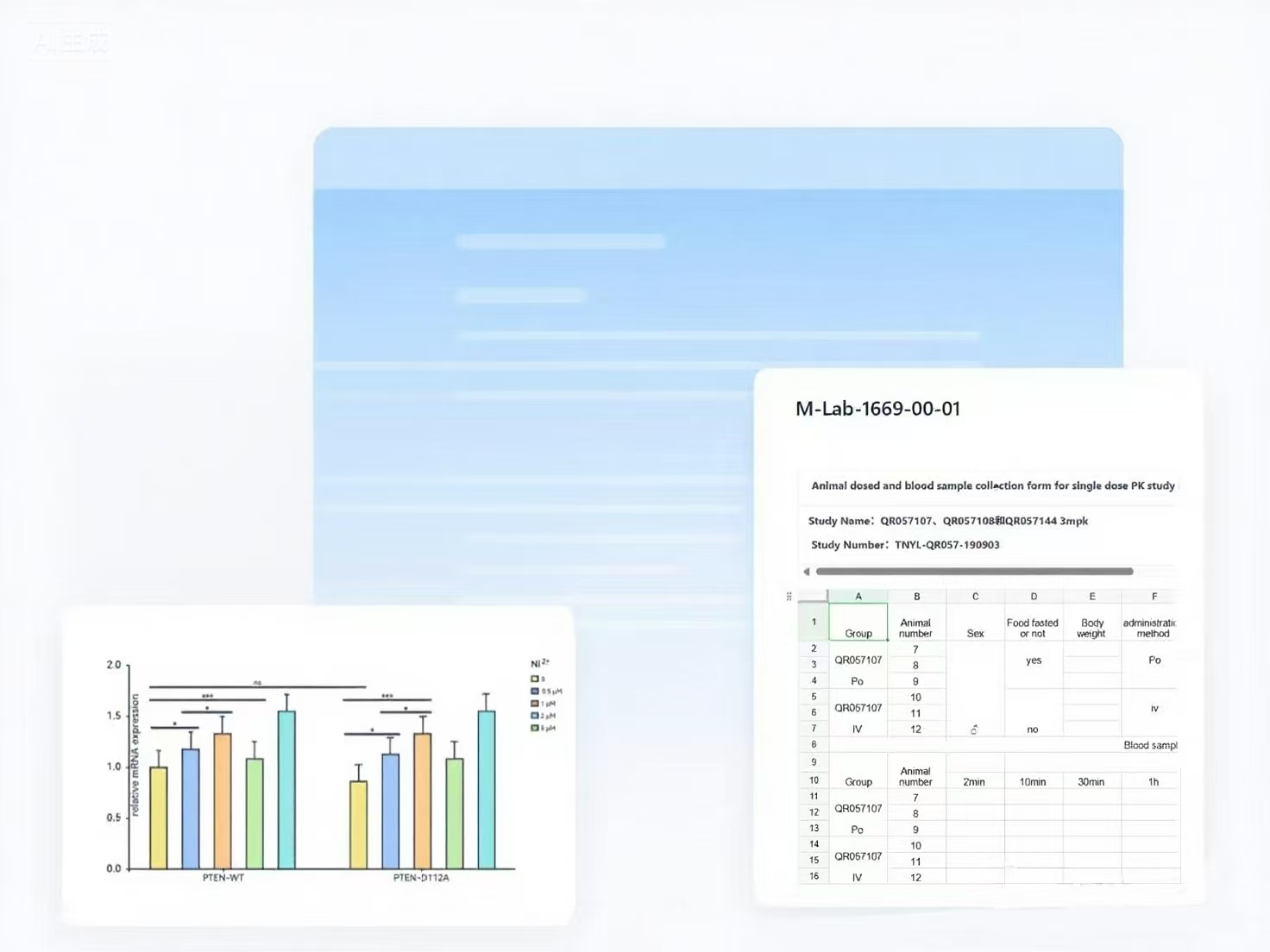
Sample management tracks complete lineage for proteins, antibodies, cell lines, and small molecules. Inventory features cover container location, barcode printing, and full audit trails from registration through lab procedures.
Workflows and Integrations
Drag-and-drop process planning, interdependent task assignment, and instrument integrations (plate readers, sequencers, qPCR machines) connect the digital layer to the physical bench.
The Cost Reality: What Small Biotechs Actually Pay
Benchling does not publish public pricing. Industry reports and user reviews, however, paint a consistent picture:
| Plan | Typical Cost | Conditions |
|---|---|---|
| Startup Program | ~$15,000 / year | < 10 scientists, < $25M funding |
| Professional | ~$20,000 / year (5 users) | Custom quote required |
| Implementation Services | $10,000 – $20,000 | One-time setup cost |
Over a two-year horizon, total cost of ownership — including subscriptions, onboarding, and the hidden productivity loss during adoption — can exceed $200,000. Several users on review platforms have noted unexpected price increases after the initial contract period, making long-term budgeting uncertain.
Key Trade-offs Before Committing
Feature Overload vs. Feature Fit
Small biotechs rarely need every module Benchling ships. Paying for a registry, inventory, and advanced insights suite when your core pain point is just sequence design and note-taking creates unnecessary overhead.
Learning Curve and Onboarding Time
Enterprise platforms come with enterprise-level onboarding demands. Configuring registries, mapping sample hierarchies, and training team members can take weeks or months — time a small team working toward its next milestone cannot easily spare.
Data Lock-in Concerns
Migrating out of a deeply integrated platform is non-trivial. Export formats, API limitations, and the sheer volume of structured data stored in proprietary schemas make switching costly down the road.
Practical Alternatives for Budget-Conscious Teams
- Open-source stacks (Galaxy, UGENE) — free for sequence analysis and cloning, but require in-house IT support and offer no ELN.
- Hybrid ELN + standalone tools — pair a lightweight ELN (e.g., RSpace, SciNote) with free molecular biology software (Serial Cloner, Benchling Academic) for a fraction of the cost.
- ZettaLab — a purpose-built bioinformatics toolkit that offers ZettaGene for sequence design and ZettaCRISPR for guide RNA engineering without the enterprise pricing overhead. ZettaLab also provides ZettaNote, a structured digital lab notebook designed with small-team workflows in mind, avoiding the feature bloat that plagues larger platforms.
When Benchling Makes Sense (and When It Doesn't)
Benchling is a strong fit for companies with 15+ scientists, multi-site operations, or compliance obligations (GxP, 21 CFR Part 11) that require a validated enterprise system. If your team is smaller, earlier-stage, and needs core molecular biology tools without the enterprise price tag, simpler solutions often deliver better ROI.
ZettaLab bridges this gap by focusing on the three capabilities that small biotechs actually use daily: sequence design (ZettaGene), CRISPR engineering (ZettaCRISPR), and structured note-taking (ZettaNote). Instead of paying for modules you may never adopt, you invest in tools that accelerate the work happening at the bench right now.
Actionable Steps to Evaluate Your Options
- Audit your actual needs. List the tools your team currently uses and the gaps that hurt productivity most.
- Request a Benchling demo and pricing quote — then compare it against the cost of a leaner stack built around ZettaLab plus a lightweight ELN.
- Run a parallel pilot. Test your top two options side by side on a real project before signing a multi-year contract.
- Factor in total cost of ownership. Include onboarding time, training, and potential exit costs when the platform no longer fits.
Related Articles