Cloud Lab Notebook Adoption: What Research Teams Gain and How to Choose a Platform
Why Labs Are Moving to Cloud Lab Notebooks — and What to Consider Before Switching
The shift from paper records to digital systems has been underway for years, but cloud lab notebook adoption has accelerated sharply. Roughly 62% of new electronic lab notebook (ELN) installations in 2026 ran on cloud infrastructure, and the global ELN market is projected to reach $1.17 billion by 2035 — up from $709.1 million in 2026. For research teams still relying on paper or on-premise systems, the pressure to modernize is real.
This article breaks down what a cloud lab notebook actually delivers, where traditional methods still hold ground, and what questions teams should answer before committing to a platform.
What a Cloud Lab Notebook Actually Is
A cloud lab notebook is an electronic lab notebook that stores experimental data, protocols, and documentation on remote servers rather than local machines or in-house servers. Researchers access their records through a web browser or desktop client from any device with an internet connection.
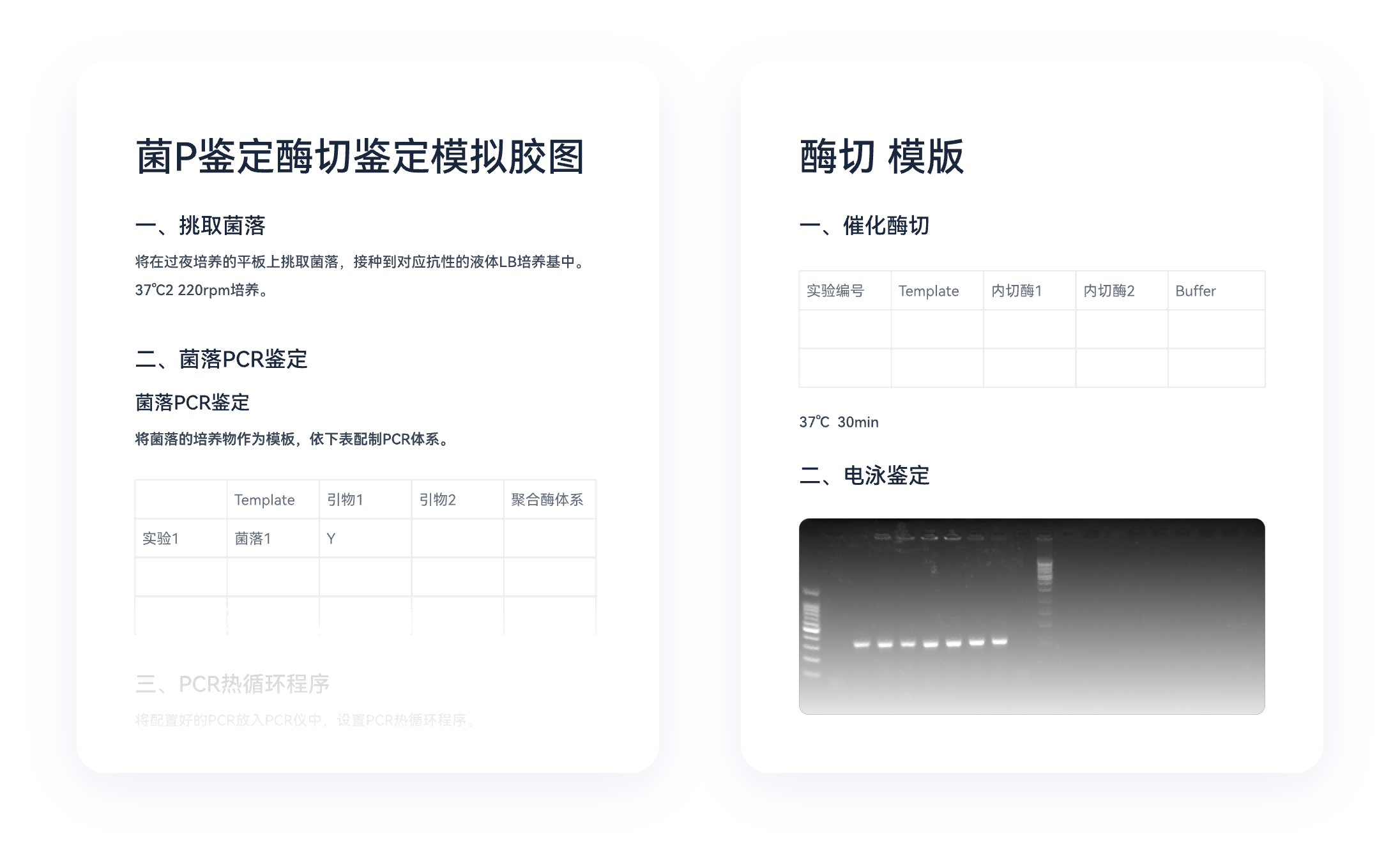
Unlike traditional paper notebooks — where data is static, handwritten, and difficult to search — cloud ELNs provide structured templates, version control, searchable archives, and automated audit trails. They serve as a single source of truth for experiments, observations, and analyses.
The practical difference matters: instead of flipping through dozens of physical notebooks to find a specific protocol run two years ago, a researcher can search by keyword, date range, tag, or project code and pull up the exact entry in seconds.
The Case for Cloud Over Paper or On-Premise
Remote access and real-time collaboration
Cloud ELNs remove geography as a barrier. Teams spread across multiple sites — a common setup in biotech and pharma — can view, edit, and comment on the same experiment records simultaneously. PI at one location can review a postdoc's work at another without waiting for physical notebooks to be shipped or scanned.
This capability became critical during the pandemic and has since become a baseline expectation rather than a nice-to-have feature.
Regulatory compliance built into the workflow
For organizations operating under FDA 21 CFR Part 11, GLP, HIPAA, or GDPR, compliance is not optional. Cloud lab notebooks typically include electronic signatures, timestamped entries, immutable audit trails, and role-based access controls as standard features.
Paper-based systems require manual processes to achieve similar traceability — and even then, the result is harder to verify during audits. With a cloud ELN, every edit, comment, and approval is logged automatically.
Reduced transcription errors and better reproducibility
Handwritten records are prone to illegibility, omissions, and inconsistent formatting. Cloud ELNs use standardized templates and direct data import from instruments, which cuts down on manual copying and the errors that come with it.
Better documentation directly supports reproducibility — a requirement that regulatory bodies and journal publishers increasingly enforce.
Where Paper Still Has a Role
Cloud lab notebooks are not universally superior in every context. Paper notebooks still offer advantages in specific situations:
- Zero infrastructure dependency: No internet, no power, no software license required. For quick bench-side sketches or field observations, paper remains the fastest tool.
- Minimal learning curve: No training needed. A new lab member can start writing immediately.
- Legal evidentiary value: Handwritten, dated, and signed notebooks carry established legal weight in patent disputes and litigation.
Some labs adopt a hybrid approach — paper for immediate bench work, then digitized into the cloud ELN before the end of the day. This works when the team enforces the digitization step consistently.
Key Platform Categories in 2026
The cloud lab notebook market has diversified. Here's how the main categories compare:
| Category | Examples | Best For |
|---|---|---|
| General-purpose ELN | LabArchives, SciNote, Labfolder | Broad research labs needing flexible documentation |
| Domain-specific ELN | ZettaNote (molecular biology), Labguru (life sciences) | Teams with specialized workflows (sequencing, cloning, CRISPR) |
| Enterprise LIMS-integrated ELN | IDBS, Labware | Large pharma with existing LIMS infrastructure |
| Lightweight / startup-focused | Scispot, LabCloud | Small teams wanting quick setup and low cost |
Cross-disciplinary platforms now account for about 76% of the market, but domain-specific tools like ZettaNote — ZettaLab's integrated electronic lab notebook — are gaining traction among molecular biology teams that need deeper tool integration. ZettaNote combines structured experiment documentation with sequence editing, a journal-scale plasmid library, and CRISPR design in a single cloud workspace, which reduces the toolchain fragmentation that plagues many biology labs.
AI Is Changing What ELNs Can Do
A significant trend in 2026 is the integration of AI and machine learning into cloud lab notebooks. Approximately 58% of new ELN systems now incorporate AI capabilities for experiment suggestion, error prediction, and data analytics.
Practical applications include:
- Protocol optimization: AI analyzes past experiment data to suggest parameter adjustments.
- Anomaly detection: ML models flag unusual results or potential data integrity issues.
- Regulatory translation: AI-powered translation agents help biopharma teams align multilingual submission documents — relevant for IND, NDA, and BLA filings across jurisdictions.
These features are still maturing, but they represent a clear direction: the cloud lab notebook is evolving from a passive record-keeping tool into an active research assistant.
Questions to Ask Before Choosing a Cloud Lab Notebook
Not every platform fits every lab. Before selecting a cloud lab notebook, evaluate these factors:
- Data residency and compliance: Does the provider store data in regions that meet your regulatory requirements? Are there options for specific geographic hosting?
- Integration capabilities: Does the ELN connect with your existing LIMS, instruments, and analysis tools? APIs and pre-built connectors matter.
- Templates and customization: Can you create experiment templates that match your lab's SOPs? How flexible is the metadata and tagging system?
- Collaboration model: Does the pricing model work for multi-site teams? Are there per-seat costs or project-based tiers?
- Exit strategy: Can you export all data in standard formats if you switch platforms? Vendor lock-in is a real risk.
The Bottom Line
Cloud lab notebooks have moved from early-adopter territory to mainstream infrastructure. The combination of remote access, built-in compliance, and growing AI capabilities makes them a practical investment for most research organizations. Paper still works for specific use cases, and hybrid workflows can bridge the transition period — but the direction of travel is clear.
The decision is less about whether to adopt a cloud lab notebook and more about choosing the right platform for your team's discipline, scale, and regulatory environment.
Related Articles