How Can Research Process Management Software Transform Your Lab's Efficiency and Accelerate Scientific Discovery?
Research process management software streamlines workflows, boosts collaboration, and ensures compliance across biotech, pharma, and academic labs. Discover how the right platform can transform your research.
Introduction: The Growing Complexity of Modern Research
Scientific research has never been more data-intensive, collaborative, or regulated. A typical drug discovery program now generates terabytes of experimental data across multiple teams, instruments, and geographic locations. Managing this complexity with spreadsheets, paper notebooks, and disconnected tools is no longer sustainable.
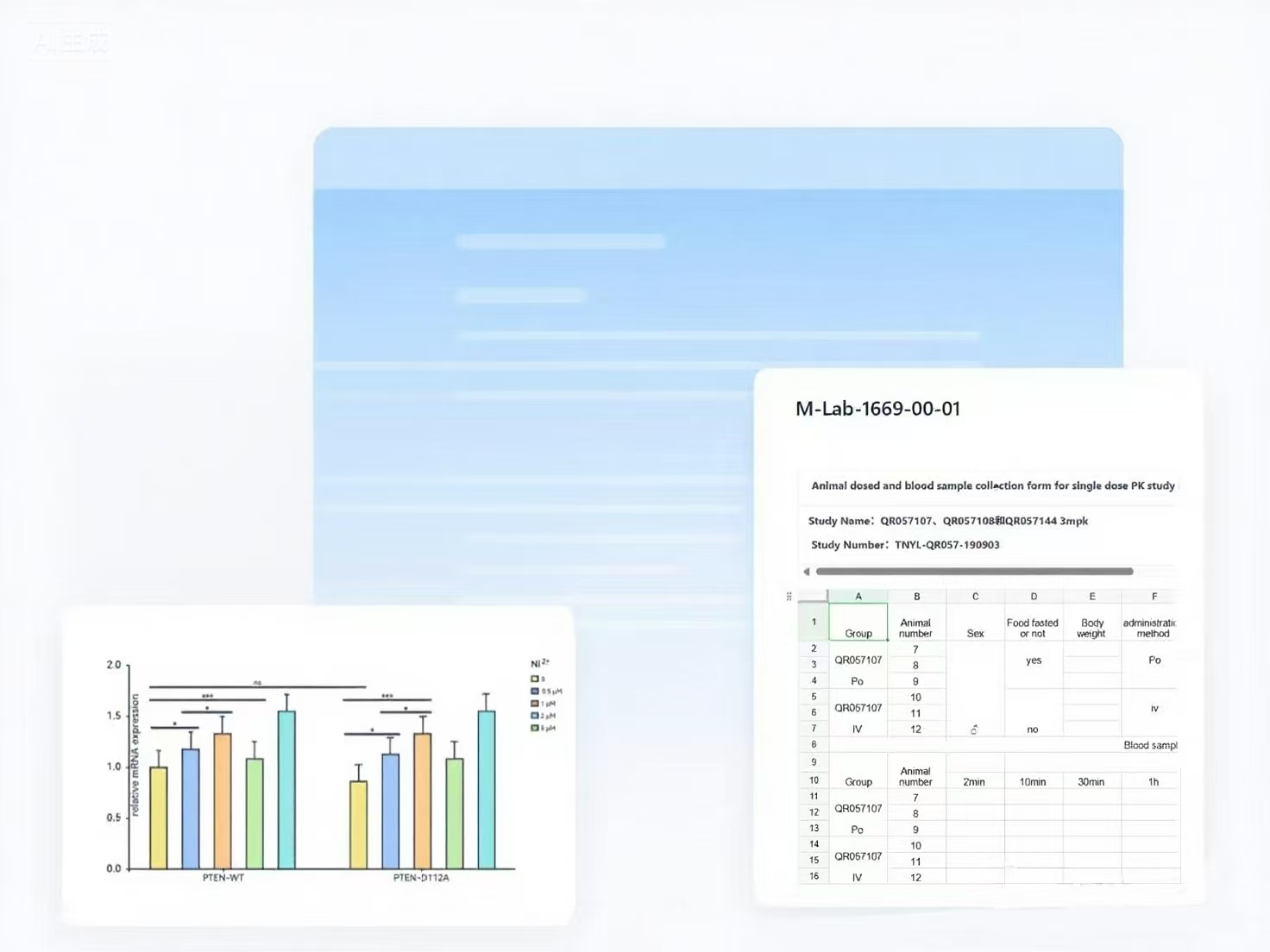
Research process management software has emerged as the answer — a unified digital platform that orchestrates the entire research lifecycle from hypothesis to publication. In this article, we explore what research process management software is, why it matters for biotech and pharma teams, and how choosing the right solution can unlock measurable gains in speed, reproducibility, and regulatory compliance.
What Is Research Process Management Software?
Research process management software (often abbreviated as RPM software) refers to a category of digital tools designed to coordinate, track, and optimize every stage of the scientific research workflow. Unlike traditional electronic lab notebooks (ELNs) that focus on recording experiments, or laboratory information management systems (LIMS) that handle sample logistics, research process management software provides an overarching layer that connects planning, execution, data analysis, collaboration, and documentation into a single, coherent system.
At its core, research process management software answers a fundamental question: how do you ensure that every experiment is designed properly, executed consistently, documented thoroughly, and accessible to the right people at the right time?
Why Research Teams Need More Than Just an ELN or LIMS
Many laboratories rely on a patchwork of specialized tools — an ELN for notebook entries, a LIMS for sample tracking, a separate system for instrument data, and yet another for project management. While each tool serves its purpose, the lack of integration creates significant friction.
The Fragmentation Problem
- Data silos: Experimental results live in one system while metadata and context reside in another, making it difficult to reconstruct the full picture of a study.
- Manual handoffs: Teams spend hours transferring data between tools, introducing transcription errors and delaying downstream analysis.
- Limited visibility: Project leads and PIs cannot get a real-time view of research progress without manually checking multiple dashboards.
- Compliance gaps: Audit trails become fragmented when documentation is scattered across disconnected platforms.
Research process management software addresses these challenges by providing a centralized orchestration layer. Rather than replacing your ELN or LIMS, it integrates with them — creating a seamless flow of information across the research pipeline.
Core Features of Effective Research Process Management Software
When evaluating research process management software, certain capabilities separate truly comprehensive platforms from glorified task managers. Here are the features that matter most:
1. Workflow Design and Automation
The best research process management software allows teams to define standardized workflows for common research activities — from CRISPR experiment design to preclinical study execution. Automated task assignments, approval gates, and notification systems reduce the cognitive load on scientists and minimize the risk of skipped steps.
2. Integrated Data Management
A robust platform centralizes all research data — raw instrument output, processed datasets, annotated results, and metadata — in a structured, searchable repository. Version control ensures that every iteration is tracked, and role-based access controls protect sensitive information.
3. Cross-Functional Collaboration Tools
Modern research is inherently collaborative. Research process management software should support real-time commenting, shared workspaces, and granular permission management that enables cross-team and cross-site cooperation without compromising data integrity.
4. Compliance and Audit Readiness
For regulated industries like pharmaceuticals and biotechnology, compliance is non-negotiable. Leading platforms provide GLP-compliant documentation, FDA 21 CFR Part 11 electronic signatures, complete audit trails, and validation-ready cloud infrastructure.
5. Analytics and Progress Tracking
Dashboards that visualize project timelines, resource utilization, experiment outcomes, and team productivity help managers make informed decisions and identify bottlenecks before they cascade into delays.
6. Seamless Integration Ecosystem
The value of research process management software increases exponentially when it connects to existing tools — ELNs, LIMS, instruments, data analysis environments, and regulatory submission systems. APIs, webhooks, and pre-built connectors are essential.
Research Process Management Software vs. ELN vs. LIMS vs. SDMS
Understanding the distinctions between research software categories is critical for making informed procurement decisions. The table below summarizes the key differences:
| Dimension | Research Process Management | Electronic Lab Notebook (ELN) | Laboratory Information Management (LIMS) | Scientific Data Management (SDMS) |
|---|---|---|---|---|
| Primary Scope | End-to-end research orchestration | Experiment documentation | Sample and test management | Data storage and retrieval |
| User Persona | PIs, research managers, scientists | Bench scientists | Lab managers, technicians | Data scientists, IT |
| Key Output | Project visibility, workflow efficiency | Experiment records | Sample chains of custody | Queryable data archives |
| Compliance Focus | GLP, FDA Part 11, cross-study | FDA Part 11, IP protection | GLP, ISO 17025, CAPA | Data integrity, FAIR principles |
| Integration Role | Hub connecting all systems | Data source | Data source | Data source |
In practice, research process management software acts as the connective tissue — the hub that brings ELN, LIMS, and SDMS data into a unified operational view.
Industry Applications: Where Research Process Management Software Delivers Impact
Biotechnology and Gene Editing
In molecular biology and gene editing labs, research process management software coordinates complex workflows that span sequence design, primer ordering, transfection, screening, and validation. For example, a team working on CRISPR-based therapies needs to track guide RNA design parameters, off-target analysis results, and clonal selection outcomes — all while maintaining reproducibility documentation for regulatory submissions.
Platforms like ZettaLab have emerged as compelling options in this space, offering an integrated suite that combines molecular biology tools (ZettaGene, ZettaCRISPR) with a GLP-compliant electronic notebook (ZettaNote) and team collaboration features (ZettaFile). The tight integration between gene editing design tools and documentation workflows means that every experimental decision is automatically captured in context — a significant advantage over pieced-together solutions.
Pharmaceutical R&D
Pharmaceutical companies face some of the most demanding research management challenges: multi-year drug discovery programs, global regulatory requirements, and the need to transfer knowledge across manufacturing sites. Research process management software helps pharma teams by:
- Standardizing experimental protocols across sites
- Maintaining audit-ready documentation for IND and NDA submissions
- Enabling real-time visibility into pipeline progress for leadership
- Supporting cross-functional collaboration between discovery, development, and regulatory teams
Major pharmaceutical organizations, including Johnson & Johnson's R&D division, have adopted integrated research platforms to accelerate breakthrough therapy development across global teams.
Academic and Government Research
Academic laboratories, often constrained by limited budgets and personnel, benefit from research process management software that improves reproducibility and simplifies multi-institution collaboration. Graduate students and postdocs can maintain structured records that follow them across projects, while PIs gain dashboard visibility into lab-wide productivity.
CROs and Service Laboratories
Contract research organizations must manage client projects with strict timelines, data handoff requirements, and compliance obligations. Research process management software provides the project tracking and documentation infrastructure that CROs need to deliver consistent, auditable results to pharmaceutical and biotech sponsors.
How to Choose the Right Research Process Management Software
Selecting a platform is a high-stakes decision that affects daily research operations for years. Consider these evaluation criteria:
1. Workflow Flexibility
Does the platform support custom workflows, or does it force you into rigid templates? The best research process management software adapts to your scientific processes, not the other way around.
2. Integration Capabilities
Evaluate the platform's API ecosystem, pre-built connectors, and willingness to support custom integrations with your existing ELN, LIMS, and instrument systems.
3. Compliance Certifications
For regulated environments, confirm that the platform supports GLP documentation, electronic signatures (FDA 21 CFR Part 11), and offers validated cloud deployment options.
4. Scalability and Total Cost of Ownership
Consider not just the per-user license cost, but the infrastructure requirements, training investment, and ongoing support fees. Cloud-native platforms with flexible pricing models tend to offer better long-term value.
5. User Experience and Adoption
The most powerful platform is useless if scientists refuse to use it. Prioritize intuitive interfaces, mobile accessibility, and tools that reduce — rather than add to — the daily administrative burden.
6. Vendor Track Record
Look for vendors with demonstrated experience in your specific domain, responsive customer support, and a consistent update cadence that keeps pace with evolving scientific and regulatory requirements.
Key Considerations Before Implementation
Before deploying research process management software across your organization, address these preparatory steps:
- Map your current workflows: Document existing processes to identify integration points and customization needs.
- Engage stakeholders early: Involve bench scientists, IT, compliance, and management in the selection process.
- Plan for data migration: Develop a strategy for transferring historical data from legacy systems.
- Define success metrics: Establish KPIs — such as time-to-first-draft, experiment reproducibility rates, or audit preparation time — to measure impact.
- Budget for training: Allocate resources for onboarding, especially for teams transitioning from paper-based systems.
The Future of Research Process Management
Several trends are shaping the next generation of research process management software:
- AI-powered insights: Platforms are increasingly leveraging machine learning to suggest experimental optimizations, flag anomalous data, and automate routine documentation tasks.
- Domain-specific AI agents: Specialized tools, such as regulatory-grade AI translation systems for multilingual pharmaceutical submissions, are being integrated into research platforms to streamline cross-border collaboration.
- Cloud-native architectures: Scalable, secure cloud deployments are replacing on-premise installations, enabling real-time global collaboration without infrastructure overhead.
- Interoperability standards: Emerging data standards (FAIR, Allotrope) are making it easier for research platforms to exchange data seamlessly.
- Embedded molecular biology tools: The convergence of computational biology tools with research management platforms is creating all-in-one environments where scientists can design, execute, and document experiments without switching applications.
Conclusion
Research process management software represents a paradigm shift in how laboratories operate — from fragmented, manual processes to integrated, data-driven workflows. For biotech companies racing to develop gene therapies, pharmaceutical organizations managing global drug discovery pipelines, and academic labs pursuing reproducible science, the right platform can mean the difference between breakthrough and bottleneck.
The key is choosing a solution that balances scientific flexibility with operational rigor — one that integrates naturally with your existing tools, supports your compliance requirements, and earns the genuine adoption of your research teams. As the landscape continues to evolve with AI-powered capabilities and tighter ecosystem integrations, organizations that invest in robust research process management today will be best positioned to lead tomorrow's scientific breakthroughs.
Related Articles