Secure Research Records: IP Protection and Continuity
Secure research records are documented evidence of scientific work that is protected against unauthorized access, loss, tampering, and context degradation throughout the entire research lifecycle—from initial design through experimentation, publication, and long-term archiving. For biotech teams, academic labs, and research organizations, secure records are not only about documentation integrity; they are the foundation of intellectual property protection, reproducibility, cross-institutional collaboration, and research continuity when team members transition. This article examines what makes research records secure, how teams lose research context in practice, and what to evaluate when selecting tools and processes for research record security.
What Secure Research Records Encompass
Secure research records cover the full spectrum of documentation generated during a research project: experimental protocols and observations, sequence data and plasmid designs, raw instrument outputs, analysis results, collaboration notes, version histories, and the connections between them. Unlike a narrow view of "lab records" that focuses on bench-level experiment entries, secure research records include everything a future researcher—whether a new team member, a collaborator at another institution, or a patent attorney—would need to understand, reproduce, or build upon the work.
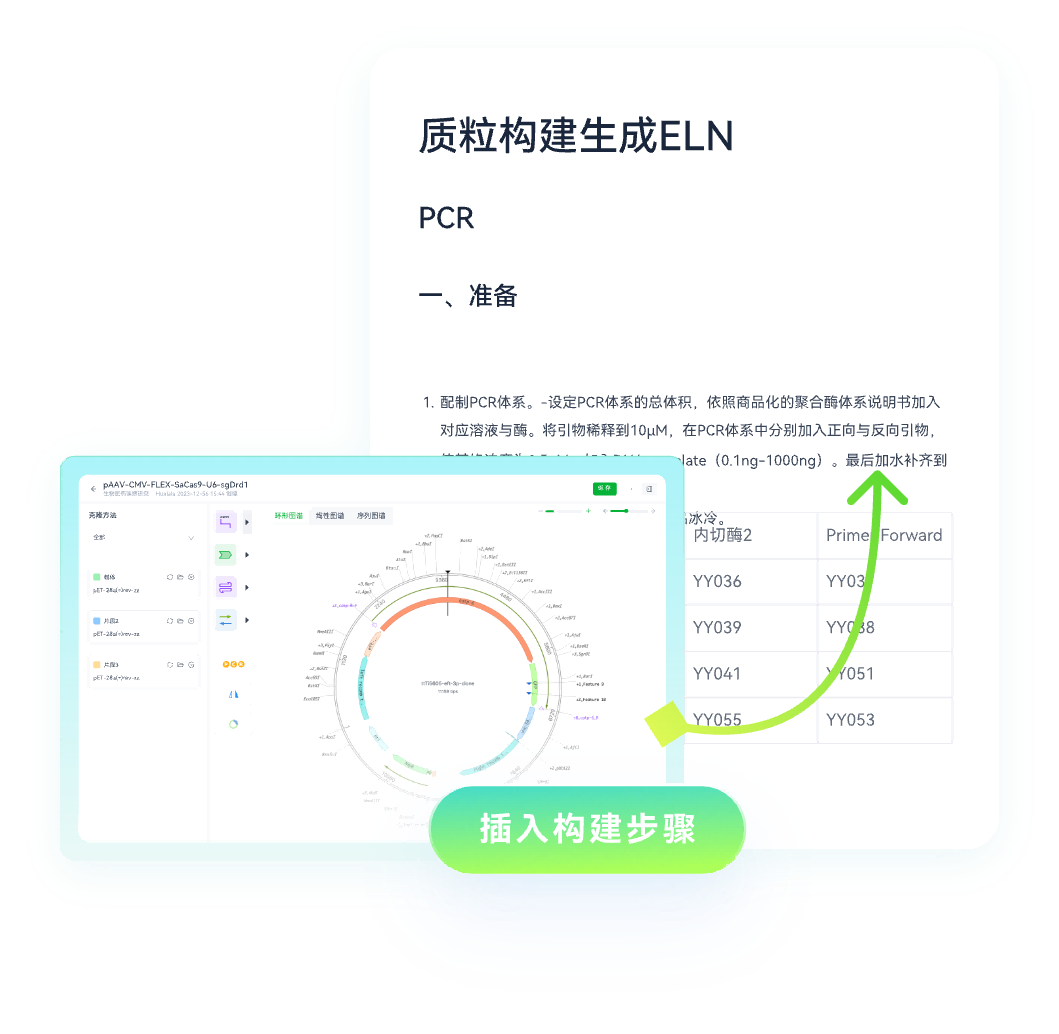
Three properties define a secure research record. First, it is protected: access is controlled, modifications are tracked, and the record cannot be altered without detection. Second, it is connected: the record maintains explicit links to the data, files, and design decisions that informed it, so that context is preserved even as the research evolves. Third, it is durable: the record remains accessible and interpretable over time, even as software platforms change, team members leave, or the research transitions from active development to publication and archiving.
These properties are interdependent. A record that is protected but disconnected from its supporting data loses scientific value. A record that is connected but not protected is vulnerable to tampering or loss. A record that is both protected and connected but not durable may become inaccessible when the tools used to create it are no longer available.
How Research Teams Lose Records and Context
Research records are rarely lost through a single dramatic event. More commonly, context degrades gradually through a series of small, routine gaps that accumulate over time.
Personnel transitions. When a graduate student, postdoc, or research scientist leaves a team, their knowledge leaves with them—unless it was documented in a way that others can follow. Paper notebooks remain, but the reasoning behind key decisions, the failed approaches that were abandoned, and the informal context that connects one experiment to the next are often not captured. New team members spend months reconstructing context that was never formally recorded.
Scattered storage across personal devices. Research files stored on individual laptops, USB drives, or personal cloud accounts become inaccessible when the researcher leaves or the device fails. Even when files are backed up, the organizational structure—the folder naming, the relationship between files—may be understood only by the original researcher.
Tool fragmentation. When different stages of a research project use different tools—sequence analysis in one program, experiment documentation in another, file sharing through email—the connections between these stages exist only implicitly. A sequence file used in an experiment may be identifiable by filename, but the specific version, the design rationale, and the alignment results that justified its selection are not linked to the experiment record.
Informal collaboration channels. Critical research decisions often happen in chat messages, email threads, or hallway conversations. When these discussions are not captured in the research record, the rationale behind key decisions is lost. Months later, when a reviewer or collaborator asks why a particular approach was chosen, the answer exists only in participants' memories.
Publication and archiving gaps. When a research project culminates in a publication, the manuscript typically references only a subset of the underlying research records. The full experimental history—including negative results, alternative approaches, and iterative design changes—may not be preserved in a way that is accessible after the project concludes.
IP Protection Through Secure Research Records
For biotech startups and academic teams pursuing patentable discoveries, research records serve as legal evidence of invention. Secure records establish a documented timeline of who did what, when, and with what results—a chain of custody that can be critical in patent disputes, investor due diligence, and licensing negotiations.
Several practices strengthen the IP value of research records. Automatic timestamps and user attribution establish when each contribution was made and by whom. Immutable audit trails demonstrate that records were not retroactively created or modified. Permission controls restrict access to IP-sensitive data, limiting exposure before patent filings are complete. Export capabilities that preserve the full audit history allow teams to produce time-stamped evidence for legal proceedings.
The risk of insecure records in an IP context is not just that records could be altered—it is that the team cannot prove they were not altered. When research records lack audit trails and timestamps, their evidentiary value in a patent dispute is significantly diminished, regardless of the actual quality of the underlying research.
For biotech startups in particular, the transition from academic research to commercial development often reveals gaps in earlier documentation. Records created during university research may lack the access controls, version histories, and audit trails that investors and patent attorneys expect. Teams that anticipate this transition and implement secure documentation practices early avoid costly retroactive documentation efforts.
Collaboration Security for Multi-Team Research
Modern research increasingly involves collaboration across institutions, disciplines, and geographies. A university lab may partner with a biotech company, a contract research organization may contribute specific experiments, and a regulatory consultant may review documentation before a submission. Each collaboration introduces access control and data handling considerations.
Secure research records in a collaborative context require clear permission boundaries. Not every collaborator needs access to every record. A CRO performing a specific assay may need access to the relevant protocol and sample information but not to the broader project data. A regulatory consultant may need to review documentation without accessing raw research data. Granular permissions allow teams to share what needs to be shared while protecting what should remain confidential.
Cross-institutional collaboration also requires data portability. When a collaboration concludes, each institution needs to retain its own copy of the relevant records—with audit trails intact—for its own compliance and IP purposes. Export capabilities that preserve metadata, not just content, support this requirement.
Version control becomes more complex in collaborative settings. When multiple teams contribute to a research project, ensuring that everyone is working from the same version of a protocol, sequence file, or analysis pipeline requires explicit version tracking. Without it, teams may unknowingly work from divergent versions, producing results that are difficult to reconcile later.
Core Elements of Secure Research Record Systems
Research teams evaluating tools and processes for secure records should consider several interdependent elements.
Access Control with Project-Level Granularity
Secure records require clear access boundaries. Project-level isolation ensures that records in one research project are not visible to members of another. Role-based permissions (e.g., admin, editor, viewer) allow teams to define who can create, modify, or export records. For IP-sensitive projects, additional controls may restrict data export or printing.
Immutable Audit Trails
An audit trail should capture every action on a research record—creation, modification, viewing, export, and permission changes—with user attribution and timestamps. The audit trail itself must be protected from modification. This provides both scientific accountability and legal defensibility.
Version History with Comparison
Research records evolve. An experiment protocol may be revised multiple times; a construct design may go through several iterations. Version history preserves earlier states and allows comparison between versions. This supports both scientific understanding (what was originally planned vs. what was revised) and IP protection (demonstrating the evolution of an invention).
Cross-Referencing and Data Linkage
A research record is most valuable when it maintains explicit connections to the data, files, and design decisions that informed it. Cross-referencing allows a reader to trace from an experiment entry to the specific sequence file, primer design, or analysis result it references—without searching through separate file systems or relying on informal naming conventions.
Data Export and Long-Term Accessibility
Research records must remain accessible beyond the active life of a project. Export in standard formats (PDF with metadata, structured data files) ensures that records can be archived, submitted as supplementary materials, or migrated to new systems. The export should preserve the audit trail and cross-references, not just the visible content.
Encryption and Infrastructure Security
Records stored in cloud-based systems should be encrypted in transit and at rest. Teams should evaluate the provider's data center security, backup policies, disaster recovery capabilities, and data residency options. For research involving sensitive or controlled data, these infrastructure considerations are as important as the application-level security features.
Evaluating Software for Secure Research Records
Several practical dimensions affect whether a software tool actually delivers secure research records in daily use.
Workflow integration. Security features that disrupt the research workflow will be circumvented. A tool that requires researchers to maintain separate documentation outside their normal process creates parallel records that undermine the very security it is meant to provide. The most effective security is embedded in the workflow—timestamps, audit trails, and permissions operate automatically without requiring extra steps.
Context preservation. Does the tool maintain connections between experiment records, design data, and supporting files? A system that stores all three in the same project workspace with cross-references provides fundamentally different security than one that treats each as an isolated object.
Adoption across the team. Security only works when the entire team participates. If some members use the system and others maintain personal records outside it, the security perimeter is incomplete. Evaluate whether the tool is practical enough for consistent daily use by all team members, not just the most documentation-conscious.
Scalability across projects. As a team's project portfolio grows, does the system handle increasing volumes of records, files, and collaborators without degradation? Permission structures and organizational schemas that work for three projects may not scale to thirty.
Export and continuity. Teams should evaluate whether they can extract complete records—including audit trails, version histories, and cross-references—in standard formats. Data portability ensures that the team's research records are not locked into a single platform and remain accessible for future regulatory needs, patent filings, or institutional transitions.
How Zettalab Supports Secure Research Records
Zettalab addresses research record security through a connected workspace that combines experiment documentation, file management, and molecular biology tools.
ZettaNote provides structured experiment documentation with automatic timestamps, audit trails, templates, annotations, cross-references, and file attachments. Research entries are organized within project contexts, with permission controls that determine who can view, edit, or export records. ZettaNote is most relevant when teams need research records that maintain connections to the design decisions, sequence data, and protocols that shaped the work—rather than isolated text entries that require manual context assembly.
ZettaFile provides team-level file storage with fine-grained permission management. Research files—sequence data, instrument outputs, analysis results, protocol documents—are organized by project with controlled access. When ZettaFile and ZettaNote share a project context, files and experiment records exist within the same permission boundary, eliminating the gap that occurs when documentation and file storage operate in separate systems.
ZettaGene contributes to research record security by keeping molecular biology design data—sequence analyses, plasmid constructions, primer designs—within the same workspace as experiment documentation. When a primer designed in ZettaGene is referenced in a ZettaNote experiment entry, the connection is maintained automatically, reducing the risk that design context is lost when records are reviewed by new team members or external collaborators.
The value of this connected approach is that research record security is not a separate process layered on top of the research workflow—it is embedded in how the team designs experiments, documents results, manages files, and collaborates. The security comes from the system's structure, not from additional procedures that researchers must follow.
Implementation Considerations
Adopting secure research record practices involves decisions that extend beyond software selection.
Define what constitutes a research record. Not every piece of data generated during a project needs the same level of protection. Teams should define which records require full audit trails, version control, and access restrictions, and which can be managed with lighter-touch approaches.
Plan for personnel transitions. Before team members leave, ensure their research records are complete, cross-referenced, and accessible to remaining team members. Exit reviews that verify documentation completeness can prevent months of context reconstruction.
Establish collaboration agreements early. When working with external partners, define data access boundaries, export rights, and record retention expectations before the collaboration begins. Retroactive agreements are more difficult to negotiate and may not cover records already shared informally.
Review and update periodically. Permission structures, documentation standards, and file organization should be reviewed as projects evolve and teams grow. A quarterly review cycle helps ensure that security practices keep pace with changing research needs.
FAQ
What are secure research records?
Secure research records are documented evidence of scientific work that is protected against unauthorized access, loss, and tampering while maintaining connections to the data and design decisions that informed the research. They include experiment entries, sequence data, design files, raw outputs, and cross-references between them—all within a permission-controlled, audit-trailed environment. Secure research records support intellectual property protection, reproducibility, collaboration, and long-term research continuity.
How do secure research records protect intellectual property?
Secure records establish a documented, time-stamped chain of research activity that can serve as evidence of invention in patent filings and disputes. Automatic timestamps show when each contribution was made. Immutable audit trails demonstrate that records were not retroactively created or modified. Permission controls limit access to IP-sensitive data before patent filings are complete. Export capabilities that preserve audit history allow teams to produce verifiable evidence for legal proceedings and investor due diligence.
What is the difference between secure research records and secure laboratory records?
Secure laboratory records focus on bench-level experiment documentation—who performed an experiment, what protocol was followed, what results were obtained. Secure research records encompass a broader scope, including design data, analysis results, collaboration records, publication materials, and the connections between all of these across the full research lifecycle. Laboratory records are a subset of research records; securing the full research record requires protecting context, continuity, and cross-references beyond the bench.
How can research teams maintain records when team members leave?
Teams can maintain continuity by ensuring that all research records are documented in a shared, permission-controlled system rather than on personal devices or in informal channels. Exit reviews should verify that departing members' records are complete, cross-referenced, and accessible to remaining team members. Structured templates and consistent documentation practices reduce reliance on individual knowledge that is not formally recorded, which shortens onboarding time for new researchers joining the project.
What should teams evaluate in software for secure research records?
Key evaluation criteria include access control granularity (project-level isolation and role-based permissions), audit trail completeness and immutability, version history with comparison, cross-referencing between records and supporting files, data export that preserves metadata, infrastructure security (encryption, backup, disaster recovery), and workflow integration that embeds security in daily research processes rather than requiring separate procedures. Teams should also assess whether the tool scales effectively as project portfolios and collaboration networks grow.
How does Zettalab support secure research records?
Zettalab connects experiment documentation (ZettaNote), file management (ZettaFile), and molecular biology tools (ZettaGene) within a single cloud-based workspace. Research entries include automatic timestamps, audit trails, cross-references, and file attachments, organized within permission-controlled project contexts. This connected approach embeds security in the research workflow—design data, experiment records, and supporting files maintain their connections automatically, reducing the risk of context loss that occurs when records are scattered across disconnected tools.
Can cloud-based systems provide adequate security for research records?
Cloud-based systems can provide security controls that exceed what most individual labs can implement on-premises, including encrypted storage, redundant backups, and automated security updates. Teams should evaluate the provider's data center certifications, data residency options, permission granularity, and terms regarding data ownership and export. Internal policies for password management and user provisioning are equally important regardless of whether records are stored on-premises or in the cloud.
How do secure research records support reproducibility?
Reproducibility depends on understanding not just what was done, but what specific materials, sequences, and protocols were used. Secure research records maintain explicit links between experiment entries and the design data, reagents, and analysis methods they reference. When these connections are preserved with timestamps and version histories, other researchers can reproduce the work based on the documented record rather than relying on informal knowledge transfer.
Conclusion
Secure research records are most effective when security is embedded in the research workflow rather than imposed as a separate compliance layer. The risks of insecure records—IP vulnerability, context loss during personnel transitions, reproducibility gaps, and collaboration friction—compound over time and are most visible when it is too late to reconstruct what was lost.
Teams should evaluate secure research record systems not only by their security features but by how well those features integrate with daily research processes. Access controls, audit trails, version histories, and cross-references deliver value only when researchers use them consistently, which depends on whether the system supports rather than disrupts their workflow.
Zettalab connects experiment documentation (ZettaNote), team file management (ZettaFile), and molecular biology tools (ZettaGene) within a single permission-controlled workspace, helping teams maintain secure, connected records across the full research lifecycle. Teams interested in evaluating this approach can start with a free trial or explore the Zettalab Academy for research workflow guides.
Related Articles