Digital Lab Notebook Template: From Paper to Connected Research Records
A digital lab notebook template does more than replicate a paper form on a screen. It introduces capabilities that paper cannot offer: automatic timestamps, structured data fields, file attachments, cross-references between records, and connections to the research data that experiments generate. For molecular biology teams moving from paper or informal digital notes to structured templates, the transition changes not just the format of documentation but what documentation can accomplish.
How Digital Templates Change What Lab Documentation Can Do
Paper lab notebooks have served researchers for centuries, and their limitations are well understood. Entries are fixed in ink, pages cannot be reorganized, and finding a specific record from months ago requires flipping through the entire notebook. Digital templates address these constraints, but the shift involves more than convenience.
A digital template can enforce structure without restricting content. Fields for objectives, materials, methods, and results ensure consistency, while open-text sections allow researchers to capture unexpected observations. Paper notebooks rely entirely on the researcher's discipline to maintain structure; digital templates build it into the workflow.
Searchability is another fundamental change. A digital template that includes metadata fields, project tags, and structured identifiers makes it possible to retrieve records by date, experiment type, researcher, or keyword without browsing sequentially. For labs that accumulate hundreds of records over a year, this capability transforms how research history is accessed and used.
Digital templates also create the foundation for connections between records. When one experiment builds on another, a digital template can include cross-reference fields that link records directly, forming a navigable chain of research decisions. Paper notebooks can reference other pages, but the reader must locate them manually.
Digital-Native Capabilities That Paper Templates Cannot Offer
Several capabilities are exclusive to digital templates and represent the core advantage of moving documentation to a digital platform.
Automatic timestamping records when each entry is created and modified, without relying on the researcher to write the date. This creates a reliable chronological record that supports reproducibility reviews and intellectual property documentation.
Dynamic fields adapt to the experiment context. A digital template can include conditional sections that appear only when relevant, such as a "Protocol Deviation" field that prompts for details when the researcher indicates that the standard protocol was not followed. Paper templates cannot adapt in this way; they must include all possible fields, which makes them longer and harder to use.
File attachment and embedding allow researchers to associate raw data, images, sequence files, and protocol documents directly with the experiment record. The record and its supporting materials exist as a connected unit rather than as separate items stored in different locations.
Version tracking logs every change to a record, preserving the history of how documentation evolved. This is impossible in paper notebooks, where corrections overwrite or cross out previous entries without preserving a retrievable history.
Permission controls define who can create, edit, view, or approve records. In a paper notebook, access is binary: whoever has the notebook can write in it. Digital templates enable nuanced access management that supports team-based research.
Transitioning from Paper to Digital Templates
Moving from paper lab notebooks to digital templates is a process that involves both technical and cultural changes. The technical aspect is often simpler than the cultural one.
The first step is identifying which elements of the current paper workflow need to be preserved and which can be reimagined. Some researchers value the freeform nature of paper notebooks and resist structured templates. The transition works better when the digital template includes both structured fields for standard information and open sections for notes, sketches, and observations that do not fit predefined categories.
Training is essential. Researchers need to understand not just how to use the digital template but why the structure exists. When the team understands that timestamping supports IP protection, that cross-references improve reproducibility, and that structured fields make records reviewable by colleagues, adoption is more likely to be consistent.
A phased approach reduces disruption. Starting with a single experiment type or a single project allows the team to test the digital template, identify issues, and refine the structure before rolling it out across the lab. Attempting to digitize all documentation at once creates too many variables to manage effectively.
Connecting Templates to Research Data and Tools
One of the most significant advantages of digital templates is their ability to connect experiment records with the data and tools that researchers use. This is where digital templates move beyond documentation and become part of the research infrastructure.
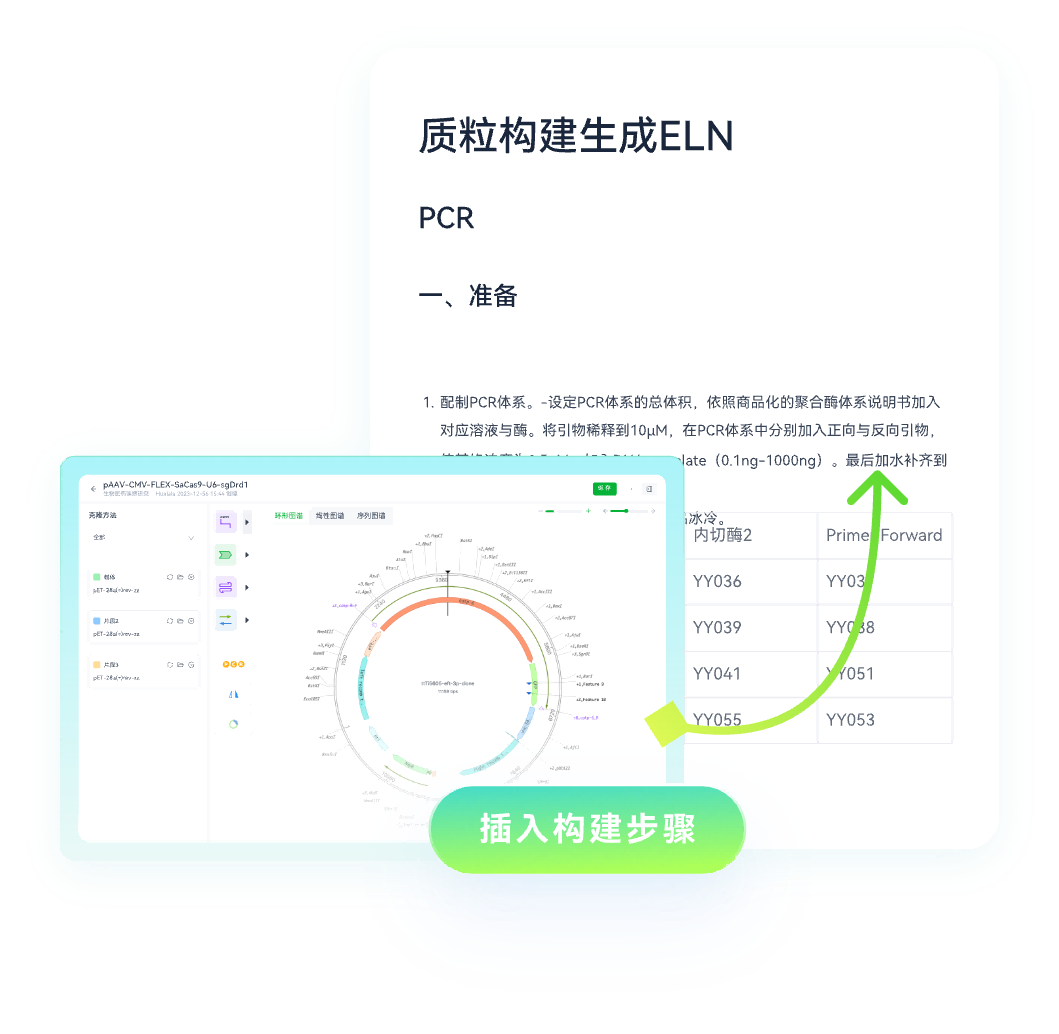
For molecular biology labs, experiment records are most useful when they link to the sequence files, plasmid maps, primer designs, and analysis outputs that define each experiment. A digital template can include reference fields that connect the record to these data sources, creating a documentation layer that sits on top of the research data.
This connection also works in the other direction. When a researcher opens a plasmid map or a sequencing result, a connected template system can show which experiment records reference that data, making it possible to trace any data point back to the experiment that generated it.
Integration with molecular biology tools extends this further. When sequence design software, CRISPR design tools, and file storage systems share a workspace with the digital template, documentation becomes part of a connected research environment rather than a separate activity that researchers perform after the experiment is complete.
Common Challenges When Adopting Digital Templates
Despite the advantages, teams encounter predictable challenges when adopting digital lab notebook templates. Anticipating these helps labs plan a smoother transition.
Resistance to structure is the most common cultural challenge. Researchers who are accustomed to freeform paper notebooks may perceive structured templates as restrictive. Addressing this requires demonstrating that structure improves retrievability and review without eliminating the space for informal observations and context.
Over-engineering templates is a technical risk. Teams sometimes design templates with too many fields, too many mandatory sections, or too much conditional logic. The result is a template that takes longer to fill than the experiment itself, which discourages thorough documentation. Templates should start simple and evolve based on actual usage patterns.
Disconnect between template design and workflow is another issue. If the template does not reflect how researchers actually conduct experiments, they will work around it rather than with it. Template designers should observe actual workflows and solicit feedback from the researchers who will use the templates daily.
Data migration from existing records can also complicate adoption. If the lab has years of paper notebooks or informal digital documents, deciding whether and how to incorporate legacy records into the new template system requires careful planning. Not all historical records need to be digitized, but key experiments and reference protocols should be accessible within the new system.
How ZettaNote Supports Digital Lab Notebook Templates for Research Teams
Zettalab's ZettaNote provides digital lab notebook templates as part of a connected R&D workspace, supporting the transition from paper or informal digital notes to structured, searchable experiment records.
Templates in ZettaNote include structured fields, cross-references, file attachments, version history, and permission controls that leverage digital-native capabilities. For molecular biology teams, the platform connects experiment documentation with ZettaGene for sequence visualization and plasmid construction, and ZettaCRISPR for gene editing design. These connections allow templates to reference the research data they describe, rather than treating documentation as an isolated activity.
For teams transitioning from paper notebooks, ZettaNote provides a template framework that preserves the flexibility researchers value while adding the structure, searchability, and connectivity that paper cannot offer.
FAQ
How is a digital lab notebook template different from a paper notebook format?
A digital template provides capabilities that paper cannot: automatic timestamping, version history, file attachments, cross-references between records, searchability across all entries, and permission controls for team access. Paper notebooks rely on the researcher's discipline to maintain structure and require manual searching. Digital templates build structure into the workflow and make records retrievable by date, experiment type, researcher, or keyword without sequential browsing.
What should a team consider when transitioning from paper to digital templates?
The transition involves both technical and cultural changes. Teams should identify which elements of their paper workflow to preserve and which to reimagine, provide training that explains the value of structured digital documentation, and adopt a phased approach that starts with one experiment type or project. Including both structured fields and open sections in the digital template helps researchers who are accustomed to freeform paper notebooks maintain flexibility while gaining the benefits of digital documentation.
Can digital templates connect with molecular biology data?
Yes. Digital templates can include reference fields that connect experiment records to sequence files, plasmid maps, primer designs, and analysis outputs. This creates a bidirectional link where experiment records point to the data they describe, and data files can be traced back to the experiments that generated them. Platforms like ZettaNote integrate experiment documentation with molecular biology tools like ZettaGene and ZettaCRISPR, embedding templates within a connected research workspace.
What are common mistakes when designing digital lab notebook templates?
Common mistakes include over-engineering templates with too many mandatory fields, designing templates that do not reflect actual experimental workflows, and failing to include cross-reference fields that connect records to related experiments and data. Teams should start with simpler templates and refine them based on actual usage patterns. Template designers should observe real workflows and solicit feedback from the researchers who will use the templates to ensure alignment between the template structure and daily lab practice.
How do digital templates support reproducibility in research?
Digital templates support reproducibility by enforcing consistent documentation of objectives, materials with identifiers, methods with protocol deviations, results with raw data attachments, and interpretation. Automatic timestamping and version history create a reliable chronological record. Cross-references connect experiments to each other and to supporting data. These features ensure that records contain enough information for colleagues or external researchers to understand what was done, why, and how, which is the foundation of reproducible science.
Does ZettaNote support different template types for different experiments?
Yes. ZettaNote supports customizable templates that can be designed for specific experiment types such as cloning, sequencing, PCR, and CRISPR workflows. Each template includes fields relevant to that experiment type while maintaining core sections for objectives, methods, results, and interpretation. Templates can also connect with molecular biology tools in the Zettalab workspace, allowing experiment records to reference sequence data, plasmid maps, and CRISPR designs directly.
Conclusion
A digital lab notebook template represents a shift from static documentation to connected, searchable, and structured research records. The transition from paper or informal digital notes to digital templates introduces capabilities that fundamentally change what documentation can accomplish: automatic timestamps, version history, file attachments, cross-references, and integration with research data. For molecular biology teams, digital templates that connect experiment records with sequence tools and project data create documentation that reflects the actual structure of the research workflow. Successful adoption depends on balancing structure with flexibility, designing templates that match real workflows, and recognizing that the transition is as much a cultural change as a technical one.
Related Articles