Biological Experiment Recording Software: Capture and Manage
Biological experiments generate records that differ fundamentally from those produced in chemistry or physics laboratories. Living systems produce variable observations, time-dependent changes, and imaging data that require documentation tools designed for biological complexity. Recording software built for biological research must capture qualitative observations alongside quantitative measurements, track specimens and cultures across multiple experimental sessions, and accommodate the temporal patterns inherent in biological studies. Understanding how biological experiment recording software addresses these data capture challenges helps research teams select platforms that genuinely serve biological research workflows rather than forcing biological data into formats designed for other disciplines.
What Makes Biological Experiment Recording Distinctive
Biological experiments produce data with characteristics that generic recording tools often handle poorly. The most significant is variability. Unlike chemical reactions that follow predictable stoichiometric relationships, biological experiments involve living organisms, cells, or tissues that respond differently across replicates, passages, or environmental conditions. Recording software must capture not only the primary results but also the contextual details that explain variation: organism age, culture passage number, environmental conditions, and handling differences.
The observation types in biological research are also more diverse than in many other disciplines. A single experiment may generate numerical measurements such as cell counts or growth rates, qualitative descriptions of morphology or behavior, photographic or microscopic images, and narrative interpretations. Recording software that accommodates only structured numerical data forces researchers to maintain separate records for qualitative observations, fragmenting the experiment record. Effective biological recording software handles all these data types within a single connected record.
Biological experiments also tend to involve identifiable biological sources, such as specific cell lines, organism strains, or field specimens, that persist across multiple experiments. Records that disconnect from their biological source lose scientific value because future researchers cannot trace the provenance of observations. Recording software that links experiment entries to biological source records maintains this traceability automatically, supporting both reproducibility and longitudinal analysis.
Data Capture Approaches for Biological Research Types
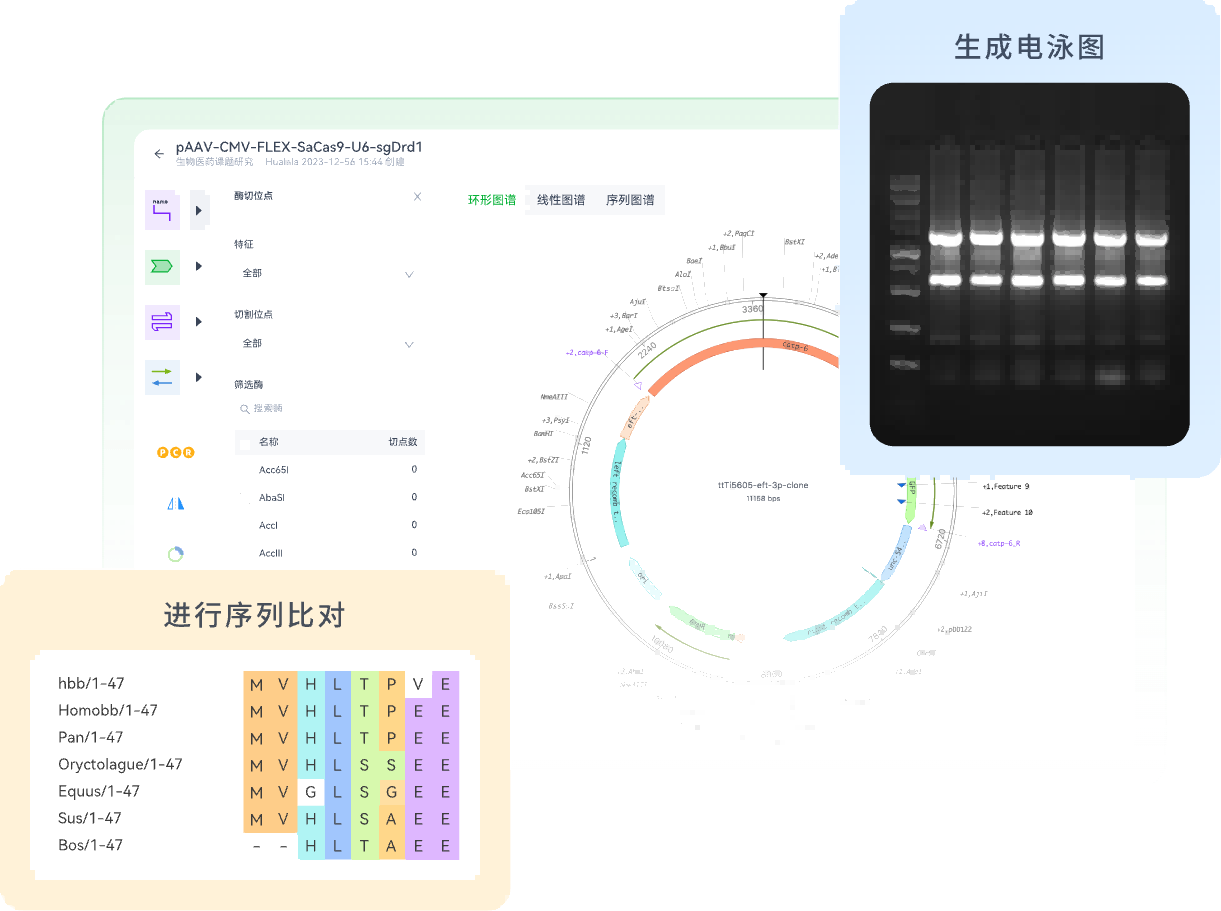
Different biological research types require different recording approaches. Software that offers a single recording mode may serve some research types well while creating friction for others.
Quantitative biological research, including growth assays, enzyme kinetics, and dose-response studies, requires structured data entry with fields for measurements, units, and statistical parameters. Recording software should support tabular data entry, calculated fields, and connections between raw data and analyzed results. Template-based recording with predefined fields ensures consistency across replicates and researchers while reducing the documentation burden for routine measurements.
Qualitative observation recording is equally important in biology. Morphological descriptions, behavioral observations, and phenotypic characterizations require free-text fields that accommodate detailed narrative entries. The software should support rich text formatting, image embedding within observation records, and tagging systems that make qualitative entries searchable alongside quantitative data. Restricting biological observations to predefined dropdown options or numerical fields loses the descriptive nuance that often proves most valuable in later analysis.
Imaging data capture represents a major requirement for biological recording. Microscopy images, gel documentation, field photographs, and histological sections are integral to biological experiment records, not supplementary attachments. Recording software should embed images within experiment entries, support annotations that highlight relevant features, and manage the storage requirements of high-resolution biological images. The connection between an image and its experimental context, including preparation methods, staining protocols, and imaging parameters, must remain intact for the record to retain scientific value.
Connecting Experiment Records to Biological Sources and Conditions
One of the most critical functions of biological experiment recording software is maintaining connections between experiment records and their biological sources. Every biological observation derives meaning from its context: which organism, which strain, which culture passage, which treatment group. Records that lose this context become scientifically unusable.
Specimen and culture linking allows researchers to navigate from any experiment record to the biological source it studied. A cell biology experiment record should connect to the cell line's receipt record, passage history, and maintenance logs. A genetics experiment should link to the organismal stock, its genetic background, and its breeding history. An ecology field record should connect to the collection site, environmental conditions, and specimen voucher information. Software that provides these linking mechanisms transforms individual experiment records into connected research narratives.
Environmental and experimental condition recording is another dimension that biological software must address. Temperature, humidity, light cycles, media composition, and treatment concentrations all affect biological outcomes and must be recorded alongside primary observations. Software that provides structured fields for common condition parameters while allowing flexible entry for unusual conditions serves the broadest range of biological research types.
Cross-referencing between related experiments enables researchers to build comprehensive records across multi-step biological studies. A researcher studying protein expression may have separate records for construct design, transfection, expression screening, and purification, all connected through cross-references that preserve the experimental chain. Software that makes cross-referencing easy and navigable supports the connected documentation that biological research requires.
Managing Temporal Records in Biological Experiments
Time is a central dimension of biological research in ways that distinguish it from many other experimental disciplines. Biological processes unfold over timescales ranging from seconds in enzyme kinetics to years in ecological monitoring, and recording software must accommodate this temporal diversity.
Short-timescale recording matters for experiments where timing precision affects data interpretation. Enzyme activity measurements, calcium imaging, and behavioral response assays may require observations timestamped to the second. Recording software should support time-stamped entries that capture the precise timing of each observation, not just the date of the experiment.
Longitudinal recording presents different challenges. Studies that track biological changes over weeks, months, or years require consistent documentation across extended periods. Cell line maintenance logs, organismal growth records, and ecological monitoring data accumulate over time, and the software must organize these entries chronologically while maintaining connections to the original experiment plan. Inconsistent documentation during routine periods, when nothing notable occurs, creates gaps that undermine the longitudinal record's analytical value.
Time-series data management requires software that can organize sequential observations into coherent datasets. Growth curves, expression time courses, and developmental staging all produce data points collected at defined intervals. Recording software that supports structured time-series entry, with fields for time points and corresponding measurements, enables researchers to review temporal patterns within the experiment record rather than reconstructing them from scattered entries.
Quality and Completeness in Biological Experiment Records
Biological data quality depends heavily on documentation completeness and accuracy. Unlike measurements from calibrated instruments in physics or chemistry, biological observations often involve subjective judgment, manual handling steps, and biological context that is easy to omit but essential for interpretation. Recording software can support data quality through design features that encourage thorough documentation.
Required fields for essential metadata ensure that researchers capture contextual information at the time of recording rather than attempting to reconstruct it later. Fields for cell passage number, organism strain, reagent lot numbers, and environmental conditions prevent the most common documentation gaps in biological research. The challenge is balancing thoroughness with usability: too many required fields create documentation burden that researchers resist, while too few leave critical gaps.
Validation rules can catch common recording errors. Cell counts cannot be negative. Temperature values should fall within biologically plausible ranges. Date fields should follow chronological order. Software that provides gentle validation, flagging potentially erroneous entries without blocking unusual but legitimate values, improves data quality without frustrating researchers.
Version history and modification tracking serve both quality assurance and scientific integrity. Biological experiment records may be reviewed during publication, patent proceedings, or regulatory audits. The ability to trace who created each record, when it was modified, and what changes were made protects both the research and the researchers. Recording software that maintains complete modification histories without allowing suppression or retroactive alteration supports the evidentiary value of biological records.
How ZettaNote Supports Biological Experiment Recording
ZettaNote provides structured recording capabilities designed for the data capture requirements of biological research. Its template system accommodates both quantitative measurements and qualitative observations within connected records, supporting the diverse data types that biological experiments generate. Version history, cross-referencing, and permission-aware collaboration address the quality and integrity requirements of biological documentation.
ZettaFile manages the imaging data that biological research depends on, connecting microscopy images, gel documentation, and field photographs to experiment records without requiring researchers to maintain separate image repositories. This integration is particularly valuable for biological experiments where imaging data is inseparable from the experimental observation itself.
For research teams whose biological work includes molecular biology components, ZettaGene connects sequence data, plasmid records, and primer designs to experiment documentation, maintaining traceability between molecular constructs and the biological experiments that use them.
Biological experiment recording software must serve the complexity of biological research rather than reducing it to simplified data formats. ZettaNote addresses this by providing recording infrastructure that captures observations, measurements, images, and contextual metadata within connected records that maintain their biological meaning across time and across research team changes.
FAQ
How does biological experiment recording software differ from general lab recording tools?
General lab recording tools typically assume standardized measurements and predictable experimental formats. Biological experiments produce variable observations across diverse data types, including quantitative measurements, qualitative descriptions, imaging data, and time-dependent changes in living systems. Biological recording software must accommodate this variability while maintaining connections to biological sources such as cell lines, organism strains, and field specimens. It also needs to handle temporal records spanning from seconds in enzyme kinetics to years in longitudinal studies. Generic tools that force biological data into rigid numerical formats lose the contextual and qualitative information essential for biological interpretation.
What types of biological data should recording software handle?
Recording software for biological research should handle quantitative measurements such as cell counts and growth rates, qualitative observations including morphological descriptions and behavioral notes, imaging data from microscopy and photography, and temporal records from time-series experiments. The software should also capture experimental conditions and metadata such as organism age, culture passage number, reagent compositions, and environmental parameters. Supporting all these data types within connected records, rather than requiring separate systems for different data categories, maintains the integrity of biological experiment records.
How should biological recording software handle specimen and culture linking?
Biological experiment records derive scientific value from their connection to identifiable biological sources. Recording software should link each experiment entry to the specimen, culture, or organism it studied, enabling researchers to trace the complete history of each biological source. Cell line records should connect to passage histories and maintenance logs. Organism records should link to strain backgrounds and breeding histories. Field specimens should connect to collection site data and voucher information. This linking transforms individual experiment records into connected research narratives that support reproducibility and retrospective analysis.
What temporal recording capabilities matter for biological experiments?
Biological experiments operate across diverse timescales. Short-timescale experiments require precise timestamping of observations to the second or minute. Longitudinal studies spanning weeks or years need consistent chronological documentation with connections to original experiment plans. Time-series data from growth curves and expression studies benefit from structured entry formats that organize sequential observations into analyzable datasets. Recording software should accommodate this temporal diversity without forcing researchers into a single recording cadence, enabling both precise short-term capture and sustained long-term documentation.
How does imaging data integrate with biological experiment records?
Imaging is integral to biological research, not supplementary. Microscopy images, gel documentation, field photographs, and histological sections should be embedded within experiment records, connected to the specific observations and conditions under which they were generated. Recording software should support image annotations that highlight relevant features, manage storage for high-resolution biological images, and maintain the connection between images and their experimental context including preparation methods and imaging parameters. Platforms that treat images as detached attachments lose the interpretive context that gives biological imaging its scientific value.
Conclusion
Biological experiment recording software must address the complexity of biological research data, from variable observations and diverse data types to specimen-linked records and temporal documentation patterns. Platforms that treat biological records as generic data entries fail to capture the contextual richness that makes biological research reproducible and interpretable. Recording software designed for biological experiments provides structured capture for measurements, flexible fields for qualitative observations, integrated imaging support, and linking mechanisms that connect records to their biological sources. ZettaNote provides recording infrastructure that serves this biological complexity, with connected tools for imaging data management and molecular biology records that keep experiment documentation scientifically meaningful across research team changes and over extended timescales.
Related Articles